
Mauisaurus: the New Zealand long‑necked plesiosaur
Mauisaurus is a genus of long‑necked plesiosaur from the Late Cretaceous of New Zealand, chiefly represented by Mauisaurus haasti. Known from fragmentary remains, it is notable for an extremely long neck and debated taxonomy.
Overview: Mauisaurus (literally “Māui reptile”) is the name given to a genus of large, long‑necked plesiosaur that lived in the seas around present‑day New Zealand during the Late Cretaceous. Fossils assigned to this genus come from Upper Cretaceous marine sediments and are most commonly referred to a single species, Mauisaurus haasti. The animal has been praised in popular accounts as one of the largest plesiosaurs found in New Zealand, and it is especially noted for an exceptionally long neck formed by many cervical vertebrae.
Image gallery
10 Images


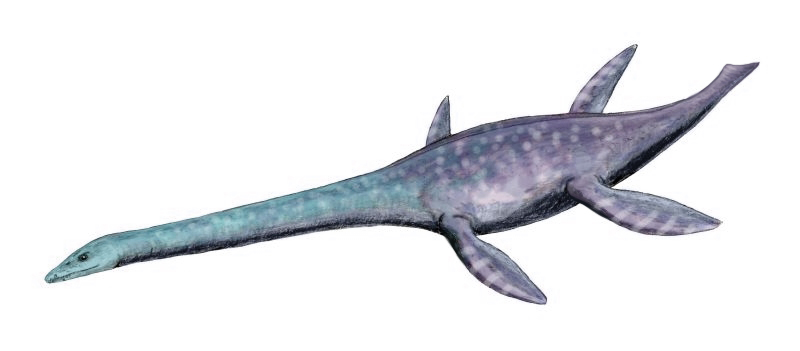


Physical characteristics
Mauisaurus resembled other long‑necked plesiosaurs (elasmosaurids): a relatively small head on a very long, flexible neck, a compact body, and four large, paddle‑like flippers adapted for swimming. Estimates based on available specimens suggest a total length in excess of 8 metres, although size estimates vary because most remains are incomplete. One of the most frequently mentioned features is a very high cervical vertebra count—reports cite around 68 neck vertebrae—giving it one of the longest necks known among plesiosaurs.
- Body plan: elongate neck, short trunk, four powerful flippers.
- Teeth and diet: slender, pointed teeth indicate a piscivorous or teuthophagous diet (fish and squid).
- Locomotion: likely used synchronized flipper strokes for propulsion, a mode characteristic of plesiosaurs.
Discovery, name and taxonomy
The genus name alludes to the Māori culture’s demigod Māui. The specific name honors a 19th‑century geologist associated with early New Zealand fossil studies; the single widely cited species is Mauisaurus haasti. Material attributed to Mauisaurus has been recovered from coastal Cretaceous strata on New Zealand islands and described in a number of publications; however, much of the material is fragmentary.
Taxonomically, the genus has been placed among the elasmosaurid plesiosaurs (plesiosaurs being the broader group). The exact relationships and the diagnostic features that separate Mauisaurus from related genera have been questioned by later researchers. Several specimens once referred to Mauisaurus have been re‑evaluated and sometimes reassigned or considered indeterminate because they lack sufficiently distinctive anatomy.
Paleoecology and behavior
Mauisaurus lived in a marine environment during the Late Cretaceous, roughly during a time interval often cited as about 80–69 million years ago. As a marine predator, it likely fed on schooling fish, cephalopods and other mid‑water prey, using its pointed teeth to seize slippery animals. Its long neck would have allowed stealthy strikes while the body remained at a distance from prey, a hunting strategy inferred for many long‑necked plesiosaurs.
Importance and notable facts
Specimens attributed to Mauisaurus are important to understanding southern hemisphere marine faunas in the Late Cretaceous and the diversity of elasmosaurids around Zealandia. Because many fossils are incomplete, a clear picture of the genus remains incomplete and actively studied. Those looking for additional information can consult the primary literature and museum collections where type and referred specimens have historically been held—references and catalog entries are often cited under regional faunal summaries and taxonomic revisions (regional faunas, museum records).
In summary, Mauisaurus represents an intriguing but partly enigmatic member of the elasmosaurid plesiosaurs: distinctive for its extreme neck length and role as a marine predator, yet scientifically cautious because of fragmentary remains and ongoing taxonomic reassessment. For general background on plesiosaurs and marine reptiles of the Cretaceous see broader summaries and review articles (marine reptile reviews).
Questions and answers
Q: When did Mauisaurus live?
A: Mauisaurus lived during the Upper Cretaceous about 80 to 69 million years ago.
Q: What is Mauisaurus?
A: Mauisaurus is a genus of plesiosaur.
Q: Was Mauisaurus the largest marine reptile in New Zealand waters at the time?
A: Yes, Mauisaurus was perhaps the largest marine reptile in New Zealand waters at the time.
Q: How big was Mauisaurus?
A: Mauisaurus was over 8 metres (26 ft) in length.
Q: How many cervical vertebrae did Mauisaurus have?
A: Mauisaurus had 68 cervical vertebrae.
Q: What did Mauisaurus use its flippers for?
A: Mauisaurus had two sets of large flippers that aided in swimming at high speeds, but may have also allowed the plesiosaur to venture onto shorelines for short amounts of time.
Q: What did Mauisaurus eat?
A: Mauisaurus was a carnivore that ate fish or squid and had sharp jagged teeth that would have been used to grip its prey.
Related articles
Author
AlegsaOnline.com Mauisaurus: the New Zealand long‑necked plesiosaur Leandro Alegsa
URL: https://en.alegsaonline.com/art/62928