
Marvin Minsky: Pioneer of Artificial Intelligence and Cognitive Theory
American cognitive scientist and AI pioneer, co‑founder of MIT's AI laboratory, author of influential works (Perceptrons, The Society of Mind) and 1969 Turing Award laureate.
Marvin Lee Minsky was an American cognitive scientist and one of the most influential early figures in artificial intelligence. He helped establish AI as a discipline, co‑founding the Massachusetts Institute of Technology's research laboratory for the field and producing foundational writing and machines that shaped decades of work on machine intelligence and knowledge representation. He received the Turing Award for his contributions to AI and cognitive science, and he remained an active thinker and teacher throughout his career. Cognitive scientist and artificial intelligence are typical descriptors of his work, and he is often associated with the growth of AI research at MIT and the recognition of the field by awards such as the Turing Award.
Image gallery
6 Images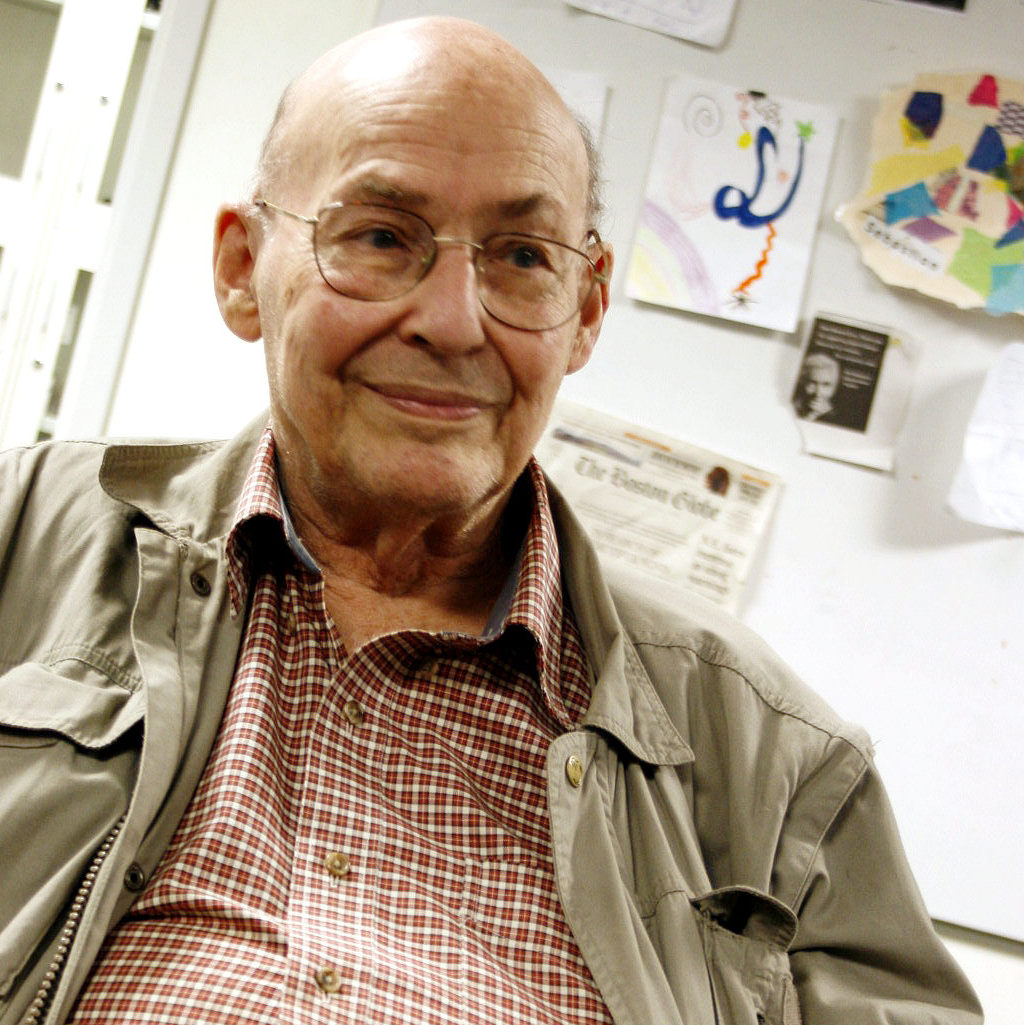


Early life and education
Minsky was born in New York City and spent his early years in a scientific and artistic family environment. He was educated at preparatory school and then studied mathematics and related subjects at university, earning undergraduate and doctoral degrees that prepared him for interdisciplinary research. Biographical accounts place his formative training at institutions including New York City schools and later at established institutions such as Phillips Academy, Harvard University, and Princeton University.
Work, methods and major ideas
Minsky combined theoretical thinking with hands‑on engineering. Early projects included hardware models inspired by neural ideas and simple learning machines that explored how networks of simple processors could produce behavior. He coauthored the influential book Perceptrons, which analyzed limitations of single‑layer neural networks and shaped research directions for years. Later he proposed architectures for representing humanlike knowledge and reasoning, most famously in the conceptual framework collected in The Society of Mind, where intelligence is described as the product of many simple interacting processes or "agents." Minsky also developed ideas about frames and knowledge representation that influenced both symbolic AI and later hybrid approaches.
Projects, influence and controversies
At the laboratory he helped build, generations of students and researchers explored robotics, vision, language, and automated reasoning. Some of Minsky's work became touchstones for critics and advocates alike: his analysis of perceptrons contributed to a temporary decline in neural‑network research, yet many of his representational ideas were later reinterpreted in light of modern machine learning. His role as a public intellectual and adviser meant his opinions on AI capability, long‑term risks, and the philosophy of mind were widely read and sometimes debated. He worked on practical devices as well as theoretical models, and his influence is evident in curricula, textbooks, and software approaches that followed.
Honors, later life and legacy
Minsky received major recognitions during his lifetime, and his writings—both technical papers and books intended for broader audiences—continue to be cited. He spent much of his career in the Boston area and was associated with institutions in Boston and elsewhere in Massachusetts. After his death he became a subject of public interest not only for his scientific legacy but also for personal choices: reports indicate his remains were cryopreserved at a facility in Scottsdale, Arizona.
Selected topics and further reading
- Biography and overview
- Foundations of artificial intelligence
- MIT AI Lab history
- Turing Award citation
- Early life and background
- New York context
- Education at Phillips Academy
- Harvard studies
- Princeton doctoral work
- Work in Boston
- Academic and public legacy
- Cryonics and afterlife decisions
- Scottsdale facility
For readers new to Minsky's writings, starting points include his technical papers on representation, the book Perceptrons (coauthored with Seymour Papert), and the more accessible The Society of Mind, which presents his mature view of how many simple processes can interact to produce complex, intelligent behavior.
Related articles
Author
AlegsaOnline.com Marvin Minsky: Pioneer of Artificial Intelligence and Cognitive Theory Leandro Alegsa
URL: https://en.alegsaonline.com/art/62443
Sources
- doi.org : 10.3115/980190.980222
- scholar.google.com : Marvin Minsky's publications in Google Scholar
- nytimes.com : "Marvin Minsky, Pioneer in Artificial Intelligence, Dies at 88"
- alcor.org : "A-1700, Case Summary, Patient 144"