
Maria Mitchell: 19th-Century American Astronomer, Educator, and Pioneer
Maria Mitchell (1818–1889) was an American astronomer and educator. She discovered a comet in 1847, advanced practical astronomy and timekeeping, and helped open scientific careers to women.
Overview
Maria Mitchell (1818–1889) was a pioneering American astronomer and teacher whose work combined careful observation, public education, and advocacy for women in science. Born on Nantucket Island, she became widely known after discovering a previously unreported comet in 1847, and she spent much of her career teaching at Vassar College while continuing observational and administrative work in astronomy.
Image gallery
7 Images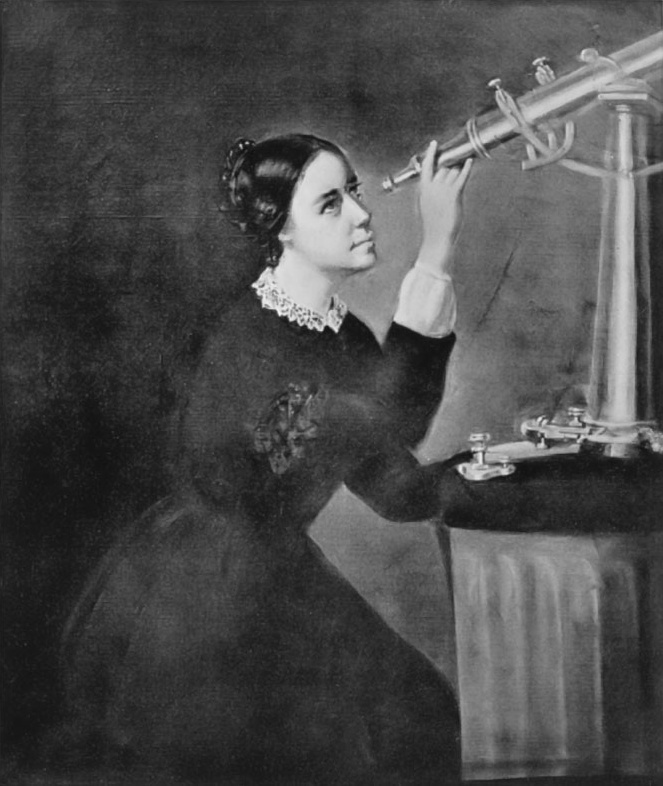


Early life and training
Mitchell grew up in Nantucket, Massachusetts, where she received basic schooling and later instruction in a school run by her father. Her family environment encouraged close study of the natural world: her father maintained a small observatory that introduced her to telescopic observation and practical astronomy. In her late teens she opened a school that combined conventional lessons with outdoor study programs that included birdwatching and astronomical observation. For background on her birthplace and early context see Nantucket sources and on her formative educational programs see reports of her school.
Discovery and recognition
Mitchell's most famous achievement came in October 1847 when she observed a new comet, an event that brought her national and international attention. The object, later cataloged as C/1847 T1, was popularly known at the time as "Miss Mitchell's Comet." Her discovery earned her a gold medal from the King of Denmark and helped establish her reputation as a careful and capable observer. Contemporary notices and later histories discuss the discovery in more detail; see observational accounts linked at comet records.
Scientific work and teaching
Beyond the comet discovery, Mitchell conducted practical astronomical work of the period: she made observations and calculations used to determine local time, latitude, and longitude—measurements essential for navigation, mapping, and observatory practice. Her contributions included timing stellar transits and working with instruments to refine positional data; related methodological notes are summarized in sources on timekeeping and geodesy (latitude, longitude).
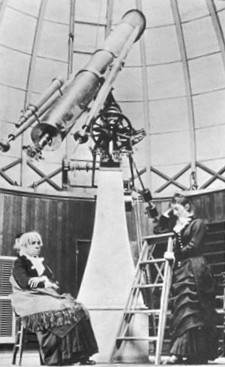
In 1865 Mitchell accepted a professorship at Vassar College where she led the college observatory, trained students in observational techniques, and integrated laboratory and field work into the curriculum. She remained at Vassar until her retirement in 1888, balancing teaching with public lectures and institutional service.
Honors, memberships, and legacy
Following her discovery and further work, Mitchell received several honors and invitations to scientific societies. She was elected to the American Academy of Arts and Sciences in the 1840s, an early female member of that body, and later participated in the American Association for the Advancement of Science. Her combination of research, teaching, and public engagement helped open opportunities for women in professional science. After her death in 1889 she continued to be celebrated: she was commemorated in halls of fame and in institutional histories of American astronomy. For institutional listings see academy records and association notes at scientific society pages.
Notable facts and distinctions
- Her comet discovery in 1847 brought international recognition and a medal from the King of Denmark (comet details).
- She combined hands-on observation begun at a family observatory with an educational career that emphasized fieldwork (observatory background).
- Her teaching at Vassar helped institutionalize astronomy courses for college women in the United States.
- Her practical calculations for time and position contributed to the applied sciences used in navigation and surveying (latitude, longitude).
Mitchell's life illustrates a 19th-century path from local, self-directed study to national scientific recognition. Her career bridged observational practice, pedagogy, and public advocacy, and she remains a frequent subject in histories of women in science. For further reading, consult general biographical and institutional resources linked above and specialist accounts of American astronomy in the mid-19th century (profiles, teaching records, observatory notes).
Related articles
Author
AlegsaOnline.com Maria Mitchell: 19th-Century American Astronomer, Educator, and Pioneer Leandro Alegsa
URL: https://en.alegsaonline.com/art/61819
Sources
- commons.wikimedia.org : Maria Mitchell
- worldbookonline.com : "Mitchell, Maria"
- link.galegroup.com : "Maria Mitchell."
- wikidata.org : wikidata.org/wiki/Q239229
- catalogue.bnf.fr : cb144963503
- data.bnf.fr : (data)
- d-nb.info : 117579130
- isni.org : 0000 0000 8099 2716
- id.loc.gov : n50033397
- data.bibliotheken.nl : 190000791
- snaccooperative.org : w6xs62qn
- idref.fr : 066860326
- viaf.org : 19910479
- worldcat.org : lccn-n50033397