
Mandarin duck (Aix galericulata): appearance, range, and significance
A colorful East Asian perching duck, the mandarin duck (Aix galericulata) is noted for the male's ornate plumage, wooded-water habitats, cultural symbolism, and small introduced populations in Europe.
Overview
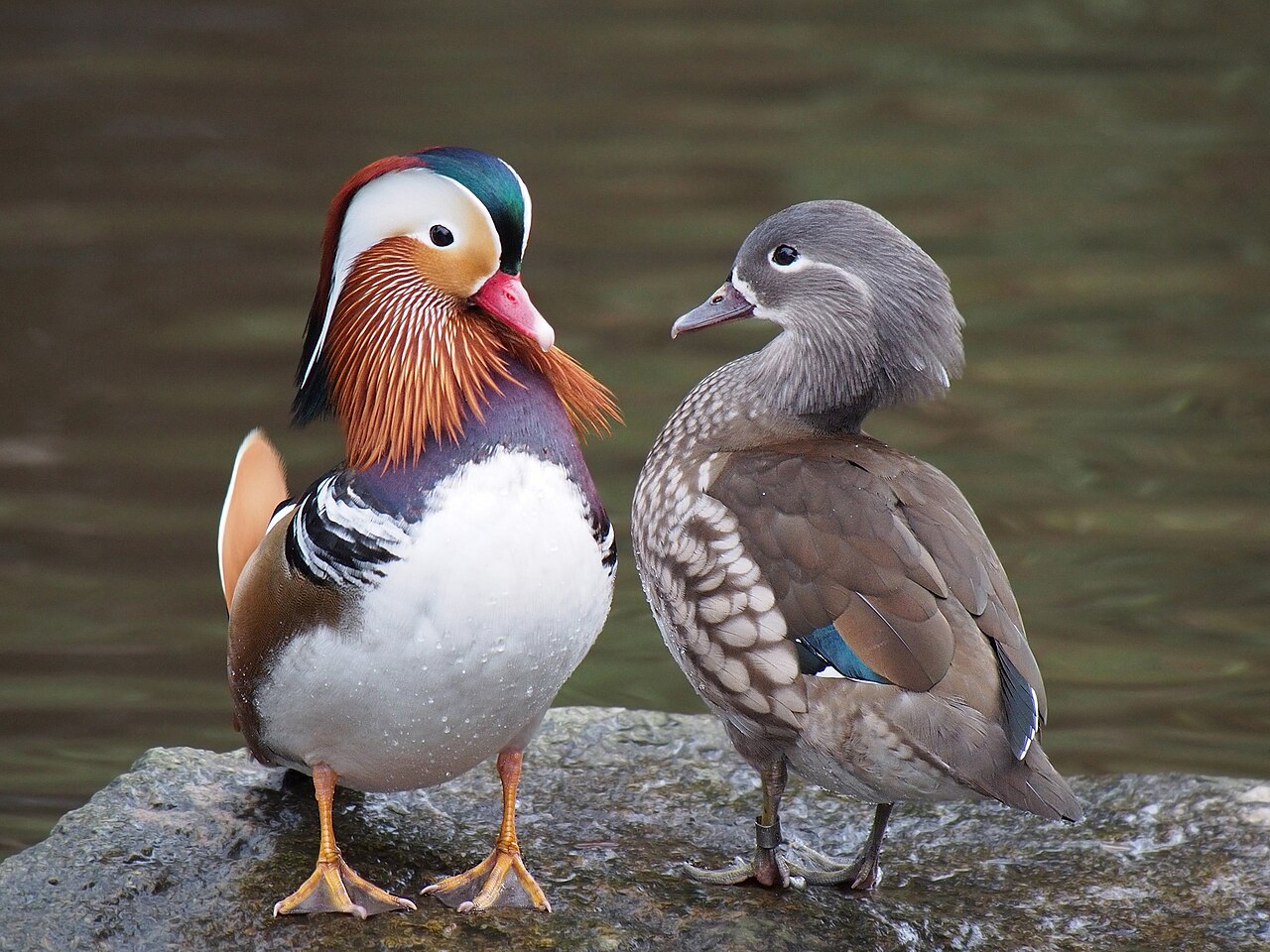
The mandarin duck (Aix galericulata) is a medium-sized perching duck native to East Asia. Males are famous for bright, ornate plumage during the breeding season; females are more camouflaged with mottled brown tones. It belongs to the genus Aix, which also includes the North American wood duck.
Image gallery
10 Images



Appearance and behaviour
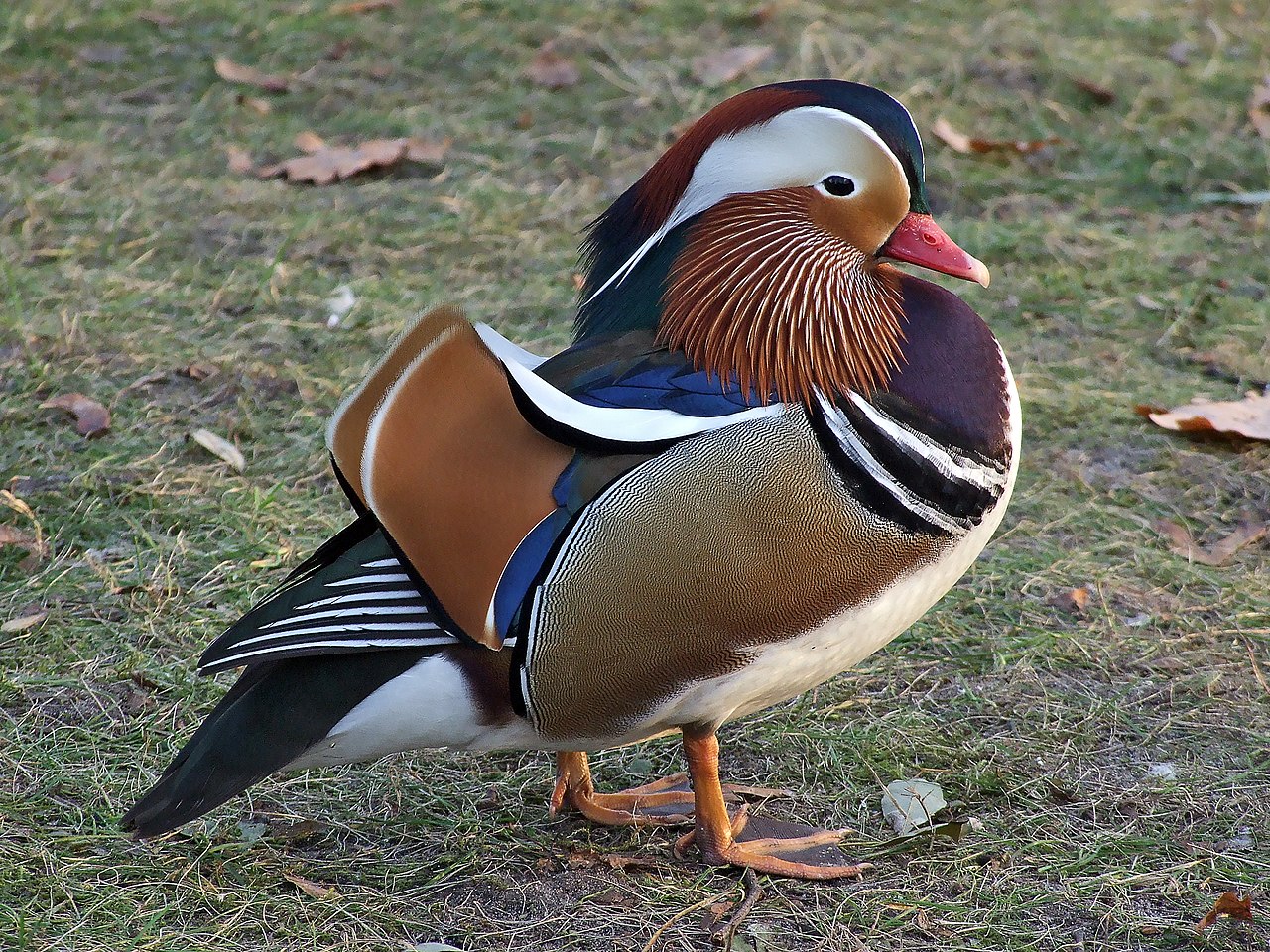
Male mandarin ducks show a complex combination of orange "sails" on the back, a red bill, and iridescent feathers that make them highly conspicuous in spring. Females have a white eye-ring and vertical stripe behind the eye, providing camouflage when nesting. These birds frequent tree-lined lakes and slow rivers and readily perch in trees; they nest in tree cavities and may use nest boxes.
Range and habitat
The species breeds across parts of eastern Siberia, China and Japan, and many birds move south to milder coastal and lowland areas in winter. A notable non-native, free-flying population exists in Britain, descended from escaped or released captive birds; similar small feral groups occur elsewhere in Europe and North America. Habitat is typically wooded wetland, ponds, and streams with nearby trees for nesting.
Diet, reproduction and social life
Mandarin ducks feed on seeds, acorns, aquatic plants and invertebrates. They form pairs during the breeding season; pair bonds may be seasonal. Females lay clutches of eggs in tree cavities and incubate alone while males may stay nearby. Ducklings leave the nest soon after hatching and drop to the ground to follow the female to water.
Conservation and cultural importance
Although the species is not currently considered severely threatened at a global scale, local declines have occurred because of habitat loss, hunting and capture for the ornamental bird trade. The mandarin duck holds strong symbolic value in East Asian art and folklore, often representing fidelity and marital harmony. It is also kept in captivity and attracts interest in parks and collections due to its striking appearance.
Key facts and distinctions
- Scientific name: Aix galericulata.
- Notable trait: male's bright breeding plumage and the ability to nest in tree cavities.
- Similar species: wood duck (Aix sponsa) of North America shares behavioral and ecological similarities.
- Human interactions: admired in art and common in aviculture; introduced populations result from escapes or deliberate releases.
Related articles
Author
AlegsaOnline.com Mandarin duck (Aix galericulata): appearance, range, and significance Leandro Alegsa
URL: https://en.alegsaonline.com/art/61231