
Manta Ray: giant filter-feeding rays of tropical seas
Large, flattened rays known for wide pectoral 'wings', filter feeding on plankton, complex social behaviour, and distinctive cephalic lobes; includes giant and reef mantas and faces conservation threats.
Overview
Manta rays are among the largest and most distinctive of the cartilaginous fishes. Recognised by their triangular pectoral fins that resemble wings and by two forward-facing cephalic lobes beside a wide, terminal mouth, mantas are active filter feeders found mainly in tropical and subtropical seas. They are notable for their size, relatively large brains compared with other sharks and rays, and for behaviours such as visiting cleaning stations, breaching, and long-distance movements.
Image gallery
10 Images


Appearance and anatomy
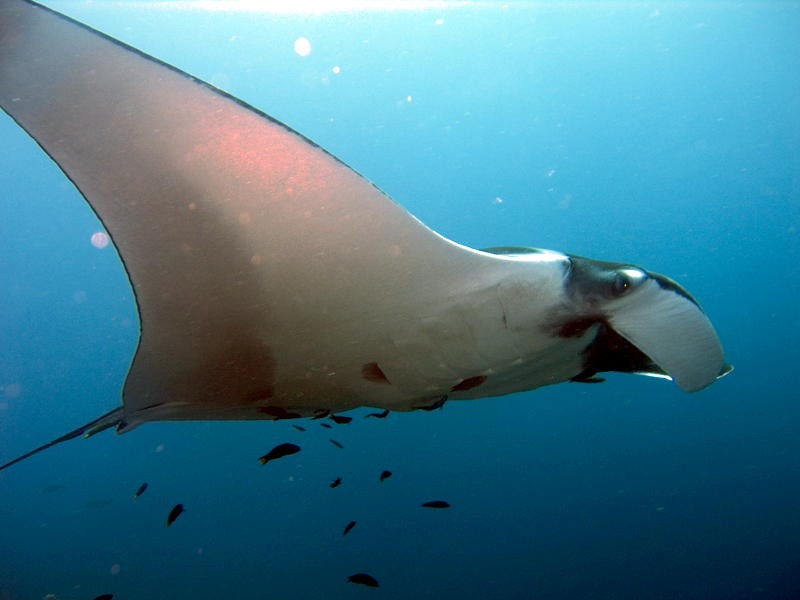
Mantas have an overall flattened body with broad, wing-like pectoral fins that can span several metres across in the largest species. The head is broad and carries two flexible cephalic lobes that can be unfurled to help channel water into the mouth while feeding. Inside the mouth are comb-like gill rakers that trap plankton and small fishes as water passes across the gills. Their tails are relatively short and lack a stinging spine. Their coloration typically combines dark upper surfaces and lighter undersides, often with unique belly patterns used to identify individuals.
Feeding, behaviour and ecology
Mantas are obligate filter feeders: they swim with open mouths to sieve plankton, small crustaceans and fish larvae. Some feed in solitary fashion, others form temporary aggregations where food is abundant. They regularly visit reef ‘cleaning stations’ where small reef fishes remove parasites from their skin and gill slits. Mantas are capable of deep dives and sustained swimming; they have been observed breaching the surface and travelling long distances following seasonal food resources.
Reproduction and life history
Reproduction is relatively slow: mantas are live-bearers that produce a small number of well-developed pups rather than large litters. Females invest heavily in each offspring, which contributes to a slow population recovery rate after declines. Juveniles use shallow coastal habitats and reefs as nurseries while adults frequent a mix of coastal and offshore environments.
Taxonomy and notable distinctions
Traditionally placed in the genus Manta, these rays belong to the family Mobulidae within the larger group of cartilaginous fishes (Elasmobranchii). Modern genetic and morphological studies indicate close relationships among mantas and the smaller mobula rays; as a result, scientific classification has been revised and the boundaries of the genus may be re-evaluated (Manta / Mobula). Two widely recognised forms are the larger, more migratory giant manta and a smaller, resident reef manta; they differ in size, range and aspects of behaviour.
Importance and conservation
Mantas play a role in marine ecosystems as large consumers of plankton and as charismatic species for ecotourism. They are vulnerable to threats including bycatch in fisheries, targeted capture for gill rakers used in some traditional medicines, habitat degradation and disturbances from boat traffic and tourism if not managed. Many populations have declined or are considered at risk; local, national and international protections, plus research and responsible tourism practices, are key to conserving them. Common predators are few but can include large sharks and orcas; otherwise adult mantas have few natural threats.
- Key features: large wing-like fins, cephalic lobes, filter-feeding gill rakers
- Typical habitats: coastal reefs, offshore seamounts and open water
- Conservation priorities: reducing bycatch, protecting aggregation sites, regulating trade and tourism
Questions and answers
Q: What is a manta ray?
A: A manta ray is the largest species of the rays that ranges throughout tropical waters of the world, typically around coral reefs.
Q: What is the size of the largest known manta ray specimen?
A: The largest known manta ray specimen was more than 7.6 meters (25 ft) across and weighs about 1,300 kilograms (2,900 lb).
Q: What is the brain-to-body ratio of manta rays among other sharks, rays, and skates?
A: Manta rays have the largest brain-to-body ratio among other sharks, rays, and skates.
Q: To what depths can manta rays dive into the water?
A: Manta rays can dive to as deep as 500 meters (1,600 ft) in cold water.
Q: How many different species of manta rays are there?
A: There may be at least two different species of manta rays: the giant manta (Manta birostris), which migrates, and another smaller one called the reef manta (Manta alfredi), which does not.
Q: What is the position of manta rays in the food chain?
A: Manta rays are probably at the top of the food chain.
Q: What are the predators of manta rays?
A: Some shark species, such as the tiger shark may hunt manta rays.
Related articles
Author
AlegsaOnline.com Manta Ray: giant filter-feeding rays of tropical seas Leandro Alegsa
URL: https://en.alegsaonline.com/art/61426
Sources
- hamerinhawaii.org : "Manta Rays"
- saveourseas.com : "Manta rays: A new species?"
- bbc.co.uk : bbc.co.uk/programmes/b010k3j3
- marinemegafauna.org : "Manta Ray Research"