
Maniraptora: the hand‑snatching theropods and their link to birds
Maniraptora is a clade of coelurosaurian theropods that includes birds and their closest relatives; many had feathers and varied ecologies from carnivores to herbivores.
Overview
Maniraptora (literally "hand snatchers") is a major clade of small- to medium-sized theropod dinosaurs nested among the coelurosaurian groups. The clade appears in the fossil record by the Jurassic period and diversified through the Cretaceous. The defining interest in maniraptors stems from their close relationship to modern birds; most researchers agree that true birds evolved from a lineage inside Maniraptora, making birds by definition members of the clade under modern phylogenetic taxonomy.
Image gallery
10 Images




Key anatomical features
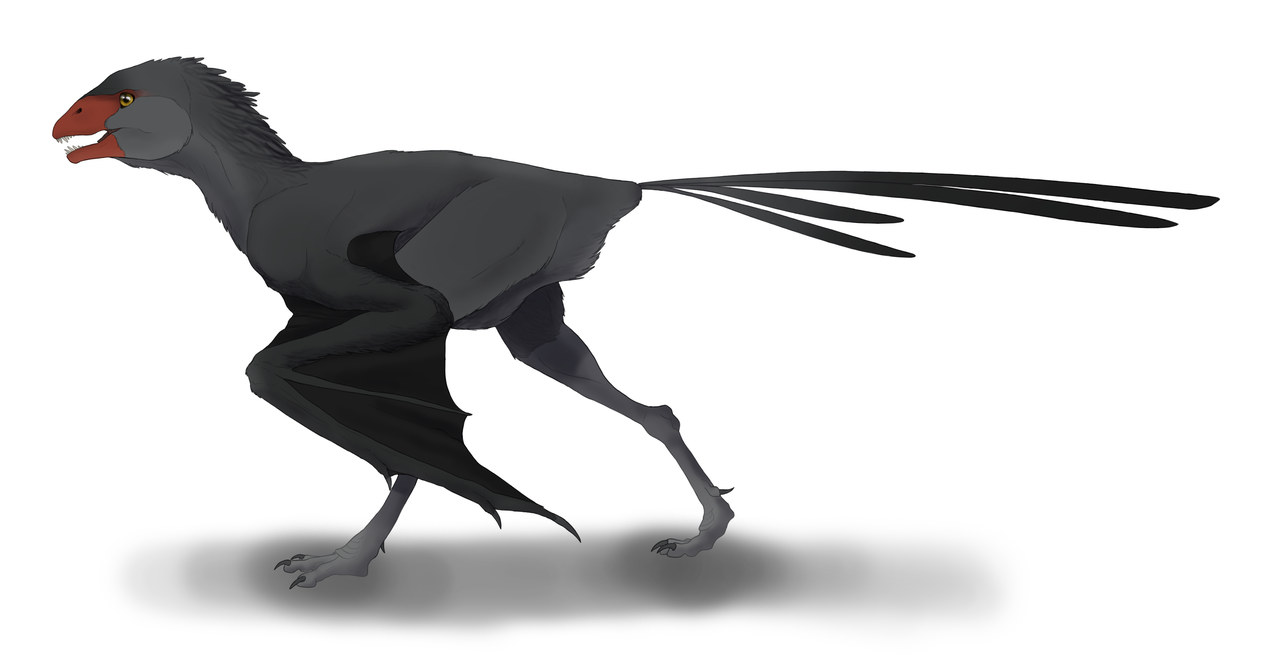
Maniraptorans share several skeletal and soft-tissue traits that distinguish them from other theropods. Common features include elongate forelimbs with grasping hands, a semi-lunate carpal allowing advanced wrist rotation and folding of the hand, and often a shortened tail or tail with specialized vertebrae. From the Jehol biota and other fossil sites it is now clear many maniraptors bore feathers of varying types (feathers), ranging from simple filaments to complex pennaceous feathers capable of forming wing-like surfaces.
Major subgroups and examples
- Paravians: the group that contains the closest relatives of birds, including dromaeosaurids and troodontids.
- Oviraptorosaurs: often short-tailed, beaked forms with diverse diets and elaborate skulls.
- Therizinosaurs: unusual, herbivorous maniraptors with long claws and bulky bodies.
- Alvarezsaurids: small, specialized forms with reduced forelimbs adapted for digging or insectivory.
Among named genera, some researchers consider basal candidates such as Ornitholestes as early-branching maniraptors, while advanced non-avian paravians include taxa like Velociraptor and Deinonychus, known for their sickle-shaped claw and predatory adaptations.
Evolutionary significance
Maniraptora is central to understanding the dinosaur-to-bird transition. The combination of feathers, wrist flexibility, and changes in forelimb proportions in many maniraptorans provides the anatomical basis for hypotheses about the origin of powered flight and other avian traits. The nesting of birds within this clade means many classical distinctions between "birds" and "non-avian dinosaurs" are now treated as degrees along a continuum rather than a strict divide.
Ecology, behavior and diversity
Despite a shared core anatomy, maniraptorans occupied diverse ecological roles. Some were active predators with keen senses and grasping hands; others were omnivores or specialist herbivores with beaks and large guts. Feather types and arrangements imply functions beyond flight—insulation, display, brooding, and tactile sensing. Fossil assemblages such as the Jehol biota have revealed plumage, nesting behavior, and sometimes stomach contents, enriching our picture of their lives.
Notable facts and classification notes
Because modern birds are phylogenetically nested within Maniraptora, technical classification treats birds as a subgroup of maniraptors. Paleontological discoveries continue to refine the group's internal relationships and the timing of key innovations. The term "dinobird" is sometimes used informally to emphasize the continuity between non-avian maniraptors and true birds.
For further reading on specific groups, fossils, and interpretations, consult specialist literature and databases linked by authoritative sources such as museums and peer-reviewed journals (coelurosaurian context, geological timescale, avian evolution, origins studies, phylogenetic methods, feather evidence, basal taxa, Ornitholestes, Velociraptor, Deinonychus).
Questions and answers
Q: What is a Maniraptor?
A: A Maniraptor is a clade of coelurosaurian dinosaurs that existed in the Jurassic period and is believed to have led to the evolution of birds.
Q: What do many paleontologists believe about Maniraptors?
A: Many paleontologists believe that birds evolved from Maniraptors approximately 150 million years ago.
Q: How are birds related to other Maniraptors?
A: According to phylogenetic taxonomy, birds are by definition Maniraptors. Therefore, other Maniraptors are considered their closest relatives.
Q: What is the significance of the Jehol biota regarding Maniraptors?
A: It is now known, from the Jehol biota, that many or all Maniraptors had feathers. This finding has led to the characterization of Maniraptors as dinobirds.
Q: Which is the most basal member of the Maniraptor group?
A: The most basal member of the Maniraptor group may be Ornitholestes.
Q: Which are the most advanced Maniraptors that are not birds?
A: The most advanced Maniraptors that are not birds are Velociraptor and Deinonychus.
Q: What is the translation of the term "Maniraptors"?
A: The term "Maniraptors" means "hand snatchers".
Related articles
Author
AlegsaOnline.com Maniraptora: the hand‑snatching theropods and their link to birds Leandro Alegsa
URL: https://en.alegsaonline.com/art/61347