
Manchester Ship Canal
A 36-mile navigation in northwest England opened in 1894 that linked seagoing vessels to Manchester, reshaping industry, transport, and rivers Irwell and Mersey for commerce and later urban regeneration.
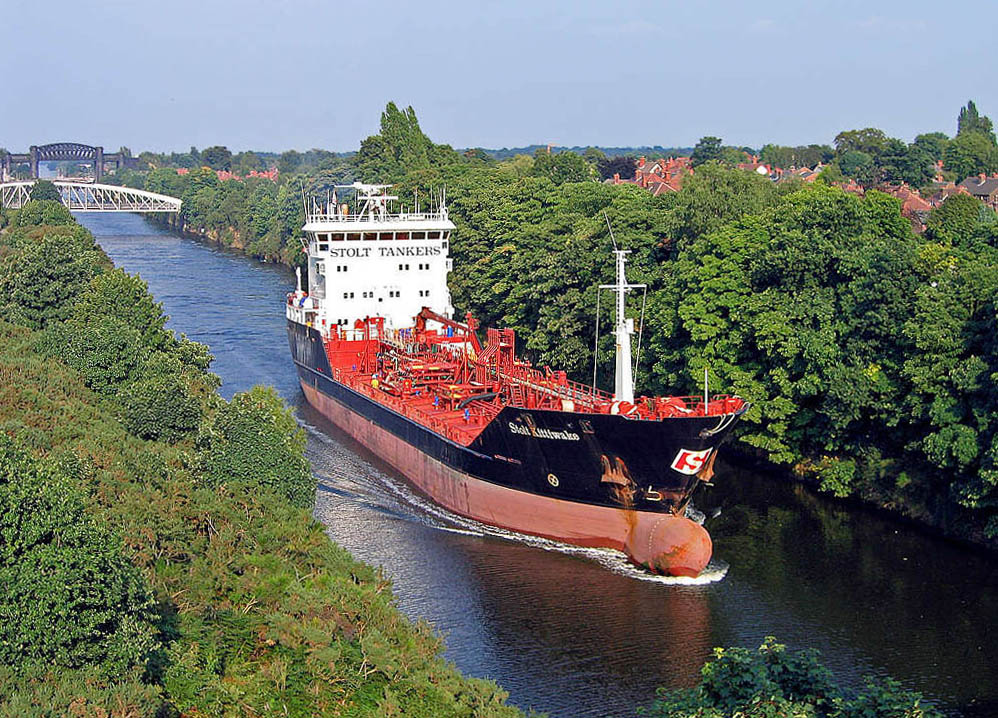
The Manchester Ship Canal is a major inland navigation in North West England, running roughly 36 miles (58 km) from the Mersey Estuary to the docks at Salford and Manchester. Opened on 21 May 1894, it converted stretches of the rivers Irwell and Mersey into a route capable of accepting seagoing vessels and, at the time of completion, was described as the largest navigation canal in the world.
Image gallery
10 Images


Overview and purpose
Built in the late 19th century to break transport bottlenecks and reduce reliance on Liverpool's docks, the canal gave the industrial city of Manchester direct maritime access and helped lower freight costs for textiles, machinery and raw materials. The navigation altered the region's geography and commerce by bringing ocean-going ships inland to what had been a landlocked industrial centre in Greater Manchester.
Design, route and features
The waterway follows a prepared channel that incorporates modified river courses and purpose-built cuts, locks, docks and quays. It was engineered to accommodate the tonnages and hull dimensions of contemporary seagoing ships, with tidal entrances and lock complexes that allow vessels to transit between estuary and inland docks. Engineering solutions also included movable structures where existing canals or roads cross the new channel.
Economic and social impact
During its peak, the canal supported heavy industry, trade and employment in the region. It reduced reliance on overland transport and spurred the development of warehouses, factories and shipping services. Over the 20th century, changing ship sizes, containerisation and competition shifted much commercial traffic away from the navigation, contributing to a decline in traditional dockside activity.
Later developments and present day
From the late 20th century the corridor has been the focus of regeneration: former docklands were redeveloped for offices, housing and leisure, and parts of the waterway are used for pleasure craft, freight on a smaller scale, and recreational access. Conservation and water-quality projects have sought to balance industrial heritage with environmental and community aims.
Notable facts
- Length: about 36 miles (58 km), linking estuary and inland docks.
- Made sections of the Irwell and Mersey navigable for larger vessels.
- Opened on 21 May 1894 and transformed Manchester into a port within Greater Manchester.
- Situated in North West England, the canal remains an important part of the region's industrial heritage.
Today the Manchester Ship Canal is remembered both for its role in the industrial revolution and as a focus for urban renewal, demonstrating how 19th-century transport infrastructure can be reimagined for modern economic and social needs.
Related articles
Author
AlegsaOnline.com Manchester Ship Canal Leandro Alegsa
URL: https://en.alegsaonline.com/art/61210