
River Mersey: geography, history and contemporary significance
Overview of the River Mersey in northwest England: its course, estuary, industrial and cultural history, ecological importance, and present-day uses.
Overview
The River Mersey is a major watercourse in north west England. It runs for about 70 miles (112 km) from its origins near Stockport in Greater Manchester to its tidal mouth at Liverpool Bay in Merseyside. For much of its length the Mersey has shaped settlement, transport and industry and for centuries formed part of the traditional county boundary between Lancashire and Cheshire; historical administrative divisions are still referenced in relation to the river’s course and estuary divide.
Image gallery
9 Images


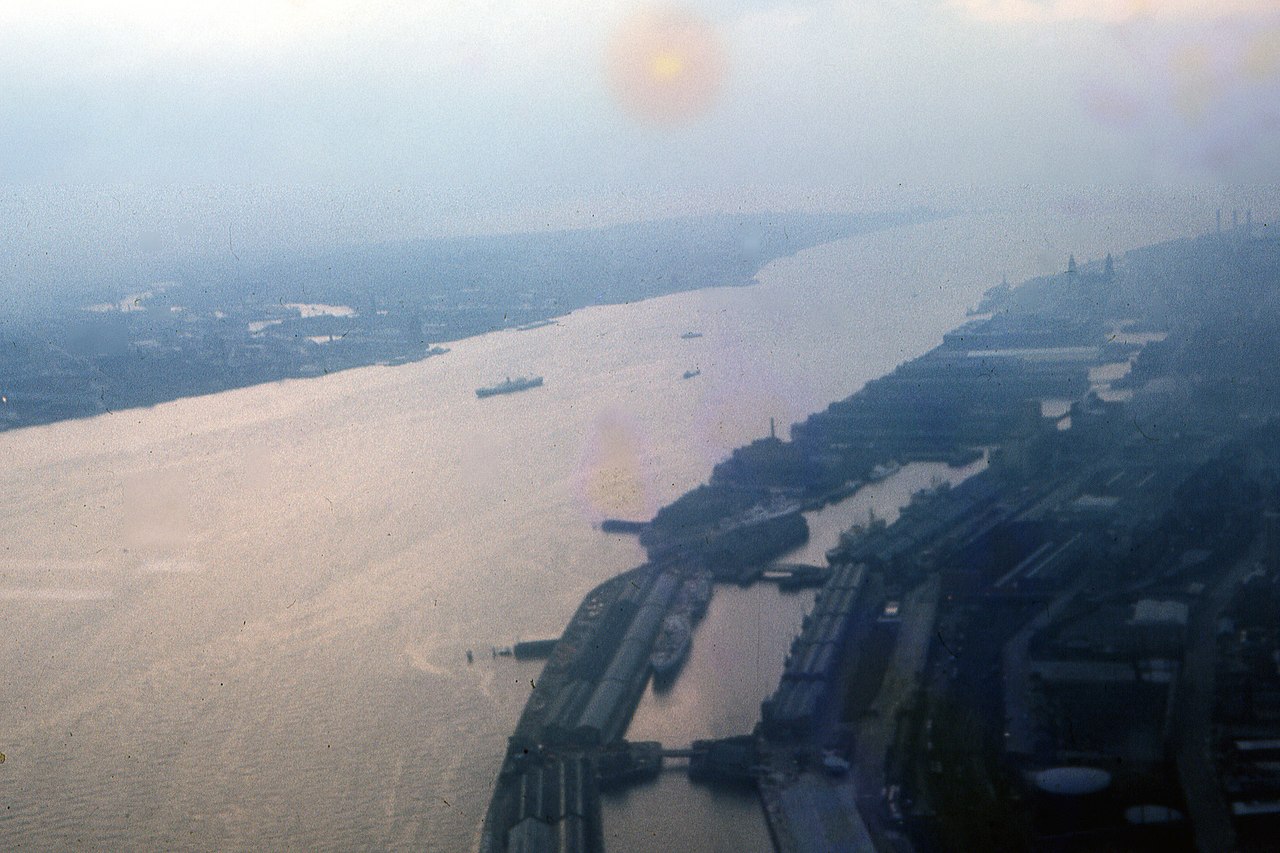


Course and physical characteristics
The Mersey begins as a network of streams and small rivers in the hills around Stockport, gathering volume as it flows west. Its channel passes through urban and semi-rural landscapes, becomes broader and tidal downstream, and opens into a wide estuary before reaching the Irish Sea. The tidal zone influences navigation, sediment patterns and ecology; the estuary is notable for strong currents, mudflats and saltmarshes that develop where river and sea meet.
Human use and economic role
Historically the Mersey supported mills, shipping and heavy industry, with Liverpool’s docks growing into an international port linked to global trade. The river corridor remains important for maritime traffic, commuter movement and leisure. Iconic services such as the Mersey Ferry and riverside promenades underline the river’s continuing role in transport and local identity.
Ecology and environment
Although intensive industrial use caused significant pollution in the 19th and 20th centuries, recent decades have seen considerable environmental improvement. Water quality has been the focus of restoration efforts, and the estuary supports a range of tidal habitats and birdlife. Conservation work aims to balance habitat protection with port activities and urban development.
Settlements and landmarks
- Stockport — near the river’s headwaters
- Warrington — a prominent town on the Mersey’s middle reaches
- Merseyside and Liverpool — the river’s estuary and major port area
Notable facts and distinctions
The Mersey is culturally significant beyond its physical size: it has inspired music, literature and local traditions and acted as a boundary between historic counties. Its estuary is valued for both industry and wildlife, making the river an enduring feature of north west England’s geography and heritage.
For further reading on specific aspects of the river’s navigation, ecology and historical role, consult regional studies and authoritative conservation sources: River Mersey, north west, England, Stockport, Greater Manchester, Merseyside, county divide, Lancashire, Cheshire.
Questions and answers
Q: Where is the River Mersey located?
A: The River Mersey is located in north west England.
Q: How long is the River Mersey?
A: The river is 70 miles (112 km) long.
Q: Where does the River Mersey start and end?
A: The river starts from Stockport, Greater Manchester, and ends at Liverpool Bay, Merseyside.
Q: What historical significance does the River Mersey hold?
A: The river has been a part of the ancient county divide between Lancashire and Cheshire for centuries.
Q: Can the River Mersey be found in other parts of the world?
A: No, the River Mersey is located only in north west England.
Q: What kind of geographical feature is the River Mersey?
A: The River Mersey is a river.
Q: Does the River Mersey flow into the sea?
A: Yes, the river ends at Liverpool Bay, Merseyside, which is a part of the Irish Sea.
Related articles
Author
AlegsaOnline.com River Mersey: geography, history and contemporary significance Leandro Alegsa
URL: https://en.alegsaonline.com/art/83117