
Makran (princely state)
Former autonomous princely state in southwest Pakistan and British India, abolished in 1955. Located in the Makran region and historically linked with Gwadar, Kech and Panjgur districts.
Overview
The Makran princely state was an autonomous political entity under colonial and early post‑colonial arrangements in South Asia. It existed as a recognized princely territory during the late British period and continued as a nominal state after the end of British rule before being integrated into Pakistan in 1955. Contemporary descriptions place its territory in the extreme southwest of present‑day Pakistan, within the coastal and desert belt historically called Makran.

Image gallery
4 Images


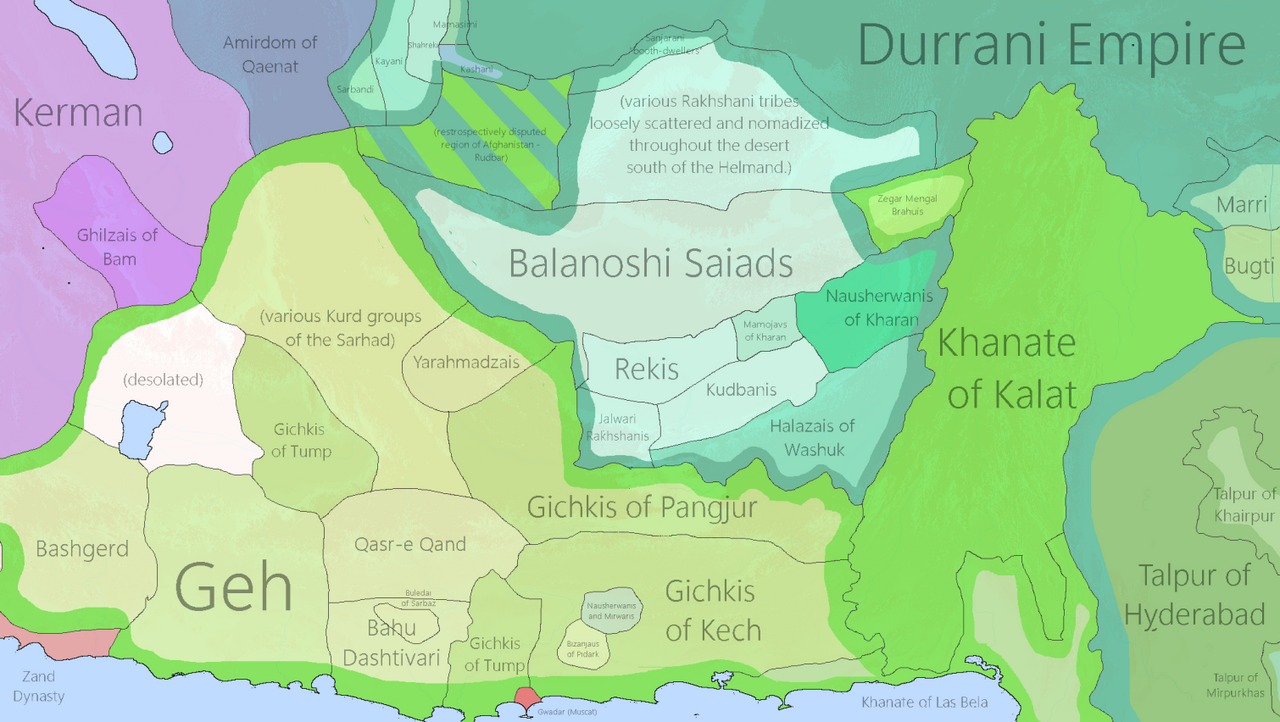
Geography and administration
Makran covered a large, sparsely populated area along the Arabian Sea characterized by arid plains, rugged hills and a long coastline. Administratively its lands correspond to modern districts commonly named today: Gwadar, Kech and Panjgur. The state's internal administration was conducted by local tribal leaders and chiefs who exercised traditional authority under varying degrees of supervision by colonial or central governments.
History and political status
During the British era the region was treated as a princely possession—an autonomous unit with its own local rulers rather than a directly administered province. The state is often described in records as a princely state of British India, which after the end of the British Raj became part of the new dominion of Pakistan. Local governance combined tribal customs and formal agreements with higher authorities, resulting in a degree of internal autonomy until mid‑20th century political reforms.

Dissolution and legacy
In 1955 the separate status of Makran ceased when the Pakistani government reorganized its western territories. The state's administrative identity was folded into larger provincial arrangements (the One Unit scheme) and its princely institutions were gradually dissolved. One notable territorial complexity was the port town of Gwadar: although the surrounding region was part of Makran, the town and immediate enclave of Gwadar remained under Omani rule until it was transferred to Pakistan in 1958. The former state's territory has continued to be important for maritime access and for the culture of the Baloch people who form the region's majority.
Notable facts and distinctions
Makran's status differed from directly administered provinces because of its princely arrangements and tribal governance. Its coastline and desert environment shaped settlement patterns and economy, and the later development of Gwadar as a strategic port has brought renewed attention to the region's historical boundaries and administrative legacy.
Related articles
Author
AlegsaOnline.com Makran (princely state) Leandro Alegsa
URL: https://en.alegsaonline.com/art/60908