
Acaena: a genus of low-growing plants in the rose family
Acaena is a genus of perennial, often mat-forming plants in the Rosaceae family. Found mainly in the Southern Hemisphere, they are notable for pinnate leaves and burr-like seed heads used for seed dispersal and groundcover.
Overview
Acaena is a genus of low-growing perennial plants in the rose family, traditionally treated as a group of small shrubs and herbs. Many species form dense mats or tufts and produce distinctive burr-like seed heads that readily cling to animals and clothing. The genus is commonly discussed in horticulture and ecology as both attractive groundcover and, in some places, an invasive colonizer. For a basic botanical reference see shrub and herb descriptions.
Image gallery
1 Image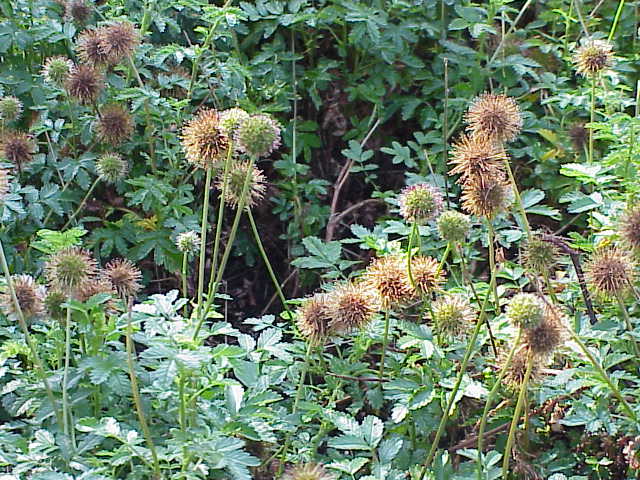
Physical characteristics
Plants in this genus typically have pinnate or compound leaves arranged near the base, with stems that creep or spread. Flowers are small and unobtrusive, usually clustered in compact heads. The most recognizable feature is the fruiting structure: hard achenes surrounded by hooked spines or burrs that promote attachment to passing animals. These burrs give several Acaena species their common names and a reputation for sticking to fabrics and fur.
Distribution and habitat
Acaena species are primarily native to temperate regions of the Southern Hemisphere, especially New Zealand, Australia, South America, and various subantarctic islands. They occupy a range of habitats from coastal sands and grasslands to alpine meadows. Local ecological preferences vary by species, with some tolerating saline or exposed conditions and others favoring moist, sheltered sites. Taxonomically they are placed within the family Rosaceae.
Ecology and seed dispersal
The burrs of Acaena facilitate epizoochorous dispersal: seeds hitch rides on animals, birds, and humans. This efficient mode of movement has enabled some species to spread widely beyond their native ranges. In natural communities these plants can help stabilize soil and provide low vegetation structure, but rapid colonizers may alter native flora composition when introduced to new regions.
Uses, management, and notable facts
Acaena species are used in horticulture as ornamental groundcovers and for erosion control because of their mat-forming habit. Gardeners value some species for texture and low maintenance, while land managers may control others where they behave invasively. Practical management strategies include regular mowing, removal of burrs before seed set, and monitoring disturbed sites.
Notable species and resources
Several species are widely referenced in literature and horticulture; a few have become naturalized outside their native ranges. For more detailed species accounts and identification guidance consult specialist floras or trusted plant databases and resources such as further reading. Observations of local populations can inform whether a species is beneficial or problematic in a particular landscape.
- Key traits: mat-forming habit, pinnate leaves, burr-like fruits.
- Ecological role: groundcover, soil stabilizer, epizoochorous disperser.
- Human concerns: ornamental use vs. invasive potential.
Related articles
Author
AlegsaOnline.com Acaena: a genus of low-growing plants in the rose family Leandro Alegsa
URL: https://en.alegsaonline.com/art/609