
Madeira River — major tributary of the Amazon in Bolivia and Brazil
The Madeira River (Rio Madeira) flows from Bolivian Andean tributaries into western Brazil and joins the Amazon. It is a key waterway for navigation, biodiversity, sediment transport and hydroelectric power.
Overview
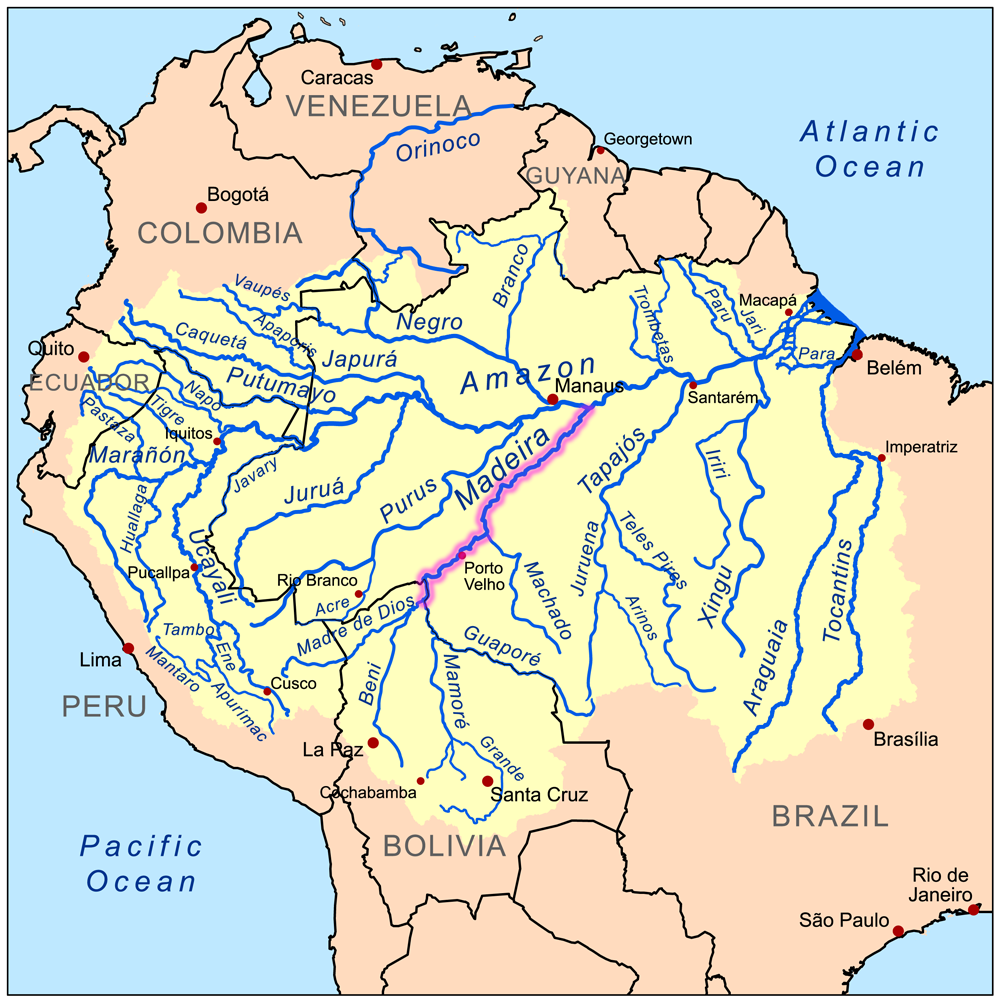
The Madeira River (Rio Madeira) is a principal tributary of the Amazon River system, running through parts of Bolivia and western Brazil. Formed by the confluence of large Andean-fed rivers, it carries substantial water volume and sediment eastward to meet the Amazon. It has long been a regional transportation artery and a focus of ecological, economic and engineering interest. For general geographic context see Madeira River in Brazil.
Image gallery
6 Images


Physical characteristics
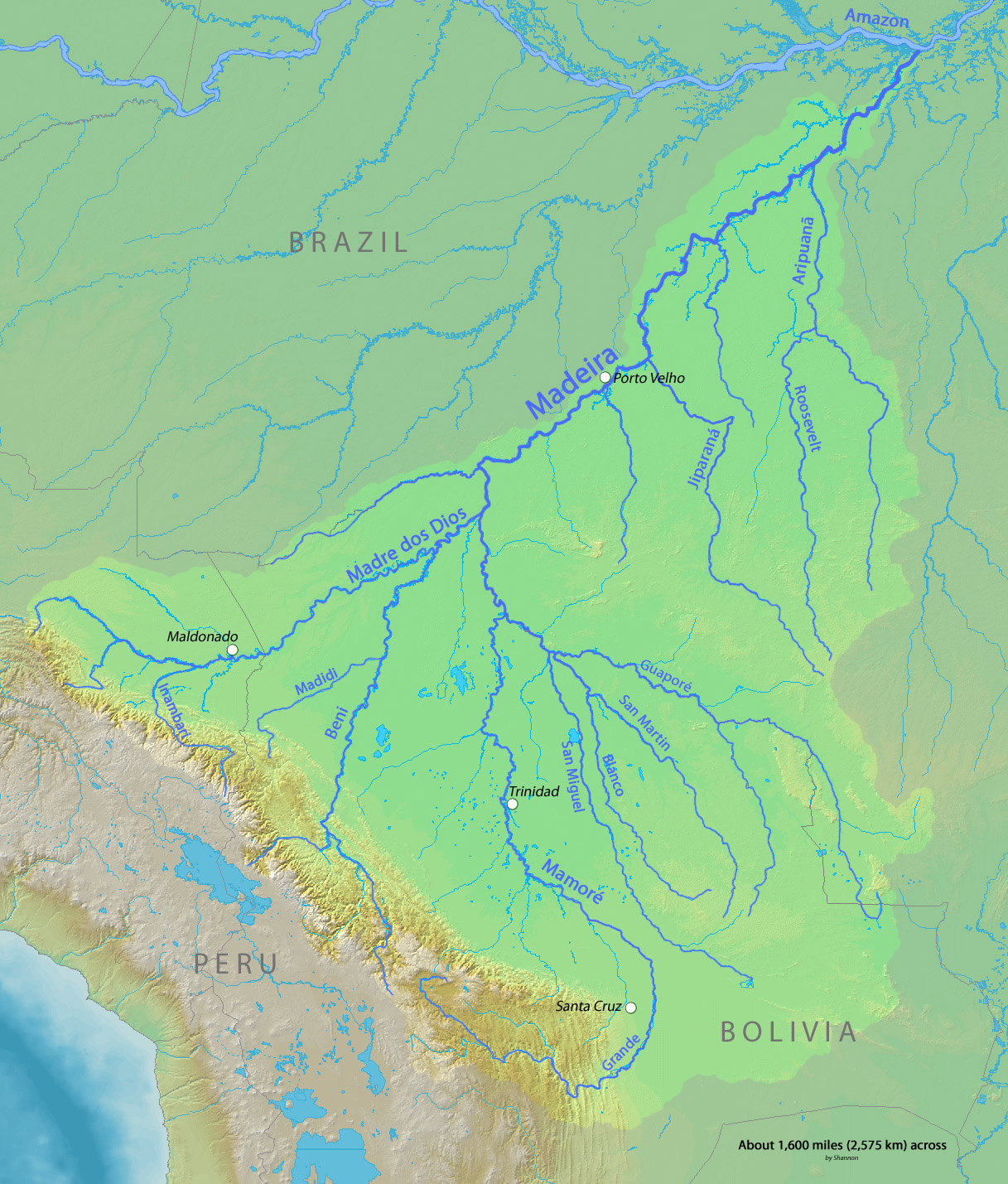
The Madeira basin collects runoff from highland Andean streams and extensive lowland forests, producing strong seasonal fluctuations in flow. The river transports heavy loads of suspended sediment and has broad floodplains (várzea) that support productive fisheries and diverse habitats. It is fed chiefly by Andean tributaries such as the Beni and Mamoré, which together form its upper reaches before it continues into Brazil. As a major feeder of the Amazon, the Madeira is widely recognized as an important tributary: see tributary information.
History and development
Indigenous peoples lived along the Madeira for millennia, relying on its fisheries and floodplain agriculture. During the 19th and early 20th centuries the river corridor was involved in exploration, resource extraction and the rubber boom. In recent decades the river has been modified by navigation improvements and large hydroelectric projects, prompting debates about environmental and social impacts. The basin also connects Bolivia to Atlantic trade routes via riverine navigation; more on Bolivia’s river access is available here.
Uses and significance
- Navigation: The river serves as a transport route for goods and people between interior regions and Amazonian markets.
- Hydropower: Large dams have been built for electricity generation, supplying regional grids while raising concerns about fish passage and habitat change.
- Biodiversity and fisheries: Floodplain lakes and channels support diverse fish assemblages important for local livelihoods.
- Geomorphology: High sediment loads influence channel form, delta development and nutrient dynamics downstream.
Notable facts and distinctions
The name "Madeira" means "wood" in Portuguese, a reminder of the dense forests historically associated with the basin. The river stands out within the Amazon network for its sediment-rich waters, pronounced seasonal swings, and its strategic role linking Andean headwaters with the Amazon mainstem. Its development continues to raise questions about balancing energy, transport and conservation priorities in one of the world's most dynamic tropical river systems.
Related articles
Author
AlegsaOnline.com Madeira River — major tributary of the Amazon in Bolivia and Brazil Leandro Alegsa
URL: https://en.alegsaonline.com/art/60453