
Macaroni
Short, hollow pasta made from wheat flour or semolina, shaped as small straight or curved tubes (elbow), used worldwide in casseroles, salads, soups and cheese dishes like macaroni and cheese.
Overview
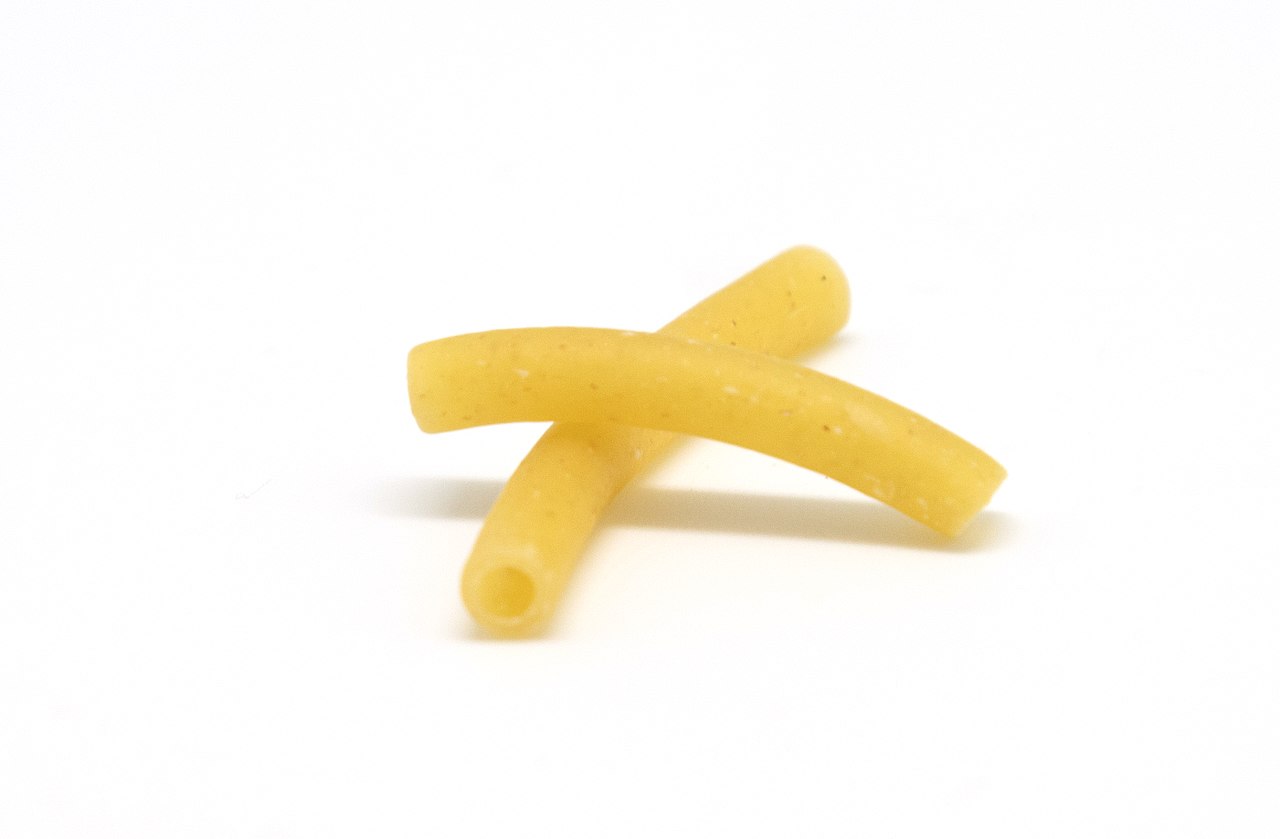
Macaroni is a class of short, tubular pasta traditionally made from milled wheat and water. It is produced in both straight and curved forms; the curved variety is commonly called elbow macaroni. As a member of the broader category of pasta, macaroni is valued for its compact shape that holds sauces and ingredients well, and for its wide use in both home cooking and industrial food products.
Image gallery
5 Images



Composition and shapes
Commercial macaroni is most often made from durum wheat semolina or refined flour, which provides a firm texture when cooked. Whole-grain versions include more bran and fiber. The basic form is a small hollow tube; surfaces can be smooth or ridged, and sizes vary from very small pieces to larger tubes intended for baking or stuffing. The tube geometry allows sauces to cling inside and around the pasta.
History and geographic notes
The name and techniques trace back to Italian pasta-making traditions and regional variations often referred to as maccheroni. Over centuries, trade and migration spread pasta beyond Italy and led to local adaptations. For instance, in Libya the term Macroona Imbakbaka refers to a spiced, sauced baked macaroni reflecting Italian influence in North Africa. Many cuisines adopted macaroni because of its portability and ease of storage.
Culinary uses and popular dishes
Macaroni is rarely eaten plain; it is typically combined with sauces, vegetables, meats or dairy. A globally recognized preparation is macaroni and cheese, a dish of pasta mixed with melted cheese. Short tubular shapes are common in soups, cold pasta salads, and baked casseroles. Choice of shape and surface—smooth versus ridged—affects how well a sauce, whether thin or thick, adheres to the pasta.
Production, cooking and nutrition
Industrial macaroni is usually extruded through shaped dies and dried for shelf stability. When boiled, it softens but may be cooked to an al dente texture to retain some firmness. Nutritionally, macaroni is primarily a source of carbohydrates and provides modest protein and B vitamins when made from durum wheat; whole-grain varieties offer more fiber and micronutrients. Salt and sauce additions change the overall nutritional profile.
Selection, storage and pairing
Buy macaroni in airtight packaging and store dry pasta in a cool, dry place to preserve texture. Pair smooth macaroni with lighter sauces and ridged or larger tubes with chunkier, creamier, or meat-based sauces. For background on grain types used in pasta, consult resources on wheat and milling methods. For notes on culinary contexts, see references about Italian cuisine and common small tube pasta forms. Many recipes discuss sauce technique and timing; basic guidance on sauce selection appears in general guides to sauces.
- Typical uses: casseroles, salads, soups, cheese dishes.
- Common forms: elbow (curved), straight short tubes, ridged variants.
- Storage: keep dry pasta sealed in a cool, dry place; check package instructions for cooking times.
Related articles
Author
AlegsaOnline.com Macaroni Leandro Alegsa
URL: https://en.alegsaonline.com/art/60274