
M4 Carbine — Compact, Modular Military Carbine in the M16 Family
Compact, gas-operated 5.56mm carbine developed from the M16 family. Widely used by U.S. forces and police, available in variants (including full-auto M4A1) and compatible with many accessories and launchers.
Overview
The M4 carbine is a compact, shoulder‑fired, gas‑operated carbine that evolved from the M16 family to meet the needs of troops operating in vehicles, close quarters, and rapidly changing environments. Chambered for the 5.56×45mm NATO (.223) cartridge, it preserves many features of the full‑size rifle while offering a shorter overall length and lighter weight for improved maneuverability. The platform emphasizes modularity and adaptability, permitting a wide range of mission‑specific configurations.
Image gallery
10 Images


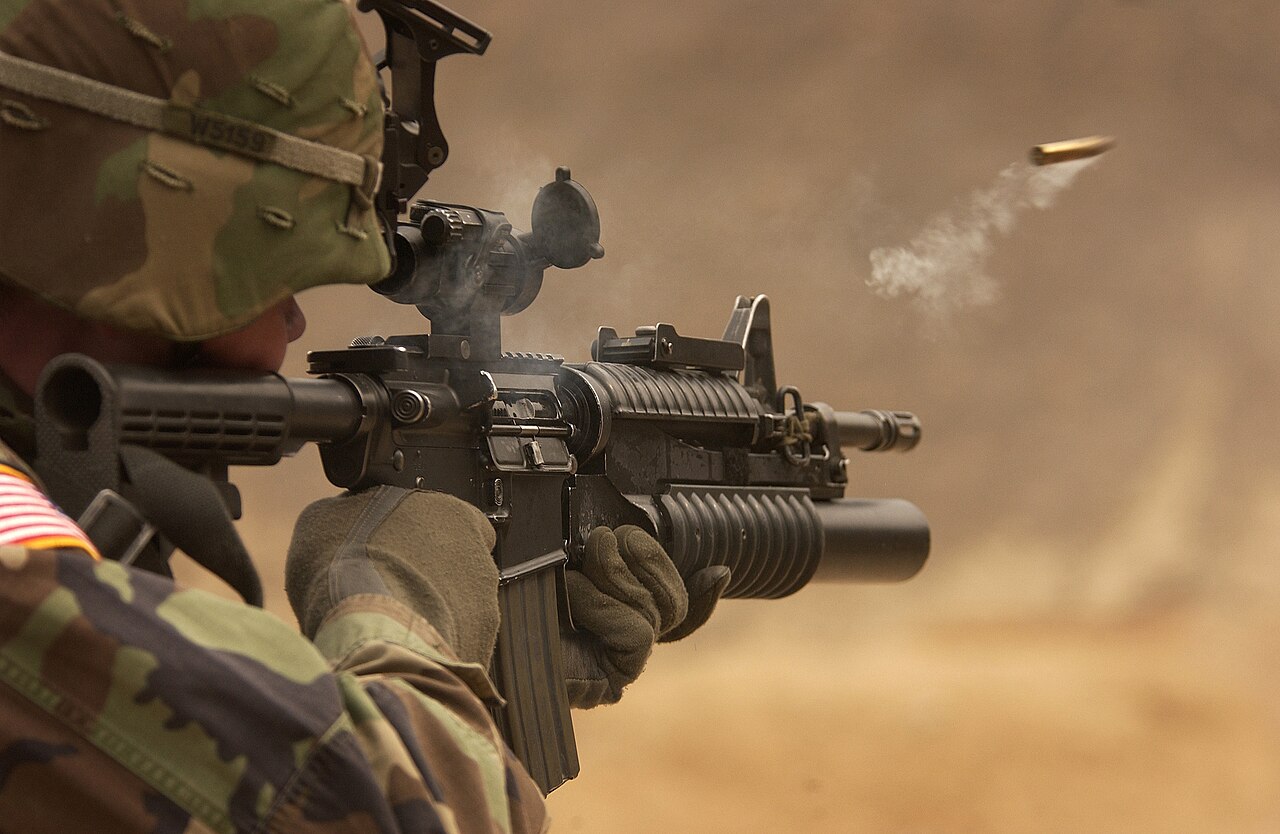


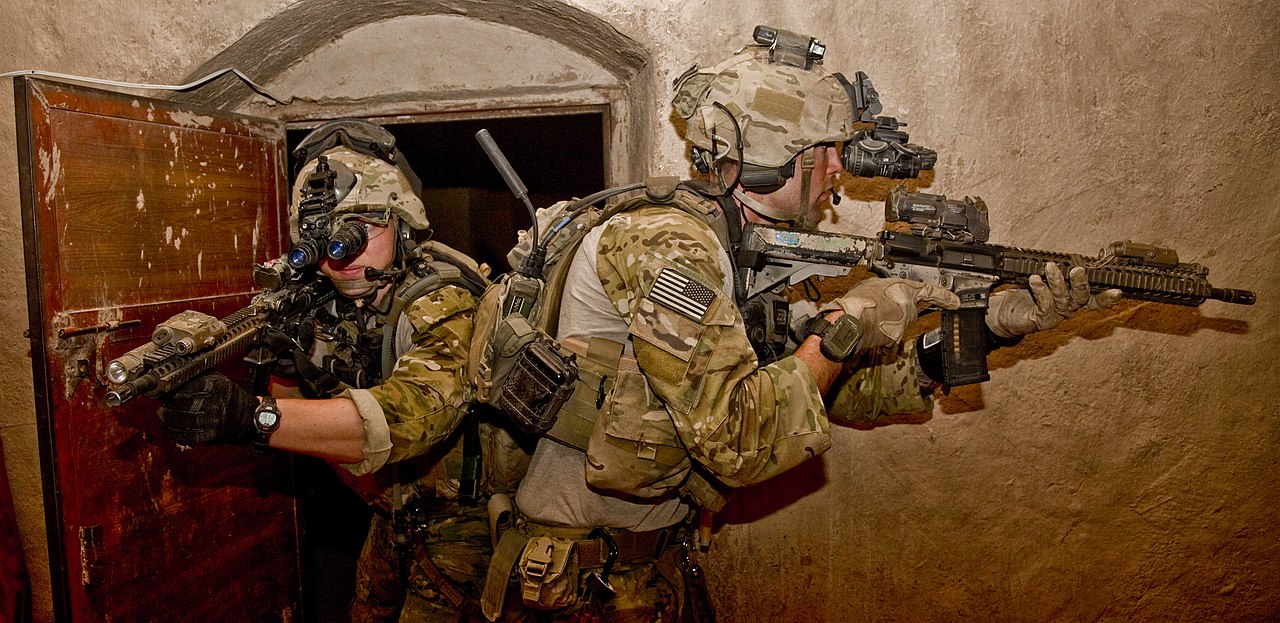


Design and basic features
The M4's design centers on a shortened barrel—commonly cited at about 14.5 inches—and a collapsible (telescoping) buttstock that allows rapid adjustment of length of pull. It uses a detachable box magazine to feed cartridges and employs a rotating bolt in a direct‑impingement, gas‑operated system in most standard variants. Many modern examples use a flat top upper receiver with a Picatinny or similar rail to accept optics and accessories, which contributes to its popularity across numerous units and services.
Firing modes and common variants
Standard M4 carbines are typically capable of semi‑automatic fire and a three‑round burst mode, while the M4A1 variant is commonly fielded with a fully automatic capability in place of the burst feature. Other variants and upgrade kits address barrel profile and length, improved gas systems, enhanced bolt and carrier components, and specialized upper receivers for different operational roles. These changes are intended to improve reliability, heat management, and sustained‑fire performance in demanding conditions.
Accessories, modularity and attachments
A defining characteristic of the M4 is its modular accessory ecosystem. Common attachments include optical and electronic sights, night‑vision and thermal devices, suppressors, laser aiming modules and illuminators, as well as underbarrel systems such as the M203 or newer grenade launchers and shotgun modules. The carbine frequently mounts forward grips, bipods, illumination devices and weapon lights to suit specific tasks. Examples of accessory types include night vision, suppressors, laser devices and telescopic sights.
Operational use and organizations
The M4 is issued widely across branches of the U.S. armed forces and to many allied militaries, special operations units and law enforcement agencies around the world. It is valued for the balance of controllable firepower, weight and short‑length handling characteristics. Some services have standardized the carbine as a primary individual weapon for a substantial portion of their personnel; in other cases it complements longer‑range rifles and designated marksman systems within infantry formations.
Underbarrel systems and secondary attachments
Underbarrel launchers and secondary attachments expand the carbine's tactical role. The M203 grenade launcher is a long‑standing example historically fitted beneath the barrel; more recent alternatives offer different ergonomics and munition compatibility. Some units also employ short shotgun modules or standalone shotguns as adjunct tools for breaching or close‑quarters requirements. See related entries for general context on the shotgun and other underbarrel systems.
Practical considerations: maintenance and field performance
Field experience and studies have highlighted the importance of scheduled maintenance, proper lubrication, and replacement parts to sustain reliability, especially under harsh environmental conditions. Barrel wear, fouling and heat buildup are common considerations for any high‑rate‑of‑fire carbine; many units therefore follow well‑defined maintenance cycles and select appropriate barrels or cooling practices to meet anticipated mission demands. Upgrade programs and service modifications have been introduced over time to address wear, ergonomics and parts commonality.
Comparisons and limitations
Compared with a full‑length rifle such as the original M16, the M4 sacrifices some effective range and muzzle velocity due to its shorter barrel, but gains handling advantages in confined spaces and mobile operations. These tradeoffs are inherent to the carbine concept: shorter, lighter weapons are easier to carry and aim at close ranges, while longer rifles retain ballistic advantages at extended distances. The term carbine describes this class of shorter rifles; the M4's lineage can be traced to the broader M16 rifle family and common small‑arms cartridges used by NATO forces.
Legal, training and procurement notes
Acquisition, distribution and authorized configurations of the M4 and its variants are typically governed by national procurement processes, military requirements and export controls. Training emphasizes safe handling, marksmanship fundamentals and mission‑specific drills for maintenance and immediate action procedures. Law enforcement agencies that adopt the carbine generally pair it with policy guidance on authorized use and appropriate force considerations.
Further reading and resources
Because the M4 platform is widely produced and supported by an extensive aftermarket, authoritative technical and historical resources are available from military publications, defense manufacturers and recognized reference works for readers who require detailed specifications or service histories. For broader context and accessory examples see sources addressing the carbine, the parent M16 rifle, standard military cartridges, as well as manufacturer and military technical documents on night vision, suppressors, laser devices, telescopic sights and related systems such as the shotgun.
Questions and answers
Q: What is the M4 carbine?
A: The M4 carbine is a shorter, lighter type of rifle used in the military that is based on the M16 rifle.
Q: How is the M4 carbine operated?
A: The M4 is a gas-operated, shoulder-fired weapon that is fed cartridges into the gun with a magazine.
Q: What is the purpose of the stock on the M4 carbine?
A: The stock on the M4 can be extended or pushed in and helps to make it easier for soldiers to use the weapon in confined spaces.
Q: What caliber bullets does the M4 carbine fire?
A: Like the other rifles in the M16 family, the M4 fires the .223 caliber, or 5.56mm NATO round.
Q: What firing modes does the M4 carbine have?
A: The M4 can be fired in two ways, either semi-automatic (which fires one bullet when the trigger is pulled) and three-round burst (which fires three bullets very quickly when the trigger is pulled). The M4A1 can fire fully automatic instead of three-round burst.
Q: What accessories can be added to the M4 carbine?
A: The M4 can be fitted with many accessories, such as night vision devices, silencers, laser pointers, telescopic sights, bipods, a shotgun, and forward hand grips.
Q: Who uses the M4 carbine?
A: The M4 carbine is widely used by the military and police officers. The United States Marine Corps has ordered its officers (up to the rank of lieutenant colonel) and staff non-commissioned officers to carry the M4 carbine instead of the M9 pistol.
Related articles
Author
AlegsaOnline.com M4 Carbine — Compact, Modular Military Carbine in the M16 Family Leandro Alegsa
URL: https://en.alegsaonline.com/art/60219
Sources
- militarytimes.com : "U.S. Army places order for 24,000 M4A1 carbines with Remington"
- colt.com : "Colt M4"
- colt.com : "Colt Weapon Systems"
- globalsecurity.org : "M4 5.56mm Carbine"
- urbandictionary.com : "m4gery"
- openjurist.org : "OpenJurist synopsis of denial of Colt's appeal to 08 Dec 2005 ruling"