
Lustenau — market town in Vorarlberg, Austria
Lustenau is a market town in Austria's Vorarlberg state, in the district of Dornbirn. Known for its Alemannic dialect, textile tradition and border location on the Rhine near Switzerland.
Overview
Lustenau (Alemannic German: Luschnou) is a market town (Marktgemeinde) in western Austria. It lies in the state of Vorarlberg (Vorarlberg) and forms part of the administrative district of Dornbirn (Dornbirn). Its location near the Rhine places it close to the Swiss border, and the town has historically been connected with cross-border trade and cultural exchange.
Image gallery
3 Images
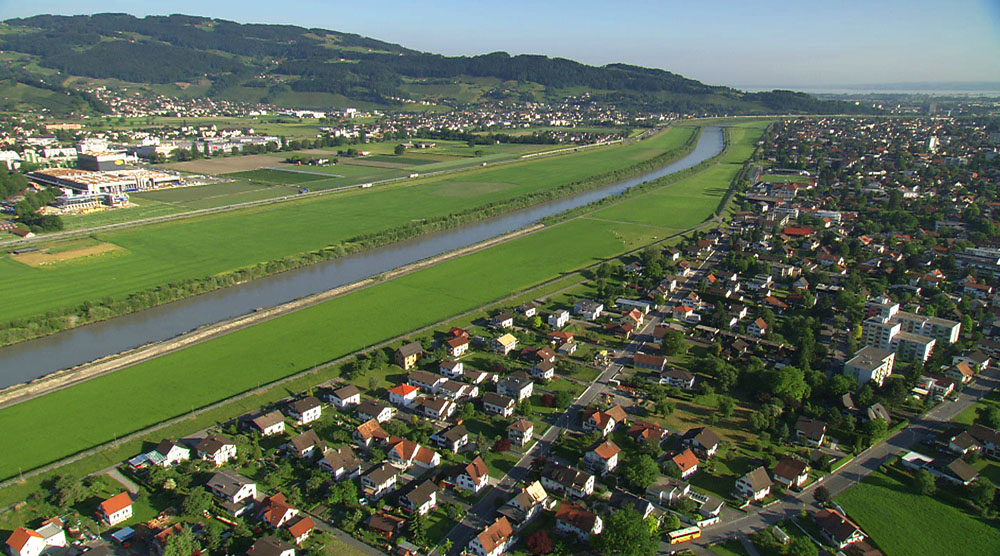

Characteristics
Lustenau is built on lowland near the river and combines residential areas with small industry and commercial zones. The town retains a distinctive Alemannic dialect and local traditions that reflect its position within the German-speaking Alpine region. Municipal governance has the status of a market town, a common local classification in Austria signifying historic market rights.
History and development
The settlement grew from rural origins into a community shaped by crafts and light industry. From the 18th to 20th centuries, textile and related manufacturing became important sources of employment; small factories and family firms contributed to local prosperity and urban growth. Lustenau's proximity to neighboring countries influenced its economy and social life during industrialization and after World War II.
Economy and culture
Today the town combines commuter residence with local business, including precision manufacturing and services. Cultural life includes local festivals, clubs and a focus on preserving dialect and customs. The town's open spaces and riverside setting make it a regional center for recreation as well as commerce.
Notable facts and distinctions
- Strong regional identity tied to Alemannic language and customs (Luschnou).
- Historic and ongoing links to the textile trade and small industry.
- Strategic position near the Rhine and the Swiss border, facilitating cross-border contacts.
- Administrative affiliation with the Dornbirn district and the state of Vorarlberg (Vorarlberg).
For visitors and researchers, Lustenau offers an example of a Central European market town whose local language, industrial heritage and borderland setting have shaped a distinct civic character.
Related articles
Author
AlegsaOnline.com Lustenau — market town in Vorarlberg, Austria Leandro Alegsa
URL: https://en.alegsaonline.com/art/59996