
Luthern
Luthern is a rural municipality in the Willisau district of the canton of Lucerne, Switzerland, known for its valley landscape, traditional farming, and low-density settlements.
Luthern is a rural municipality (municipality) in the district of Willisau and the canton of Lucerne in Switzerland. It occupies a valley setting and comprises several villages and hamlets rather than a single dense urban centre. The area is characterized by agricultural land, forested slopes and small watercourses that shape local land use and settlement patterns.
Image gallery
10 Images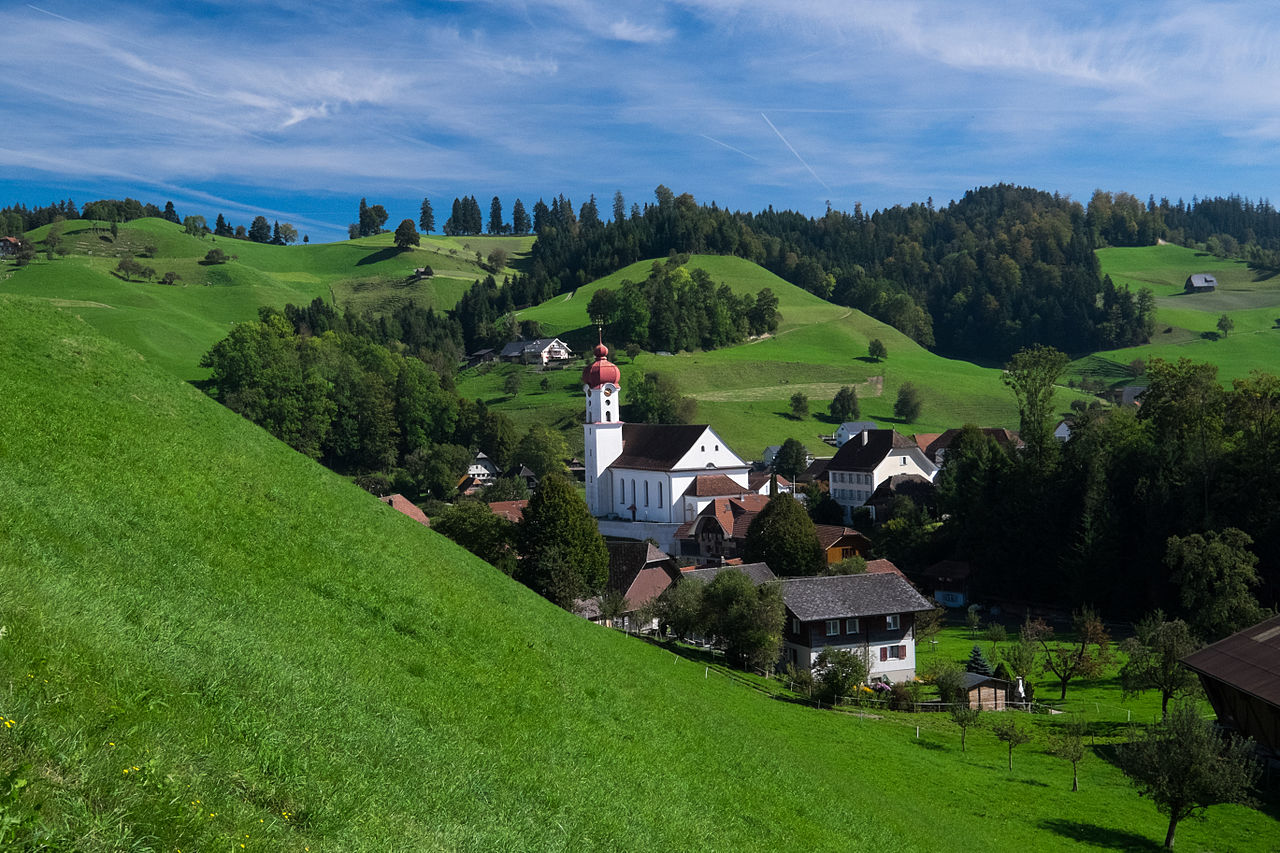


Geography and landscape
The municipality lies in a mountain-fed valley with pastures and mixed woodland on the surrounding hills. Local roads connect scattered farmsteads and village clusters. The landscape is typical of central Swiss rural municipalities, with a mosaic of fields, meadows and woodlands that support grazing and forestry. Seasonal changes and outdoor recreation are important aspects of the local environment.
History and built heritage
Luthern's roots extend back to earlier centuries when small farming communities developed in upland valleys across central Switzerland. The settlement pattern reflects long-standing agricultural traditions; older buildings include parish churches, chapels and timber-framed farmhouses that document vernacular architecture. Historical development followed the wider administrative and ecclesiastical structures of the Lucerne region.
Economy and transport
The local economy is dominated by agriculture, particularly dairy and livestock farming, together with forestry and small local enterprises. A number of residents commute to nearby towns for work and services. Public transport in such municipalities tends to be limited to regional bus links, while roads provide the principal access for private vehicles and goods.
Culture, recreation and notable features
- Traditional village festivals and parish events sustain local culture and community life.
- Outdoor activities such as hiking, nature observation and seasonal rural tourism attract visitors seeking quiet landscapes.
- Conservation of rural character and upland ecosystems is often an objective of local planning.
Administratively Luthern is governed by a municipal council and participates in cantonal structures for education, planning and social services. As with many small Swiss municipalities, it balances maintaining local traditions and landscapes with modern needs for mobility and services.
Related articles
Author
AlegsaOnline.com Luthern Leandro Alegsa
URL: https://en.alegsaonline.com/art/60017
Sources
- bfs.admin.ch : "Arealstatistik Standard - Gemeinden nach 4 Hauptbereichen"
- bfs.admin.ch : "Ständige Wohnbevölkerung nach Staatsangehörigkeitskategorie Geschlecht und Gemeinde; Provisorische Jahresergebnisse; 2018"