
Lüterkofen-Ichertswil
Lüterkofen-Ichertswil is a rural municipality in the Bucheggberg district of the canton of Solothurn, Switzerland, formed in 1961 by the merger of the villages Lüterkofen and Ichertswil.
Overview
Lüterkofen-Ichertswil is a municipality in the Bucheggberg district of the canton of Solothurn in Switzerland. The local administrative unit was established in 1961 by combining the formerly independent villages of Lüterkofen and Ichertswil. The municipality is part of the Swiss cantonal system and is represented on cantonal bodies through the structures of Solothurn and in national contexts as part of Switzerland. Official information and local services are typically published through the municipal portal at Lüterkofen-Ichertswil.
Image gallery
5 Images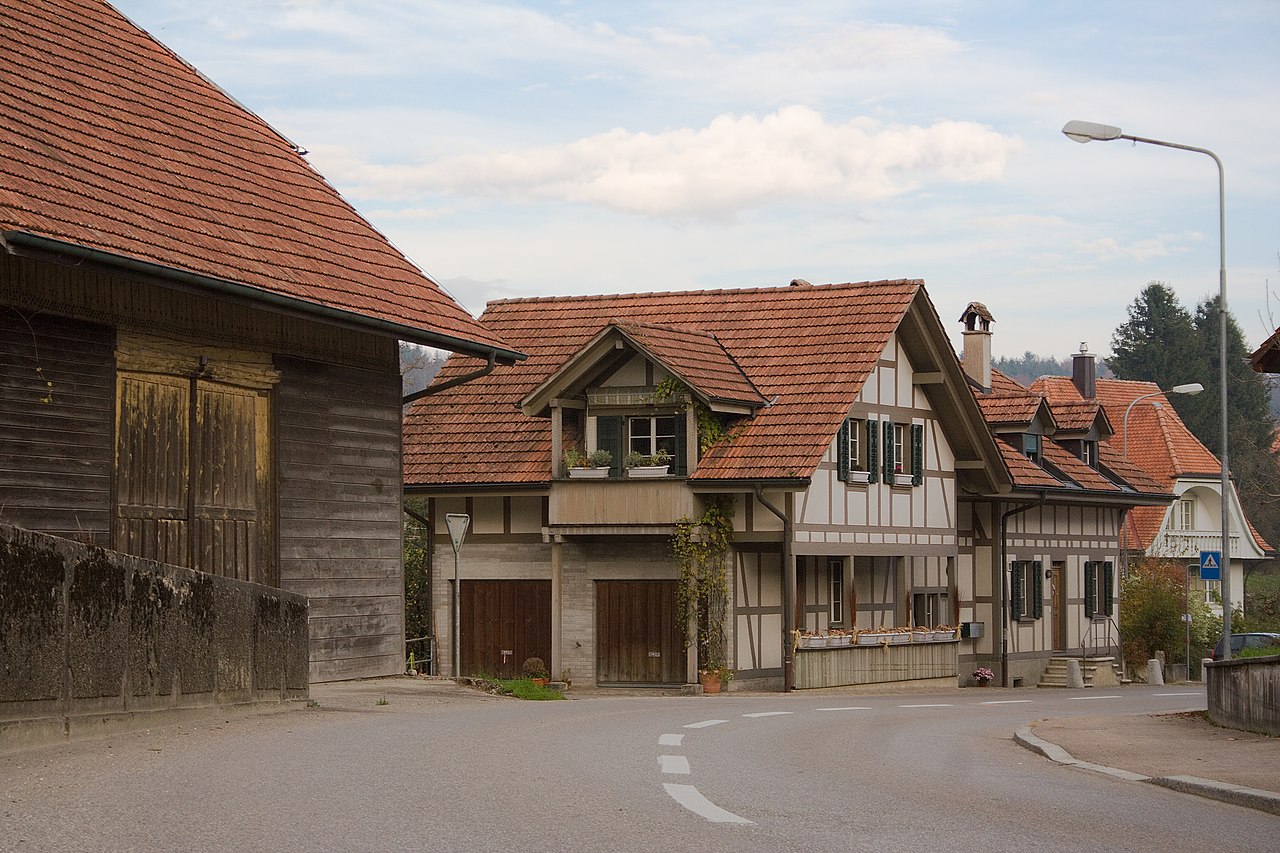


Geography and settlement
Set within the gently undulating landscape of the Bucheggberg area, the municipality displays a mix of agricultural land, small woodlands and compact village cores. The settlement pattern reflects traditional Swiss rural development: clustered houses around a church or communal square, farmsteads on the surrounding slopes and smaller hamlets linked by local roads. The terrain and climate support mixed farming and provide routes for walking and cycling.
History and development
The two villages that gave the municipality its name have long local histories as rural communities in the Swiss Plateau. Like many small Swiss localities, they were consolidated in the mid-20th century to streamline administration and public services. This municipal merger preserved local identity while creating a single council responsible for planning, schools and infrastructure.
Economy and services
The local economy is largely rural and mixed: agriculture, small enterprises, craftsmen and service providers form the backbone of economic activity. Many residents commute to larger towns and cities nearby for work, benefiting from regional transport connections and road links. The municipality provides basic services such as primary schooling, local roads maintenance and community facilities, often in cooperation with neighbouring communes.
Culture, recreation and notable facts
Cultural life in Lüterkofen-Ichertswil centres on community events, village clubs and seasonal festivals typical of Swiss rural municipalities. The area offers opportunities for outdoor recreation — walking, cycling and enjoying the countryside — and features traditional architecture and local landmarks. The municipal council preserves local traditions while adapting to modern administrative and environmental requirements.
Administration and links
- Governance: managed by a locally elected council and municipal administration.
- Collaborations: often cooperates with neighbouring municipalities for shared services.
- Information: municipal and cantonal pages provide details on services, planning and contact points (municipality, canton, national).
Related articles
Author
AlegsaOnline.com Lüterkofen-Ichertswil Leandro Alegsa
URL: https://en.alegsaonline.com/art/60001
Sources
- bfs.admin.ch : "Arealstatistik Standard - Gemeinden nach 4 Hauptbereichen"
- bfs.admin.ch : "Ständige Wohnbevölkerung nach Staatsangehörigkeitskategorie Geschlecht und Gemeinde; Provisorische Jahresergebnisse; 2018"