
Longsword (European two-handed sword)
A European two-handed sword used mainly from the late medieval to the Renaissance era, notable for its long blade and grip, varied techniques, and a rich tradition of fencing treatises and schools.
The longsword is a type of European sword characterized by a relatively long blade combined with a grip long enough for two-handed use. It was most common in the late medieval and Renaissance periods, roughly the mid-14th to mid-16th centuries, though forms and techniques appear both earlier and later. Longswords served on the battlefield, in judicial combat, and in civilian self-defence and training.
Image gallery
7 Images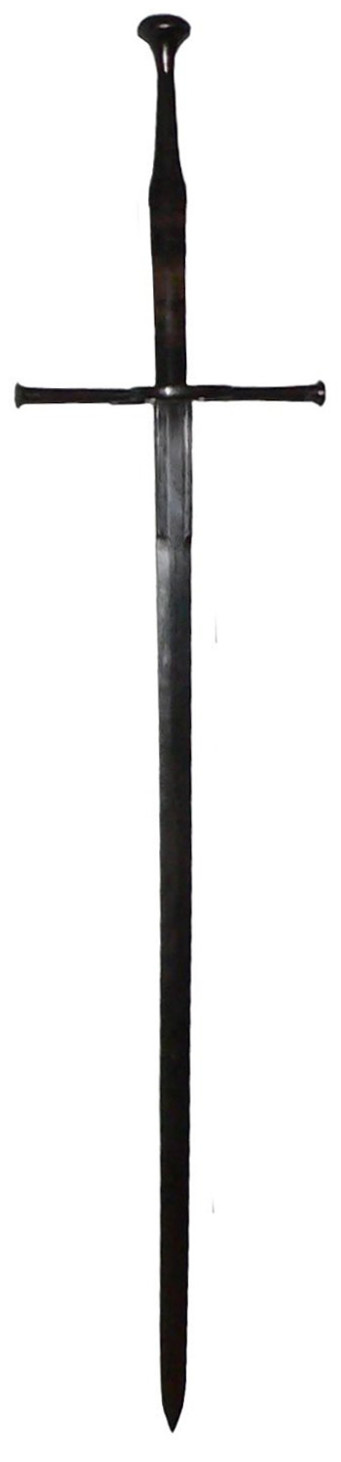


Characteristics and components
Typical features include a straight double-edged blade, a cruciform guard (crossguard) to protect the hands, and a pommel that helps balance the weapon and can be used as a striking surface. The grip is long enough to accommodate both hands, allowing leverage for powerful cuts and precise point control. Blades varied in length and cross-section depending on intended use; some were optimized for cutting, others for thrusting or armour penetration.
Parts of a longsword
- Blade – the cutting and thrusting portion, often with a fuller to reduce weight.
- Crossguard – protects the hands and can be used to bind or control an opponent's blade.
- Grip – long enough for two hands; hand placement changes tactics.
- Pommel – counterweight that aids balance and can be used offensively.
History and schools
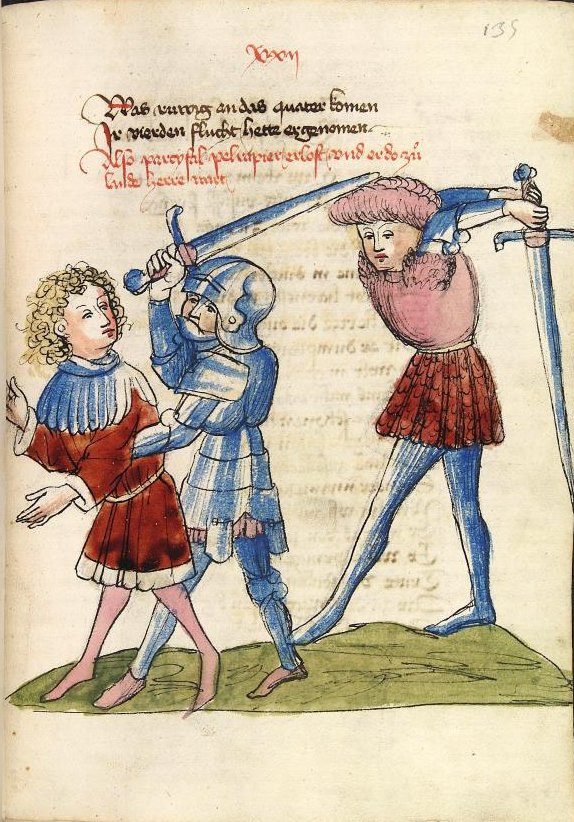
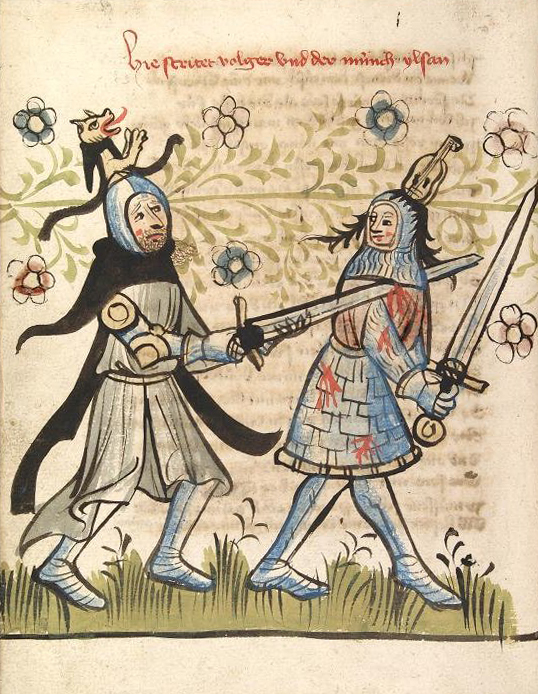
The longsword evolved from earlier arming swords and grew in prominence as fighting styles and armour changed. Treatises and manuals written by masters in the German and Italian traditions—among others—systematized techniques for guards, strikes, defenses and grappling. Surviving manuscripts from these schools form the backbone of our understanding of historical longsword use.
Use and notable techniques
Longsword fighting combines cutting and thrusting with hand-and-arm mechanics that exploit the two-handed grip. Common techniques include wide cuts, precise thrusts, half-swording (gripping the blade for close work against armour), winding and binding the opponent's blade, and the mordhau or pommel strike where the sword is used like a hammer. Footwork, timing and measure are central to effective use.
Legacy and distinctions
The longsword is distinct from shorter one-handed arming swords and from very large two-handed 'greatswords' by its balance of reach, manoeuvrability and control. Interest in the longsword has been revived by modern historical European martial arts (HEMA) practitioners who study period manuals and practice reconstruction drills. For overviews and facsimiles of period manuals, see primary sources and instructional resources such as specialist treatises.
Related articles
Author
AlegsaOnline.com Longsword (European two-handed sword) Leandro Alegsa
URL: https://en.alegsaonline.com/art/59140