
LNER electric units (Tyneside EMUs)
Electric multiple units ordered by the London and North Eastern Railway in 1937 for Tyneside suburban services; articulated trainsets plus motor parcel and luggage vans for Newcastle to North/South Shields routes.
Overview
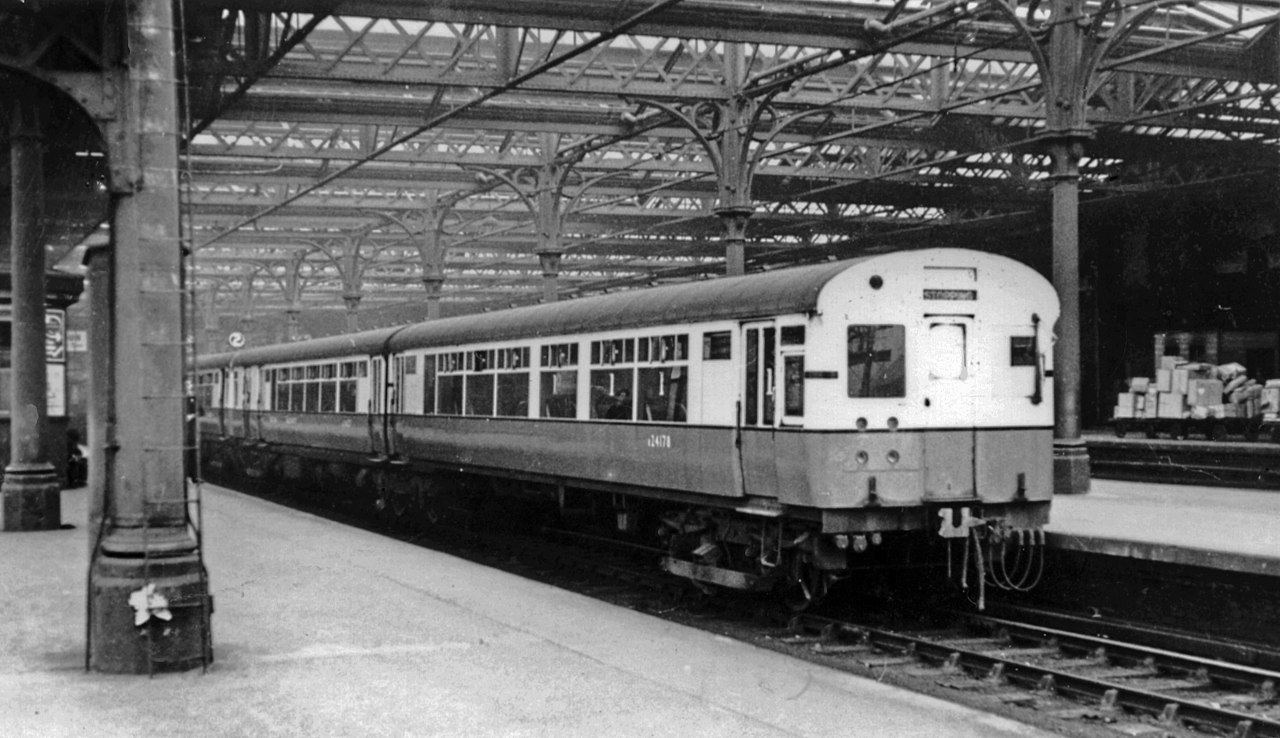
In 1937 the London and North Eastern Railway placed an order for a new fleet of articulated electric multiple units designed to operate on the Tyneside suburban network linking Newcastle upon Tyne with coastal termini at North Shields and South Shields. The purchase covered not only passenger EMUs but also a number of single-unit motor parcel vans and motor luggage vans intended to support mixed passenger and freight requirements on short-distance commuter services.
Image gallery
2 Images
Design and characteristics
These trains followed the multiple-unit principle allowing several vehicles to be controlled from one driving cab. The articulated configuration meant adjacent cars shared a common bogie or were semi-permanently coupled, improving stability and reducing weight compared with a string of fully independent vehicles. The units were built for the local electric supply and signals used on the Tyneside routes and emphasised rapid boarding, durable interiors and frequent-stop reliability rather than long-distance comfort.
Fleet components and features
- Articulated passenger sets configured for suburban commuting, with simple seating and multiple doors for fast dwell times.
- Single-unit motor parcel vans used to convey time-sensitive parcels and light freight alongside passenger trains.
- Motor luggage vans intended for larger items and for use where dedicated parcels facilities were required.
- Multiple-unit control systems permitting flexible train lengths to match demand.
Operational history
The new stock entered service on short, frequent runs between city and coastal termini, where quick acceleration and braking were important. The presence of parcel and luggage vans reflected the mixed nature of suburban services in the period, supporting commuters, coastal visitors and small-scale freight movements. Over subsequent decades these units formed part of the suburban fleet until postwar changes in traffic patterns, infrastructure investment and later fleet renewals led to their gradual replacement.
Importance and legacy
Although not unique in the history of British electrification, the LNER's 1937 order is notable for combining articulated passenger EMUs with single-unit motor vans, showing an integrated approach to suburban operations. The trains illustrate mid-20th-century priorities for urban and suburban rail: durability, turn-around efficiency and mixed passenger/freight capability. For further technical or historical context see general references on British EMU development and regional Tyneside electrification efforts (electric multiple unit studies).
Notable distinctions
Key points that distinguish these units include their articulated construction, which reduced weight and improved ride quality on frequent-stop services, and the inclusion of purpose-built parcels and luggage motor vans—an arrangement that made the fleet versatile for the needs of both passengers and local commerce.
Related articles
Author
AlegsaOnline.com LNER electric units (Tyneside EMUs) Leandro Alegsa
URL: https://en.alegsaonline.com/art/58706