
Lockheed U-2 (Dragon Lady) high-altitude reconnaissance aircraft
High-altitude, single-seat reconnaissance aircraft developed by Lockheed in the 1950s. Used for imagery, signals intelligence and scientific research; notable for long wings, high ceiling, and decades of operational service.
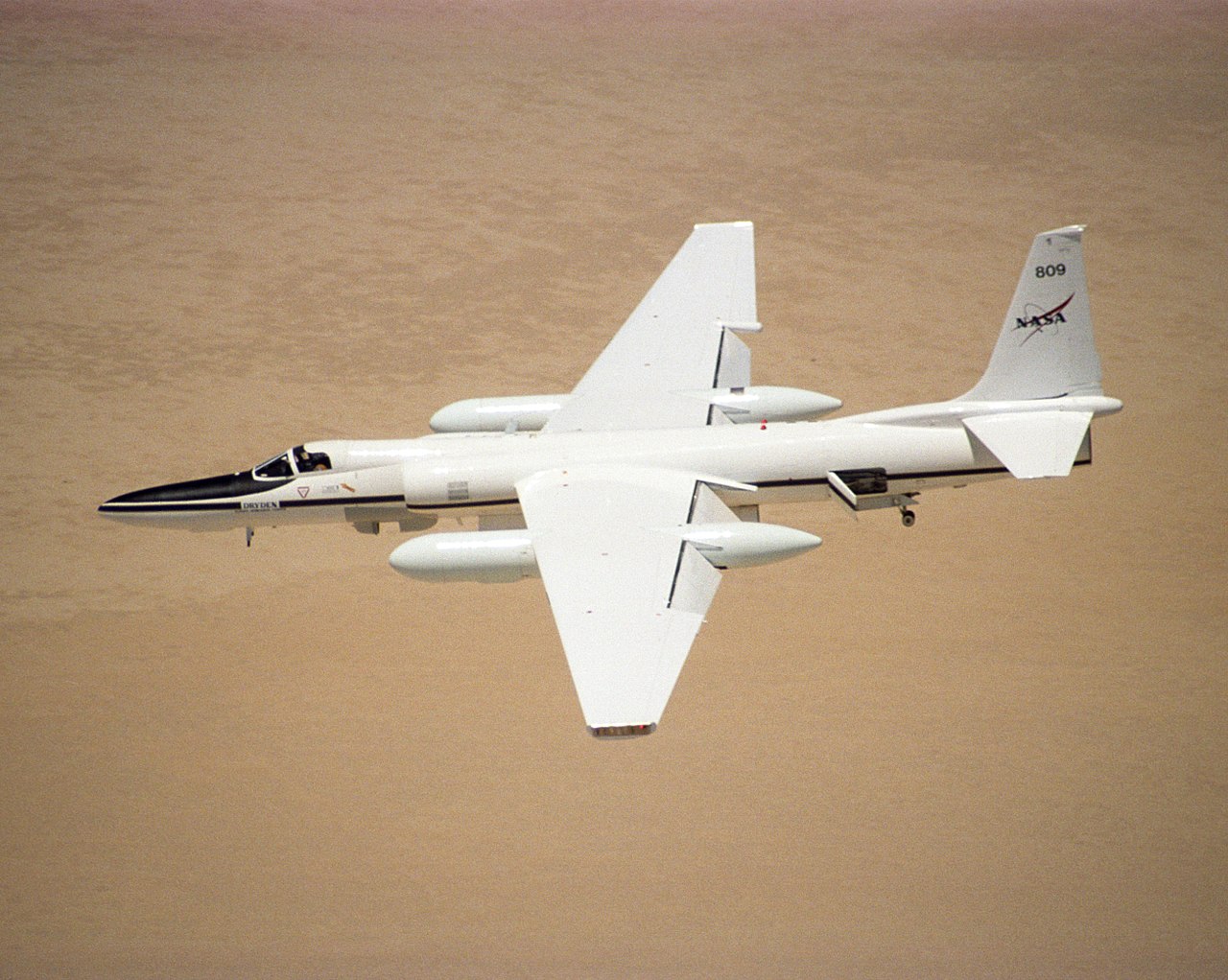
Overview: The Lockheed U-2, commonly called the "Dragon Lady," is a high-altitude, single-seat reconnaissance aircraft developed by Lockheed's Advanced Projects Group in the 1950s to meet strategic intelligence needs during the Cold War. The type first flew in the mid-1950s and entered operational service before the end of that decade with the United States. Its long, slender wings and light airframe give it flight characteristics often compared to a glider, enabling a high operational ceiling and long on-station endurance for photographic, electronic and radar sensors.
Image gallery
10 Images




Design and mission equipment
The U-2 is a fixed-wing, single-seat platform that carries modular sensor packages to perform optical imaging, synthetic-aperture radar, signals intelligence and other specialized missions. As a fixed-wing aircraft optimized for thin-air performance, it relies on a large wingspan and efficient aerodynamic design to remain aloft at extreme altitudes where thin air reduces drag but places unique demands on structure and pilot life-support. Pilots wear full-pressure suits similar to those used in spaceflight, and many U-2 sorties employ aerial refueling to extend range and mission duration.
Development and Cold War operations
Conceived to provide strategic imagery beyond the reach of many interceptors and early radar systems, the U-2 rapidly became central to U.S. aerial reconnaissance. It provided critical photographs and data that affected policy decisions during key crises. A U-2 flight played a decisive role in identifying missile installations during the 1962 Cuban crisis, an episode that demonstrated the value of high-resolution aerial imagery. The aircraft's role during the Cold War led to encounters with increasingly capable air defenses.
Notable incidents
The program's secrecy ended dramatically on May 1, 1960, when pilot Francis Gary Powers was downed over the Soviet Union by a surface-to-air missile system reported as the SA-2. The incident triggered a major diplomatic crisis and eventually led to an exchange of prisoners. As sensor, engine and aircraft technologies evolved, other reconnaissance platforms—such as the SR-71 Blackbird and orbital satellites—assumed some strategic roles, but the U-2 retained unique advantages for certain tasks.
Operators, roles and adaptations
While primarily a U.S. asset, variants and operations have included assistance to allied governments; for example, the Republic of China (Taiwan) operated and benefited from U-2 reconnaissance in regional surveillance tasks focused on the mainland (China). Over its long service life the U-2 has been upgraded repeatedly with modern avionics, improved sensors and communications systems to keep pace with changing mission requirements. Its ability to carry large, reconfigurable payloads and return timely, high-resolution imagery has kept it relevant alongside satellites and unmanned systems.
Operational qualities, limitations and procedures
The U-2's principal strengths are its high-altitude reach, long endurance and flexibility in payload configuration. Limitations include vulnerability if forced into lower-altitude flight envelopes by weather or threat conditions, and the aircraft's demanding handling characteristics during takeoff and landing due to its glider-like wing loading. Typical operational procedures evolved to mitigate these challenges: specialized training, the use of a chase vehicle to assist in landings, and reliance on aerial refueling to avoid transit at lower, more vulnerable altitudes.
Legacy and continued use
Nicknamed the "Dragon Lady," the U-2 is noted both for its iconic appearance and for a Cold War legacy that continues into the present day. The platform has been adapted for scientific missions, including high-altitude atmospheric research, illustrating the versatility of a manned aircraft able to carry heavy, reconfigurable sensor suites and to return imagery and data rapidly to analysts. Despite being designed more than half a century ago, program updates and operational changes have allowed the U-2 to remain in service, demonstrating considerable operational longevity.
- U2 (band) — unrelated musical act with a similar name
- Espionage and intelligence-gathering applications
- Design considerations for long-endurance, high-altitude fixed-wing aircraft
- Program continuity under Lockheed Martin stewardship
Note: This article summarizes broadly known aspects of the Lockheed U-2. For detailed technical data, operational records and program histories consult authoritative official histories and technical publications produced by air forces, defense organizations and recognized research institutions.
Questions and answers
Q: What is the U-2?
A: The U-2 is an espionage fixed-wing aircraft made by Lockheed (now Lockheed Martin).
Q: When was the U-2 first introduced?
A: The U-2 was first introduced in 1957.
Q: Why was the U-2 made?
A: The U-2 was made during the Cold War, because the United States needed a way to look at the Soviet military from high up. Taiwan also used it to spy on China.
Q: What happened on May 1, 1960 involving the U-2?
A: On May 1, 1960, Francis Gary Powers was shot down in his U-2 by a Soviet SAM SA-2 missile.
Q: What happened to Francis Gary Powers after he was shot down in his U-2?
A: In 1962, Powers was released and traded for captured Soviet spy Rudolf Abel.
Q: What is the SR-71 Blackbird?
A: The SR-71 Blackbird is another aircraft that was used to spy on the Soviet Union after the U-2 incident. It was faster and harder to see on radar.
Q: Is the U-2 still in service?
A: Yes, the U-2 is still in service even though the design is over 50 years old.
Related articles
Author
AlegsaOnline.com Lockheed U-2 (Dragon Lady) high-altitude reconnaissance aircraft Leandro Alegsa
URL: https://en.alegsaonline.com/art/58784
Sources
- commons.wikimedia.org : Lockheed U-2
- airforce-technology.com : "U-2 High-Altitude Reconnaissance Aircraft"
- aerospaceweb.org : "Aerospaceweb.org - Aircraft Museum - U-2 Dragon Lady"
- military.com : "Military and Veteran Benefits, News, Veteran Jobs"
- militaryfactory.com : "Lockheed Martin U-2 Dragon Lady High-Altitude Reconnaissance Aircraft / Spyplane - United States"