
Locust
Locusts are a swarming phase of certain short-horned grasshoppers (Acrididae) that can form large, migratory bands or swarms and cause major agricultural damage. This article summarizes biology, impact, uses, and management.
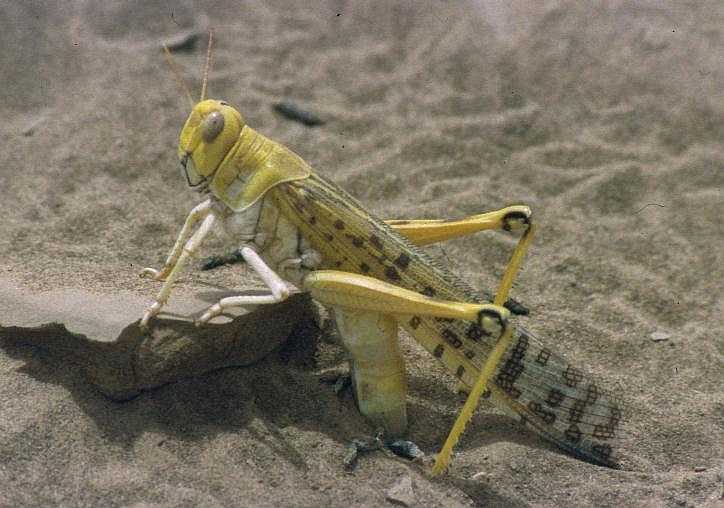
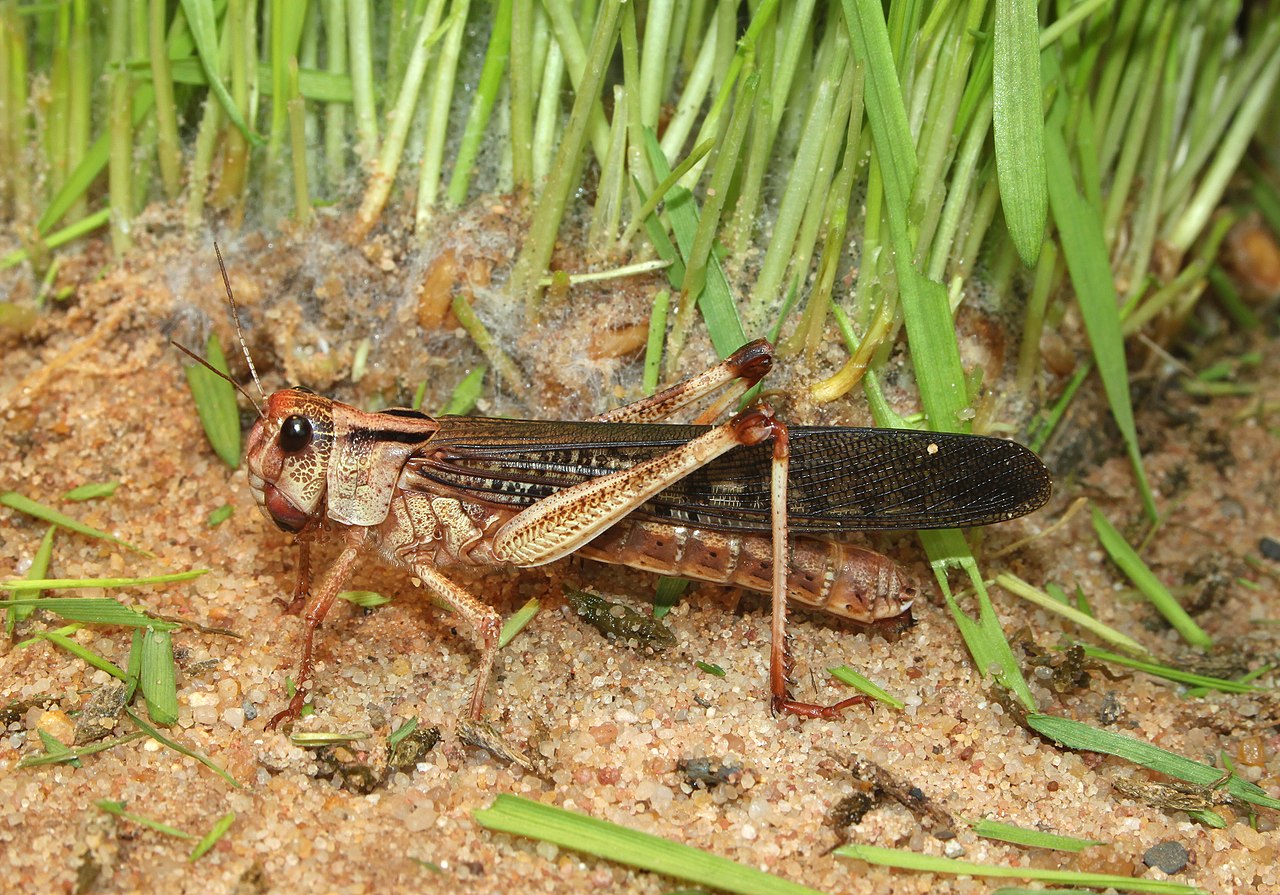
Locusts are the gregarious, swarming phase of some species of short-horned grasshoppers. In their solitary state these insects behave like ordinary grasshoppers, but when environmental conditions and population density trigger a behavioral change they enter a migratory, group-living phase often called the swarming phase. Many of the species that show this transition belong to the family Acrididae, and their swarms can contain vast numbers of individuals that travel together and feed on vegetation.
Image gallery
10 Images






Biology and lifecycle
Locusts exhibit phase polyphenism: the same species can have a solitary form and a gregarious form. Dense populations and repeated contact among individuals stimulate physiological and behavioral changes. Nymphs (wingless young) commonly move together in ground-level bands before developing into winged adults; these nymph bands and adult swarms are highly mobile. The migratory locust is a well-known example of a species that regularly forms such gregarious populations (migratory locust), and descriptions often mention nymphal bands as a distinctive stage (nymphs).
Impact on people and ecosystems
When locusts aggregate they can rapidly consume large quantities of green plant material, stripping fields, pastures and natural vegetation. This can have severe effects on food production and livelihoods where outbreaks occur; affected farmers may lose crops and forage in a short period. The adults are capable of sustained flight and can disperse over long distances in search of food, leading to sudden and widespread damage to crops. Historical and regional accounts describe occasional extreme outbreaks, and there is scholarly discussion about the past existence and local disappearance of unusually large forms of these insects (origin and extinction).
Uses, culture and perception
Locusts appear in human culture in several ways. They are edible insects in many traditions and are eaten as a protein source in parts of Africa, the Middle East, and Asia; culinary use is sometimes described as a delicacy (edible insects). Locust swarms also feature prominently in literature and religious texts: for example, the Book of Joel in the Old Testament contains vivid passages about locust plagues, and modern readers may consult such accounts for cultural context (Book of Joel).
Management and notable facts
Preventing and controlling locust outbreaks relies on surveillance, rapid response and integrated approaches that combine monitoring, habitat management and, where necessary, targeted control. Typical measures include early detection of developing bands, localized control of nymphs before they disperse, and coordinated regional action to limit spread. Some additional points of interest:
- Not all grasshopper species become locusts; only certain species show the density-dependent switch to gregarious behavior.
- Swarming locusts can alter local ecosystems by removing plant cover and changing food availability for other species.
- Research continues into environmentally sensitive control methods and prediction systems to reduce the human and ecological costs of outbreaks.
For summaries and further reading consult specialized resources and monitoring programs that track locust populations and advise on management strategies. See also linked subjects throughout this article for more focused information.
Questions and answers
Q: What are locusts?
A: Locusts are the swarming phase of certain species of short-horned grasshoppers in the family Acrididae.
Q: What kind of damage do locusts do?
A: Locusts do a lot of damage to the places where they pass, by eating the crops.
Q: Why do locusts become migratory?
A: Locusts become gregarious and migratory when their populations become dense enough.
Q: What are the two forms of locusts?
A: The two forms of locusts are bands as nymphs and swarms as adults.
Q: How do locusts move from one place to another?
A: Both the bands and the swarms of locusts are nomadic and rapidly strip fields and greatly damage crops.
Q: What do locusts feed on when they travel long distances?
A: The adults are powerful fliers, and they can travel great distances, consuming practically all green material wherever the swarm settles.
Q: Are locusts edible?
A: Locusts are edible insects and considered a delicacy in some countries throughout history.
Related articles
Author
AlegsaOnline.com Locust Leandro Alegsa
URL: https://en.alegsaonline.com/art/58802
Sources
- dx.doi.org : 10.1016/j.cub.2008.02.029
- nationalzoo.si.edu : "Edible Insects"