
Ligament: structure, function, types, injuries and clinical significance
A ligament is a band of fibrous connective tissue that connects bones or cartilage at joints. This article explains composition, mechanics, common injuries, healing, and clinical considerations.
In human anatomy, a ligament is a short band of dense fibrous tissue that stabilizes and supports the skeleton by connecting one bone to another or to cartilage. Ligaments are distinct from structures such as muscles and tendons: tendons attach muscle to bone, while ligaments link skeletal elements together. Because they lie at joints, ligaments are essential to normal movement and to preventing excessive or damaging motions.
Image gallery
2 Images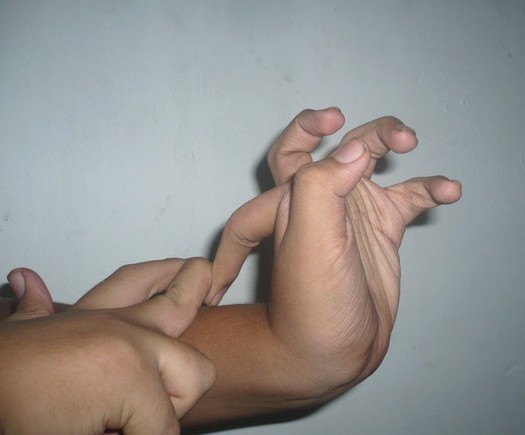

Structure and composition
Microscopically, ligaments consist primarily of bundles of long, parallel collagen fibers embedded in a small amount of ground substance and populated by fibroblasts. The dominant protein is collagen, which gives ligaments high tensile strength, while smaller amounts of elastin and proteoglycans contribute to flexibility and shock absorption. As a form of connective tissue, ligaments have relatively low blood supply compared with muscles, so their capacity to repair after injury is limited and often slow.
Function and biomechanics
Ligaments serve several mechanical and sensory roles. Mechanically, they stabilize the joint, guide normal motion, and limit ranges of movement that could harm tissues. Biomechanically they are viscoelastic: under load they resist stretch but exhibit time-dependent elongation (called creep) and can partially return to length when unloaded. Functionally they also contain nerve endings that contribute to proprioception—information about joint position and movement—complementing signals from muscles and muscles-related receptors.
Types and common examples
Ligaments are often categorized by location and relationship to a joint: capsular ligaments are thickened parts of a joint capsule; extracapsular ligaments lie outside the capsule; intracapsular ligaments are enclosed within it. Well-known examples include the anterior cruciate ligament (ACL) and posterior cruciate ligament (PCL) inside the knee, and the medial collateral ligament (MCL) on the knee's inner side. Their size, orientation, and fiber arrangement vary to match the mechanical demands placed on each joint.
Injury, healing and treatment
Sprains are the common term for ligament injuries and range from mild overstretching to complete tears. Because of limited vascularity, healing is often protracted and may leave the ligament lengthened or lax, which can cause joint instability. Management options depend on severity and location: rest, immobilization, physiotherapy, and progressive strengthening are typical for partial injuries, while complete ruptures—especially of weight-bearing joints—may require surgical repair or reconstruction to restore stability.
Clinical and practical considerations
Ligament health is important for athletes and the general population. Repeated overstretching can increase laxity, and age-related changes reduce elasticity and increase injury risk. Preventive measures include strength training, balanced conditioning, and neuromuscular exercises that enhance proprioception. In orthopedics and sports medicine, accurate diagnosis (clinical exam and imaging) guides interventions aimed at preserving joint function and preventing long-term problems such as chronic instability or degenerative joint disease.
- Key roles: stabilization, motion limitation, proprioception
- Typical composition: collagen fibers and fibroblasts (fibres)
- Common problems: sprains, tears, chronic laxity
For more detailed anatomical descriptions and illustrations, consult specialized sources and clinical guidelines via reputable resources such as educational anatomy texts or professional medical references (bone anatomy, cartilage structure, anatomy overviews, connective tissue, collagen biology, fiber organization, joint mechanics, muscle interactions, tendon differences).
Questions and answers
Q: What is a ligament?
A: A ligament is a band of tough fibrous connective tissue made of long, stringy collagen fibres that joins bones to other bones or cartilages.
Q: What is the function of ligaments in a joint?
A: Ligaments join bones to other bones to form a joint and limit the amount of movement in a joint, or stop certain movements altogether.
Q: Do ligaments connect muscles to bones?
A: No, ligaments do not connect muscles to bones; that is the function of tendons.
Q: Are ligaments elastic?
A: Ligaments are only slightly elastic; when under tension, they gradually lengthen.
Q: Why should dislocated joints be set as quickly as possible?
A: Dislocated joints should be set as quickly as possible because if the ligaments lengthen too much, then the joint will be weakened.
Q: What is the purpose of stretching exercises for athletes, gymnasts, dancers, and martial artists?
A: The purpose of stretching exercises for these individuals is to lengthen their ligaments, making their joints more supple.
Q: What is the result of a broken ligament?
A: The result of a broken ligament can be instability of the joint. Not all broken ligaments need surgery, but if surgery is needed to stabilise the joint, the broken ligament can be joined.
Related articles
Author
AlegsaOnline.com Ligament: structure, function, types, injuries and clinical significance Leandro Alegsa
URL: https://en.alegsaonline.com/art/57919
Sources
- en.wiktionary.org : ligament · web.archive.org