
Lead(II) sulfate (plumbous sulfate)
Lead(II) sulfate (PbSO4) is a sparingly soluble white crystalline lead salt. It occurs naturally as anglesite, forms in lead–acid batteries, and is a toxic heavy‑metal compound requiring careful handling.
Overview
Lead(II) sulfate is an inorganic salt with the chemical formula PbSO4. It consists of Pb2+ cations and sulfate anions (SO4 2−). The compound is commonly called plumbous sulfate and is notable for its low solubility in water and its occurrence as a secondary mineral. For basic references see chemical compound descriptions and resources about lead and sulfate ions. The lead in this salt is in the +2 oxidation state, often discussed in texts on oxidation states and coordination chemistry (oxidation state).
Image gallery
4 Images
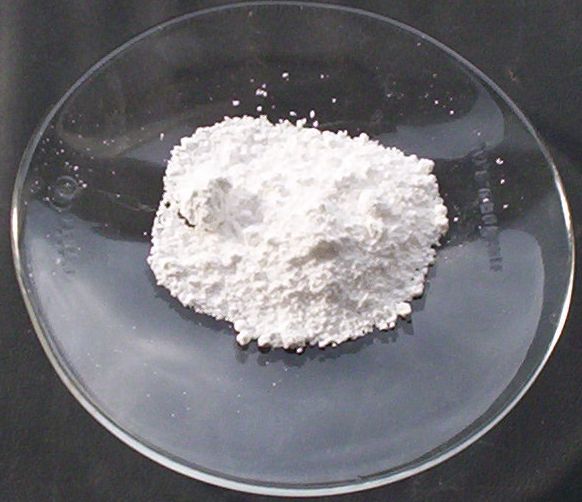


Physical and structural characteristics
Pure lead(II) sulfate is normally white or colorless as a crystalline solid, though impurities can impart different hues. Crystallographically it is associated with the mineral anglesite and commonly forms orthorhombic crystals. Its low solubility in water and many aqueous media is a defining chemical property that influences how it behaves in natural and industrial contexts.
Formation and reactions
PbSO4 forms when soluble lead salts encounter sulfate ions and precipitate. In industry and laboratories it is produced by mixing a soluble lead(II) salt with a sulfate source, causing the insoluble sulfate to separate. On heating, lead(II) sulfate can decompose to yield lead oxides and gaseous sulfur oxides; under reducing conditions different lead sulfides or oxides may form instead.
Uses and importance
Its most familiar practical role is in lead‑acid batteries: during discharge the active materials on both electrodes are converted to lead(II) sulfate, and charging reverses that transformation. Outside batteries, PbSO4 has limited commercial use because of lead toxicity, but it appears as a reagent in some laboratory procedures and as a collector specimen for mineralogists.
Health, environmental impact and distinctions
Lead compounds are toxic; inhalation, ingestion, or long‑term exposure can cause serious health effects. Because PbSO4 is poorly soluble, it is less readily mobilized in water than some other lead salts, but it still represents an environmental hazard when present in soils, paints, or corrosion products. It should be handled with appropriate protective measures and disposed of according to hazardous‑waste regulations. Lead(II) sulfate should be distinguished from lead sulfide (PbS), lead carbonates, and organolead compounds, which have different properties, appearances, and risks.
Key properties and common contexts
- Formula: PbSO4; ionic composition: Pb2+ and SO4 2−.
- Appearance: typically white crystalline solid; mineral form anglesite.
- Solubility: sparingly soluble in water; precipitates from solutions containing Pb2+ and SO4 2−.
- Practical context: prominent in the chemistry of lead‑acid batteries and in corrosion products of lead objects.
Related articles
Author
AlegsaOnline.com Lead(II) sulfate (plumbous sulfate) Leandro Alegsa
URL: https://en.alegsaonline.com/art/56754