
Lead(IV) acetate (lead tetraacetate)
Lead(IV) acetate, Pb(C2H3O2)4, is a plumbic acetate used as a powerful organic oxidizing reagent. It cleaves vicinal diols and effects acetoxylation but is highly toxic and now less commonly used.
Lead(IV) acetate, commonly called lead tetraacetate or plumbic acetate, is an organometallic salt with the formula Pb(C2H3O2)4. It is classified as a chemical compound containing lead in the +4 oxidation state; the metal center is coordinated by four acetate groups. In contrast to the more familiar lead(II) acetate, this compound functions as a strong oxidizing agent and has quite different reactivity.
Image gallery
2 Images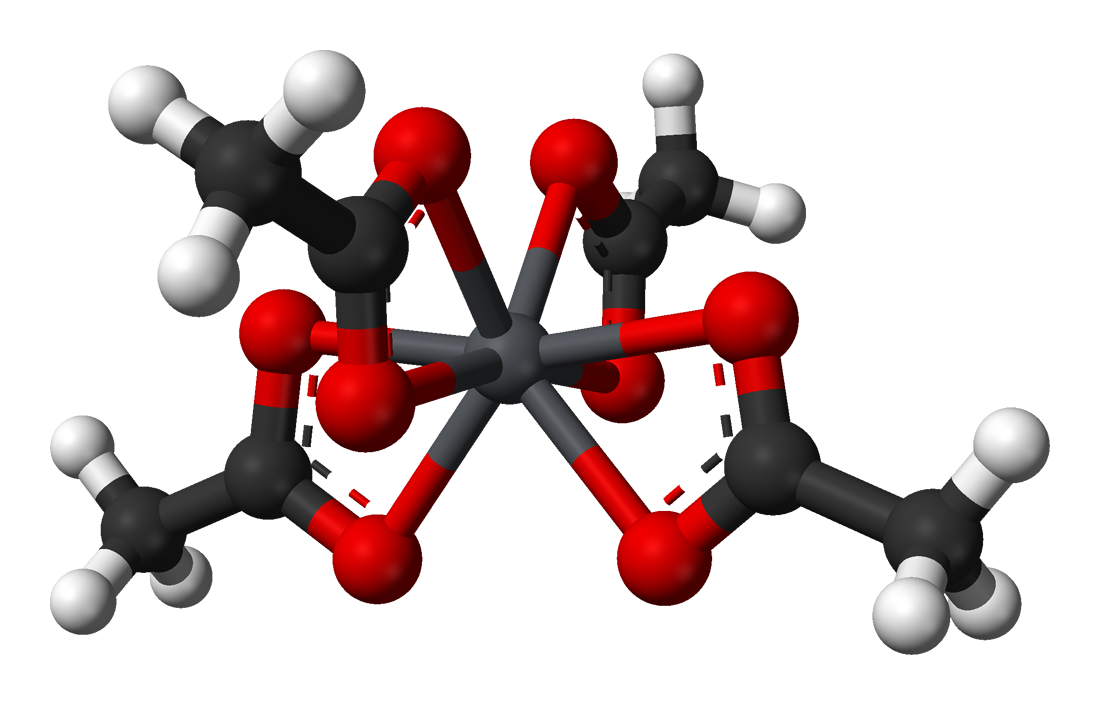

Properties and structure
Lead(IV) acetate is typically encountered as a pale crystalline solid that dissolves in common organic solvents and in acetic acid. Its reactivity is tied to the high oxidation state of lead, which makes the compound an effective electron acceptor in a variety of transformations. The acetate ligands stabilize the plumbic center while also serving as sources of acetoxy groups in some reactions.
Preparation and history
Historically, lead(IV) acetate has been prepared by oxidation of lead(II) salts or by treating lead dioxide with acetic acid or acetic anhydride. It became widely used in 20th‑century organic chemistry for functional group interconversions and oxidative cleavage, though its use has declined because of safety and environmental concerns associated with lead compounds.
Uses in organic chemistry
Its principal applications are as an oxidant and acetoxylating reagent. A well-known reaction is the oxidative cleavage of vicinal diols to form carbonyl compounds; it can also introduce acetoxy groups into alkenes and other substrates. For these roles it has been a convenient reagent in synthesis, especially before the development of many modern, less toxic alternatives.
Safety, environmental impact, and alternatives
Lead(IV) acetate is highly toxic and should be handled with strict precautions: gloves, eye protection, and fume hood are required, and wastes must be managed as hazardous lead-containing material. Because of lead toxicity and regulatory pressures, many chemists now prefer reagents such as periodic acid derivatives or other oxidants that avoid heavy‑metal residues.
Related compounds and notable distinctions
- Compare with lead(II) acetate, a different salt in which lead is in the +2 state and which has markedly different chemical behavior. See general notes on lead and on acetate chemistry for background.
- For general terminology about charged species see ions, and for oxidation numbers and their significance consult oxidation state references.
Questions and answers
Q: What is lead(IV) acetate?
A: Lead(IV) acetate is a chemical compound that contains lead and acetate ions.
Q: What is the chemical formula of lead(IV) acetate?
A: The chemical formula of lead(IV) acetate is Pb(C2H3O2)4.
Q: What is the oxidation state of lead in lead(IV) acetate?
A: The lead in lead(IV) acetate is in its +4 oxidation state.
Q: What is another name for lead(IV) acetate?
A: Lead(IV) acetate is also known as plumbic acetate.
Q: What are the constituent ions of lead(IV) acetate?
A: Lead(IV) acetate contains lead and acetate ions.
Q: Is lead(IV) acetate a simple or a complex compound?
A: Lead(IV) acetate is a complex compound as it contains both metal and non-metal ions.
Q: What is the chemical composition of lead(IV) acetate?
A: The chemical composition of lead(IV) acetate is 1 atom of lead, 8 atoms of carbon, 12 atoms of hydrogen, and 8 atoms of oxygen.
Related articles
Author
AlegsaOnline.com Lead(IV) acetate (lead tetraacetate) Leandro Alegsa
URL: https://en.alegsaonline.com/art/56757