
Le Mans Cathedral (Saint-Julien) — overview, architecture and history
Le Mans Cathedral (Cathédrale Saint-Julien) in Le Mans, France, combines a Romanesque nave with a Gothic choir, houses the tomb of Saint Julien, and shows architectural links to Bourges, Reims and Chartres.
Overview
Le Mans Cathedral, known in French as Cathédrale Saint-Julien du Mans, is the principal historic church of the city of Le Mans. It is dedicated to Saint Julien, who is traditionally regarded as the first bishop of the town; his tomb lies within the building and remains an object of local veneration. The cathedral is notable for the coexistence of two major medieval styles: a heavy, rounded Romanesque nave and a later, vertically oriented Gothic choir.
Image gallery
9 Images


Architecture and notable features
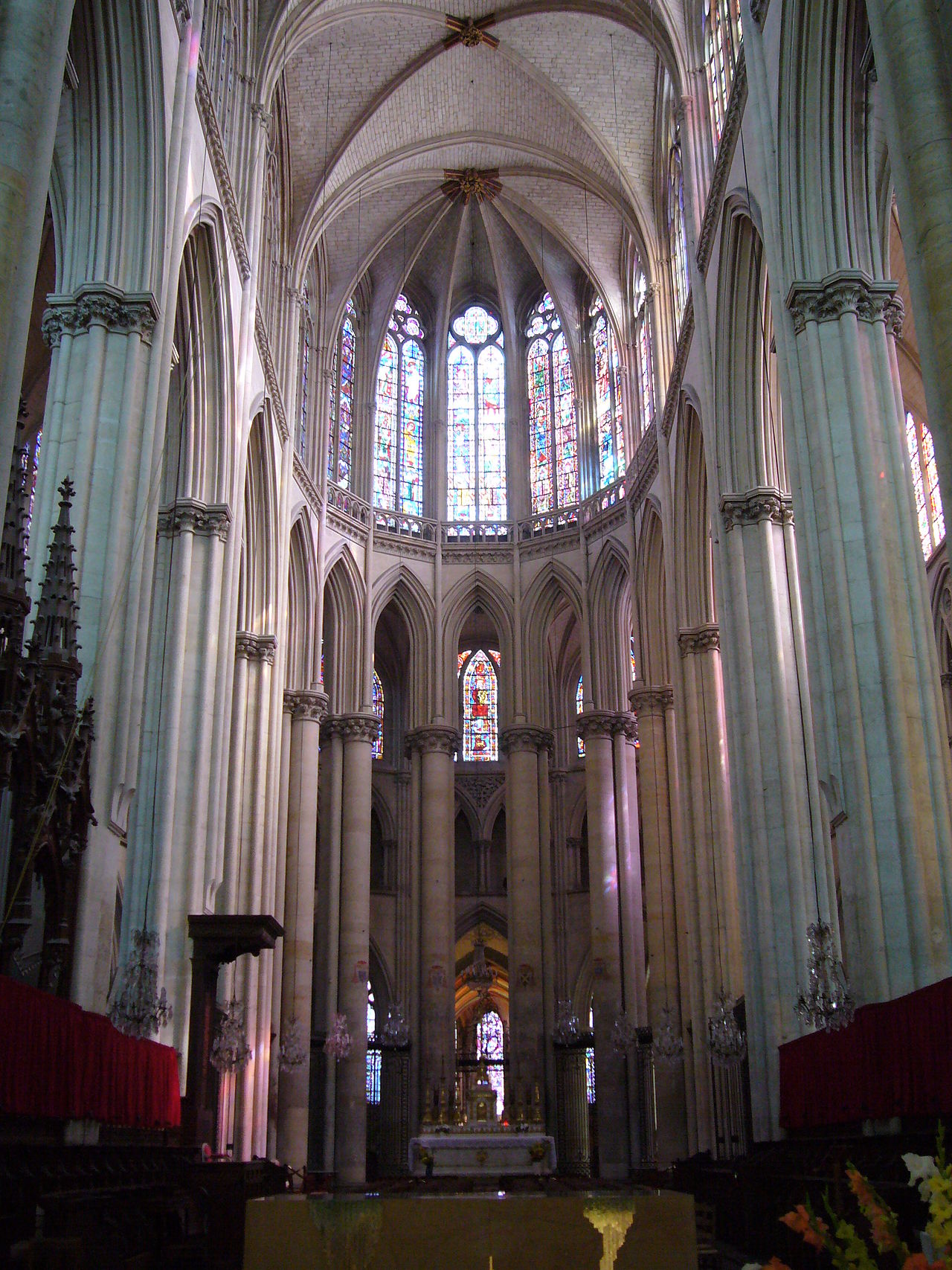
The building presents a striking contrast between the older nave and the rebuilt choir. The nave retains the massing and rounded arches associated with the Romanesque tradition, while the choir and much of the eastern end were rebuilt in the Gothic manner, with pointed arches, ribbed vaults and enlarged openings. The nave exhibits thick piers, lower lighting levels and a sense of horizontal solidity; by contrast the choir seeks height and light through its fenestration and vaulting.
- Romanesque nave: heavy masonry, semicircular arches and robust supports that reflect early medieval structural practices.
- Gothic choir: increased use of ribs, flying buttress principles in the overall plan and larger clerestory windows allowing more daylight into the eastern end.
- Decorative programs: notable stained-glass ensembles and carved stonework that survive in varying degrees from different building phases.
History and construction phases
Like many medieval cathedrals, Le Mans developed over several centuries. Early Christian and Romanesque fabric was retained, adapted or strengthened when Gothic building techniques became dominant. The transition from Romanesque to Gothic reflects broader changes in liturgy, patronage and construction technology across medieval France. Builders at Le Mans were aware of and influenced by major contemporary projects elsewhere; in particular the cathedral shows links of style and idea to the great schools of cathedral building, including the influence of Bourges.
Stained glass, sculpture and interior fittings
The cathedral's windows and sculptural decoration contribute importantly to its character. Surviving stained glass, some restored or replaced over time, illustrates biblical themes and the pictorial vocabulary common to medieval ecclesiastical art. Stone carving appears in capitals, portal decoration and funerary monuments; these elements offer evidence of changing tastes and workshops that worked at Le Mans across generations.
Tomb of Saint Julien and liturgical role
The dedication to Saint Julien and the presence of his reputed tomb have shaped the cathedral's role as both a diocesan seat and a site of local devotion. The building continues to serve as a place for worship and diocesan ceremonies, while also attracting visitors interested in medieval architecture and art.
Significance and comparisons
Scholars and visitors often compare Le Mans with other major French cathedrals such as Reims and Chartres because of its ambitious eastern glazing and sculptural programs, yet its preserved Romanesque nave gives it a distinct profile. The combination of regional tradition and the adoption of innovations from prominent centers created a singular monument in western France that illustrates how medieval cathedrals evolved rather than being the result of a single unified campaign.
Conservation, study and visiting
Conservation and study of the cathedral remain ongoing: interventions over the centuries have altered parts of the fabric and later restorations have aimed to stabilise and interpret historic features for the public. Visitors can appreciate the building's layered history by moving from the sombre Romanesque nave into the illuminated Gothic choir. Further information and organised visits are typically provided by local heritage authorities and cathedral staff; for introductory resources see general references and guides available through institutional channels such as the cathedral's French name page or municipal and tourism outlets connected with Le Mans.
Further reading and resources
Readers interested in comparative medieval architecture may consult surveys of French Gothic and Romanesque art that discuss links between Le Mans and centres like Bourges and the great cathedrals of Reims and Chartres. For ecclesiastical history, introductory materials on Saint Julien and diocesan development provide context. Architectural terms and parts of the church, such as the nave and Romanesque features, are explained in general reference works on medieval construction and liturgy (Romanesque studies).
Related articles
Author
AlegsaOnline.com Le Mans Cathedral (Saint-Julien) — overview, architecture and history Leandro Alegsa
URL: https://en.alegsaonline.com/art/56603