
Laurel wreath: history, symbolism and modern uses
A circular crown of bay laurel leaves with roots in classical Greece and Rome; symbolizes victory, honor and scholarship and appears in ceremonies, heraldry, academia and design.
The laurel wreath is a circular crown traditionally made from the branches and leaves of the bay laurel plant (Laurus nobilis). Its fragrant, glossy foliage and evergreen habit (evergreen) made it a durable and prestigious emblem in antiquity. The wreath is normally worn on the head, forming a simple crown whose appearance evokes natural authority and ceremonial dignity.
Image gallery
9 Images





Botanical basis and construction
A true laurel wreath uses flexible young shoots of bay laurel: stems are bent and interlocked so the circular form holds without rigid supports. In modern decorative versions makers sometimes fix leaves to wire frames or use imitation foliage. Bay laurel is aromatic and evergreen, with lance-shaped leaves that distinguish it from similar green crowns made from olive, oak or myrtle. Cultivation of Laurus nobilis is straightforward in temperate climates, and the plant has been grown both for landscaping and for its culinary leaves.
Mythic origins and classical symbolism
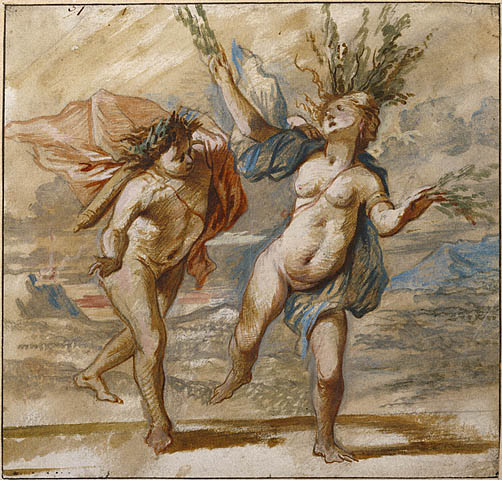
The wreath’s symbolic meaning derives in large part from classical myth and ritual. In Greek mythology the god Apollo is closely associated with the laurel because of the tale of Apollo and Daphne, in which the nymph Daphne is transformed into a laurel tree and becomes sacred to him. This connection linked the plant to poetic arts, prophecy and protective sanctuary.
Use in ancient Greece and Rome
In Ancient Greece laurel wreaths were awarded to victors in artistic and athletic contests, especially events tied to festival cults of Apollo; winners in poetic or musical competitions were accorded high honor (poetry). The association with athletic triumph extends to the ancient athletic festivals, including the Ancient Olympic Games. Rome adopted and adapted laurel symbolism: victorious generals and later emperors wore laurel crowns as visible marks of military success and public authority (Ancient Rome).
Modern ceremonial and institutional uses
The laurel remains a ceremonial emblem. In some academic traditions a laurel crown is presented at graduation ceremonies—particularly in parts of Europe where the laurel signals completion of advanced study and the awarding of a master’s-level degree. The word "laureate" in titles such as poet laureate directly references this heritage. Sporting events and cultural festivals sometimes revive laurel crowns to connect with classical symbolism; for example, hosts of the Summer Olympics in Athens, Greece used laurel-inspired crowns to evoke the ancient games.
Idioms, heraldry and design
The expression "resting on one's laurels" arises from the practice of celebrating past achievement with laurel and cautions against complacency. Visually, laurel motifs have been widely adopted in heraldry, medals and corporate logos where paired branches often frame an emblem. Designers render laurel as stylized curves or metallic wreaths to suggest honor without botanical detail.
Variations, cultural parallels and craft
Other cultures have used crowns of different plants—olive for civic victory, oak for strength, myrtle for love—but laurel retains a distinct link with poetic and intellectual accomplishment. Crafting a laurel wreath requires choosing supple stems and layering leaves to present a uniform exterior; conservation-minded makers may prefer clipped or sustainably sourced foliage when real leaves are used.
Contemporary meanings and practical notes
Today the laurel wreath functions both as a historical reference and a decorative device. It appears in academic regalia, award insignia, architectural ornament and popular culture. Because true bay laurel is also a culinary herb, care should be taken not to confuse ornamental wreath material with leaves sold for cooking. For botanical, historical and ceremonial details see sources on bay laurel, classical myth (Greek mythology) and records of festival practice in ancient Greece and ancient Rome. Additional reading may cover poetic traditions (poetry) and university customs surrounding the master’s degree.
- Symbolic range: from poetic distinction to military triumph to academic achievement.
- Material practice: live bay branches, dried leaves, or modern substitutes (metal, fabric, plastic).
- Enduring presence: laurel imagery persists in medals, seals and public monuments as a concise sign of honor.
The laurel wreath remains a compact emblem of continuity between past cultural practices and present ceremonial life: a simple circle of leaves that communicates recognition, achievement and a connection to the classical world.
Related articles
Author
AlegsaOnline.com Laurel wreath: history, symbolism and modern uses Leandro Alegsa
URL: https://en.alegsaonline.com/art/56306