
Ancient Olympic Games
Quadrennial athletic and religious festivals at Olympia (from 776 BC to the late 4th century AD) honoring Zeus; featured footraces, combat sports, equestrian events and conferred prestige on victors.
Overview
The Ancient Olympic Games were a series of pan‑Hellenic athletic competitions held every four years at Olympia in the western Peloponnese. Traditionally dated to 776 BC, the festival attracted competitors and spectators from many Greek city‑states across the Aegean world and became the most celebrated of the religious and athletic festivals of Ancient Greece. The contests combined athletic rivalry with ritual observance and were staged in honor of the god Zeus.
Image gallery
10 Images




Events and format
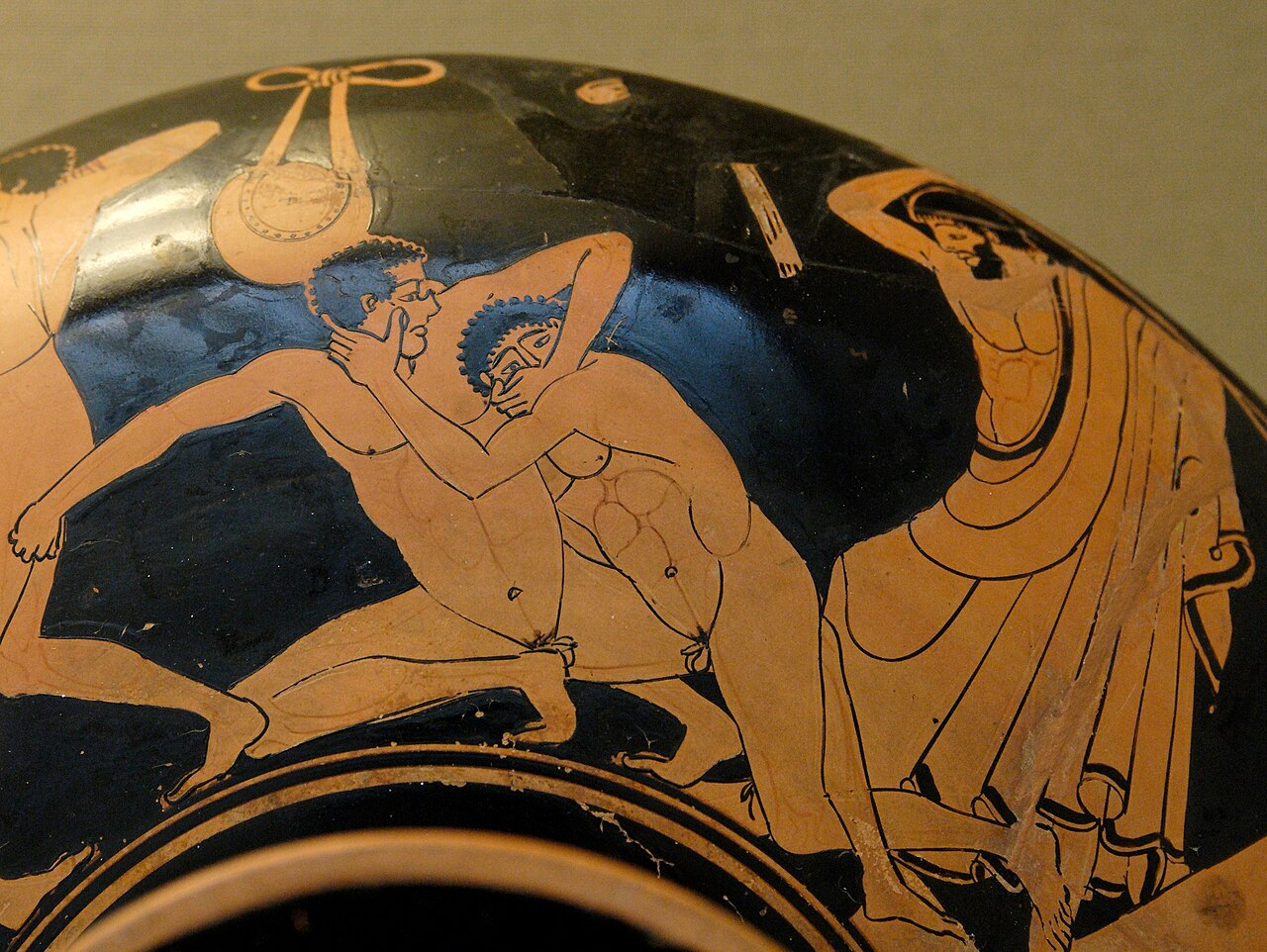
The programme evolved over centuries. Core events included short and long footraces (the stadion, diaulos and dolichos), the pentathlon (running, jumping, discus, javelin and wrestling), the combat sports of wrestling, boxing and pankration, and equestrian competitions such as horse and chariot racing. Competitions were typically for free Greek males, participants trained intensively, and—distinctively—athletes usually competed nude as part of Greek gymnic practice. Victors received symbolic prizes such as the olive crown or olive wreaths and were often honored at home with statues, poems and civic privileges.
Organization, ritual and social role
Officials known as hellanodikai administered the games: they supervised training, judged contests and enforced rules. An Olympic truce (ekecheiria) was sometimes proclaimed to protect safe travel to Olympia and to encourage attendance. Religious rites, sacrifices and processions were integral; ceremonies centered on the sanctuary (Altis) with temples, altars and the great cult statue of Zeus, renowned in antiquity and attributed to the sculptor Phidias. The four‑year cycle gave rise to the practice of dating events by Olympiads, an important chronological measure in ancient historiography.
Participation, gender and class
Entry was restricted to free Greek men, and married women were expressly forbidden to attend many contests—though separate women's races, known as the Heraea, were held at Olympia. Wealth also shaped success: equestrian events allowed owners to win through their horses and charioteers without personal athleticism, while successful athletes from humbler origins could gain celebrity, remuneration and political influence when celebrated by their home communities.
Decline and legacy
The traditional end of the ancient Olympics is placed in the late fourth century AD (often cited around 393 AD), when changing imperial policies and the suppression of pagan festivals led to their cessation. Over subsequent centuries the sanctuary fell into disuse and parts of the stadium and monuments were buried by natural processes. The cultural memory of the games and their ideals of competition and honour later helped inspire the revival of the modern Olympic Games in the nineteenth century.
Notable distinctions and surviving evidence
- Religious and civic fusion: contests were inseparable from sacrifice and cult practice to Zeus.
- Panhellenic status: the games promoted a sense of Hellenic identity beyond local rivalries.
- Prizes: victors received the symbolic olive crown (kotinos), palm branches and sometimes garments or monetary rewards; victory conferred social honors more than material trophies.
- Separate traditions: female athletic activity was acknowledged in limited form by the Heraean Games, and regional variations existed in how competitions were run.
Archaeological remains at Olympia—temple foundations, the stadium, training areas and votive offerings—provide primary evidence for the ancient festival and its rituals. For introductions to Greek terminology and literary sources see Greek names and accounts, and for material culture and prize customs consult summaries on prize traditions.
Related articles
Author
AlegsaOnline.com Ancient Olympic Games Leandro Alegsa
URL: https://en.alegsaonline.com/art/3852
Sources
- encarta.msn.com : "Ancient Olympic Games"