
Las Palmas de Gran Canaria — city, port and cultural capital of Gran Canaria
Las Palmas de Gran Canaria is a major Atlantic port and cultural centre in the Canary Islands, co-capital of the autonomous community, known for its historic Vegueta quarter, Las Canteras beach and year‑round mild climate.
Las Palmas de Gran Canaria is the largest city on the island of Gran Canaria and one of the principal urban centres in the Canary Islands, located in the eastern Atlantic Ocean (Atlantic Ocean). The municipality has long been home to a substantial population and functions as a regional hub for administration, commerce and culture; census and demographic sources report varying population figures across recent decades. It is the seat of the province of Las Palmas and — together with Santa Cruz de Tenerife — serves as co‑capital of the autonomous community, a role that shapes its political and institutional profile (capital).
Image gallery
10 Images


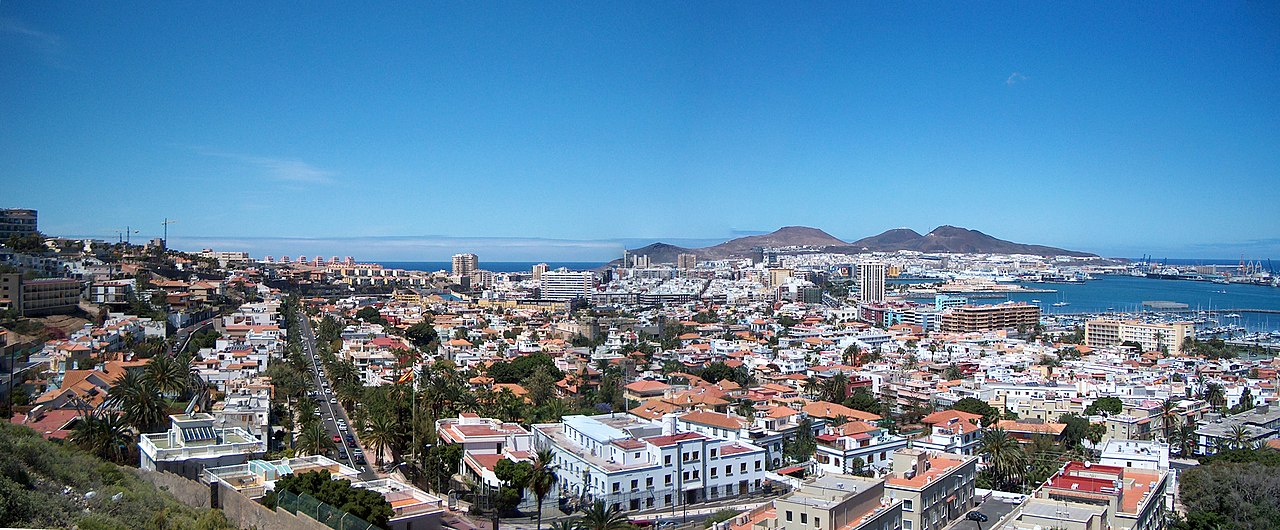

Geography and climate
Situated on the northeastern coast of the island, the city occupies a series of bays and gentle promontories whose natural features include a protective reef and an extensive urban beach. The best known shore, Playa de Las Canteras, stretches for more than three kilometres and is protected by a natural reef that moderates waves and supports a lively shoreline economy. The archipelago’s subtropical location gives Las Palmas a mild, largely dry climate with a narrow annual range of temperatures, conditions that favour outdoor life, tourism and port activity.
History and urban fabric
Founded in the late 15th century, Las Palmas grew as a staging point for Atlantic navigation and transoceanic trade. Its oldest neighbourhood, Vegueta, retains narrow lanes and buildings spanning the 16th to the 19th centuries; the layout and surviving monuments reflect the city’s colonial and maritime past. A house traditionally associated with Christopher Columbus is preserved as a commemorative site linked to his 1492 stopover (1492), and the principal cathedral—whose construction began around 1500—dominates the historic skyline (cathedral). Over centuries the urban centre combined these historical layers with 19th‑ and 20th‑century expansion, producing distinct quarters for commerce, civic life and residential use.
Port, economy and transport
The city’s harbour remains one of the busiest in Spain and a key maritime gateway between Europe, Africa and the wider Atlantic. Its modern facilities handle container traffic, cruise ships and inter‑island ferries; historically the port linked to long‑distance routes reaching as far as Cape Town in South Africa. Economic activity mixes services and logistics with long‑standing primary and secondary sectors: maritime trade and logistics, tourism, ship repair and light manufacturing, plus traditional industries such as fishing and fish canning. Commonly cited local economic drivers include trade, tourism and fishing. The port’s role as a transport hub also connects residents and visitors to the neighbouring islands of the province, notably Lanzarote and Fuerteventura, by regular ferry services.
Culture, museums and public life
Las Palmas offers a rich cultural scene that blends historical museums, contemporary art venues and performing‑arts spaces. The historic centre contains museums devoted to the city’s Atlantic role and local pre‑Hispanic past, while modern institutions present contemporary visual arts and science exhibitions. Notable sites include the Casa de Colón, dedicated to Atlantic exploration and contact history; the Museo Canario, with archaeological collections; and purpose‑built venues for concerts and theatre that host local festivals and seasonal programming.
Main sights and neighbourhoods
- Vegueta: the old town with a cathedral, plazas and museums reflecting the city’s early history.
- Triana: a traditional commercial and shopping district with nineteenth‑century façades and pedestrian streets (Triana).
- Playa de Las Canteras: urban beachfront valued for swimming, promenades and local seafood restaurants.
- Casa de Colón: exhibition rooms interpreting Atlantic navigation and colonial-era contacts.
- Museo Canario and other cultural institutions offering archaeology, modern art and science displays (Museo Canario).
- Green spaces, concert halls and theatres that support festivals, cultural institutions and community life.
Practical notes
Visitors typically reach Las Palmas by air via Gran Canaria’s main airport or by sea. Local transport includes buses and ferry connections to other islands; the port area and urban core are pedestrian friendly in many parts. Seasonal and cultural events, culinary offerings that feature Canary ingredients and a generally mild climate make the city a year‑round destination. The broader administrative territory comprises the province and its islands, and the city’s economic and civic roles link it closely to regional governance and the archipelago’s transport networks.
Las Palmas de Gran Canaria thus combines a compact historic centre, extensive maritime facilities and a varied cultural infrastructure. Its combination of climate, beaches, museums and transport connections has made it an enduring focal point for life and travel in the eastern Canary Islands.
References and further information: see institutional and tourism pages for up‑to‑date details on administration, transport schedules and visiting hours (local government, regional, port authority).
Related articles
Author
AlegsaOnline.com Las Palmas de Gran Canaria — city, port and cultural capital of Gran Canaria Leandro Alegsa
URL: https://en.alegsaonline.com/art/56109