
Santa Cruz de Tenerife
Port city on Tenerife in the Canary Islands; regional capital, cultural centre and host of one of the world's largest carnivals.
Overview
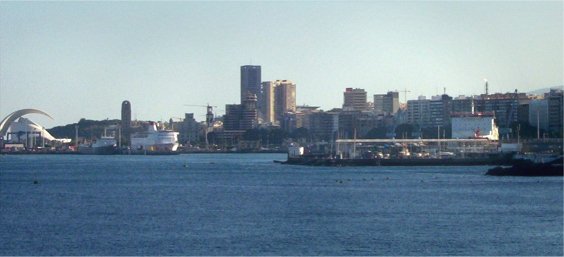
Santa Cruz de Tenerife is a major port city on the Spanish island of Tenerife and one of the two capitals of the Autonomous Community of the Canary Islands. It serves as a political, commercial and cultural centre for the eastern islands and for Tenerife itself. The municipality had a population of roughly 222,417 in 2009, and the urban area functions as a hub for maritime trade, tourism and government services.
Image gallery
10 Images



History and government
The city grew from a strategic Atlantic harbour used by trans‑Atlantic and inter‑island shipping. Over time it developed municipal institutions and became the seat of the regional Parliament of the Canary Islands. Santa Cruz shares the status of regional capital with Las Palmas de Gran Canaria, a dual arrangement established to reflect the archipelago's geography and history.
Culture and the Carnival
Santa Cruz is internationally recognised for its Carnival, an annual festival of parades, music, costume and street parties that attracts thousands of visitors. The event lasts more than a week and was officially declared a Fiesta of International Tourist Interest on 18 January 1980. The Carnival is among the largest in the world and is a key element of the city's identity and visitor calendar.
Economy and transport
The economy combines port activity, tourism, public administration and services. The Port of Santa Cruz handles commercial shipping, cruise liners and ferries connecting Tenerife with other islands and the Spanish mainland. The city is served by Tenerife North–Los Rodeos airport for regional and domestic flights, while Tenerife South handles much of the island's international air traffic.
Landmarks and environment
Prominent sites include the modern Auditorio de Tenerife, noted for its dramatic architecture, the large waterfront Plaza de España, and several museums and cultural centres that reflect Canarian history and art. The surrounding island landscape is dominated by Mount Teide, Spain's highest peak, which shapes Tenerife's climate and attracts hikers and sightseers. The local climate is typically subtropical with mild temperatures year round.
Notable facts and distinctions
- Administrative seat of the regional parliament and many public institutions.
- Hosts an internationally famous Carnival, officially recognised since 1980.
- Key Atlantic port and transport link within the Canary Islands and to Europe and Africa.
As a coastal capital with a long maritime tradition, Santa Cruz de Tenerife combines governmental functions, cultural life and tourist infrastructure, making it a central city in the geography and public life of the Canary Islands.
Related articles
Author
AlegsaOnline.com Santa Cruz de Tenerife Leandro Alegsa
URL: https://en.alegsaonline.com/art/87116