
Malayalam: language of Kerala and the Lakshadweep islands
Malayalam is a Dravidian language primarily spoken in Kerala and the Lakshadweep islands of India, noted for its distinct script, rich literary tradition, and agglutinative grammar with many regional varieties.
Overview
Malayalam (Malayāḷam; Malayalam script: മലയാളം) is a South Dravidian language principally spoken in the Indian state of Kerala and the Lakshadweep islands. Its speakers are commonly known as Malayalis. Malayalam functions as a primary vehicle of administration, education and culture in Kerala and is also used in communities of Malayali migrants abroad. The language is recognized for its long literary history, sizeable modern media output, and a standard script used in print and digital media.
Image gallery
10 Images

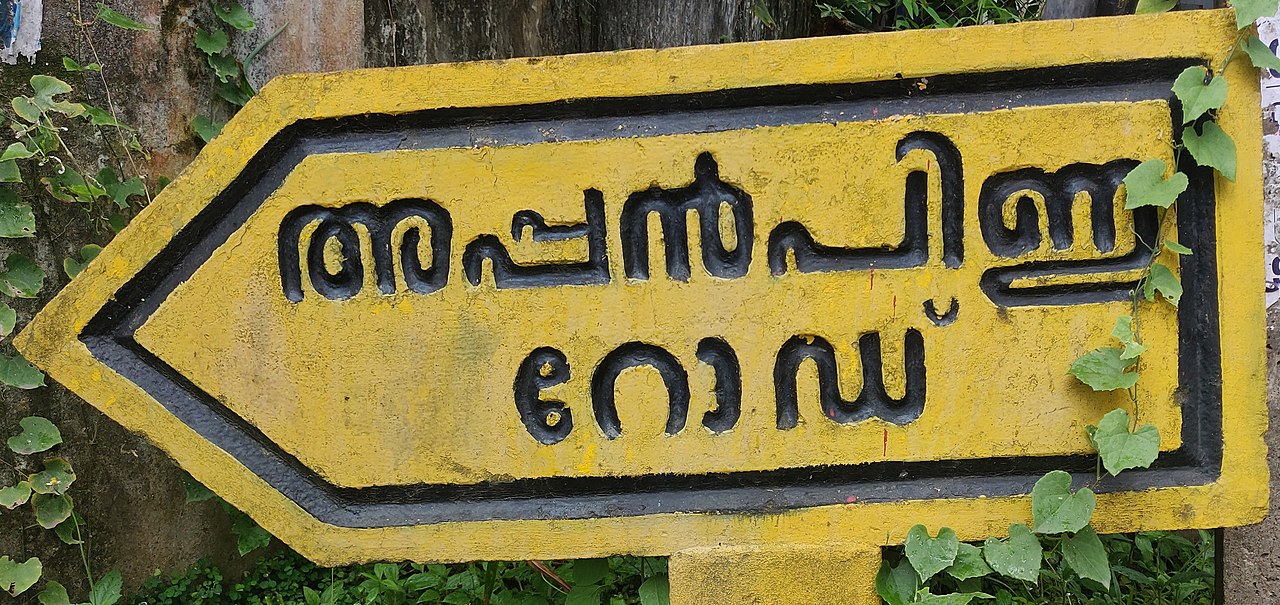


Characteristics and sound system
Malayalam is typically described as an agglutinative language with subject–object–verb (SOV) word order, extensive verbal morphology and productive derivational processes. Its sound system includes a wide range of vowels and consonants, including retroflex stops and laterals typical of Dravidian languages. Linguistic analyses identify a substantial set of phonemes — often counted at around fifty or so — arising from contrasts in vowels, consonants, gemination (consonant length) and nasality. The language also accommodates aspirated and voiced contrasts in loanwords.
Script and writing
Malayalam uses its own Brahmic script, developed from Grantha and earlier South Indian scripts. The modern script is syllabic and capable of representing vowel signs, consonant clusters and diacritic marks. The orthography supports printing, handwritten forms and digital encoding; in recent decades Unicode standards have enabled widespread use on computers and smartphones.
Grammar, vocabulary and influences
- Grammar: rich case-marking on nouns, agglutinative verb morphology, and use of postpositions rather than prepositions.
- Vocabulary: core Dravidian stock supplemented by long-standing borrowings from Sanskrit and later loans from Arabic, Portuguese and English, reflecting historical trade and colonial contacts.
- Politeness and honorifics: several lexical and morphosyntactic strategies mark formality and social distance.
History, literature and development
Malayalam emerged from early Middle Tamil-like forms and local colloquial varieties over many centuries, becoming distinct as a language with its own literature by the first millennium CE. Its medieval and devotional poetry, later classical works and a flourishing modern prose and poetry tradition have secured an important place in South Asian letters. Modern Malayalam literature and journalism grew strongly in the 19th and 20th centuries, and the language has an active publishing industry and film culture that contribute to contemporary standardization and innovation.
Use, status and varieties
Malayalam is a principal language of daily life, education and mass media in Kerala and of administration in the union territory of Lakshadweep. The state of Kerala is noted for high literacy rates and widespread bilingualism; many Malayalis also use English or Hindi in formal contexts. Dialectal variation is significant: coastal, central and highland varieties show differences in phonology, vocabulary and syntax. Distinct regional and community dialects include island forms of the Lakshadweep and historical varieties such as Judeo-Malayalam. Diaspora communities in the Gulf and elsewhere maintain the language through cultural associations, media and remittance-era migration ties.
Notable facts and resources
The name Malayāḷam is traditionally analyzed as deriving from elements meaning "mountain" and "region" (mala + alam), reflecting the geography of the Western Ghats. Malayalis take pride in a rich cultural legacy—classical music, ritual arts, cinema and literary awards—that has helped sustain and spread the language beyond its core region. For introductions to grammar, phonology and usage, readers may consult general language surveys and specialized studies; for practical resources and online materials see language portals and digital archives via links such as phonology references and community sites about Malayalam or regional portals Kerala information and Lakshadweep resources.
Related articles
Author
AlegsaOnline.com Malayalam: language of Kerala and the Lakshadweep islands Leandro Alegsa
URL: https://en.alegsaonline.com/art/60964
Sources
- portal.unesco.org : "Official languages"