
Lady Marmalade
A 1970s R&B/funk song first recorded by Labelle, known for its French chorus line and later high-profile covers, including the 2001 Moulin Rouge! version by Christina Aguilera and collaborators.
Overview
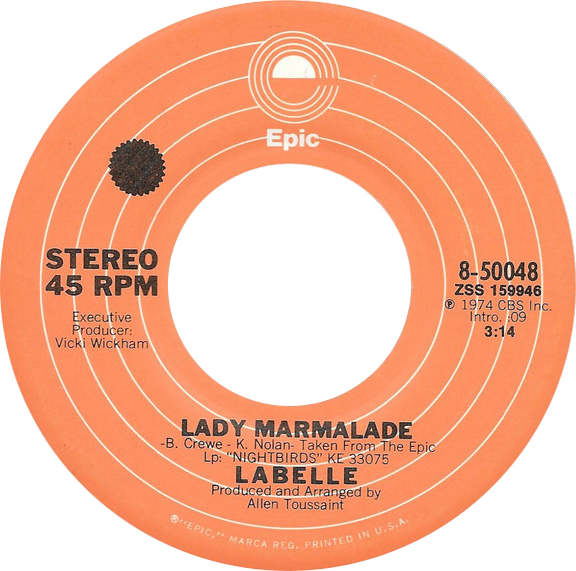
"Lady Marmalade" is a rhythm-and-blues song first recorded and popularized by the American vocal group Labelle, led by Patti LaBelle. Written by Bob Crewe and Kenny Nolan, the song tells the story of a New Orleans sex worker and is most famous for the French refrain "Voulez-vous coucher avec moi ce soir?", a line that helped give the record a provocative, cosmopolitan edge.
Image gallery
5 Images



Composition and lyrics
The track blends R&B, funk and pop elements into a sultry groove driven by harmony singing, call-and-response phrasing and a memorable hook. Lyrically it adopts the viewpoint of clients or observers praising the central character — the eponymous "Lady Marmalade" — while the repeated French phrase provides both shock value and instant recognizability. The combination of attitude, vocal arrangement and production made the song stand out on radio and in clubs.
Release and chart performance
Labelle's recording was released in the mid-1970s and became the group's biggest commercial hit, reaching number one on the Billboard Hot 100 for a brief period. The song's setting and subject matter tie it to New Orleans imagery and the city's association with nightlife and performance. Over time it has been cited as an example of how pop music of the era crossed lines between soul, funk and mainstream pop audiences.
Notable covers and versions
"Lady Marmalade" has been reinterpreted many times. It was covered by a range of artists across genres, from pop groups to solo performers. British girl group All Saints recorded their own take, and a highly visible remake in 2001 brought the song back into the global charts. That version featured Christina Aguilera, Lil' Kim, Mýa and Pink for the soundtrack of the film Moulin Rouge!, appearing on the movie's album and in promotional material associated with the production.
Legacy and cultural significance
- As a commercial hit, the original brought broader attention to Labelle and Patti LaBelle as solo artist and group.
- The song's French lyric has become one of the better-known foreign-language hooks in English-language pop music.
- High-profile covers and samples have kept the tune in circulation, introducing it to new generations and contexts.
Because of its frank subject matter and catchy chorus, "Lady Marmalade" remains a frequently discussed example of 1970s pop's willingness to be bold and theatrical, and of how a single song can be reshaped for different eras and audiences.
Related articles
Author
AlegsaOnline.com Lady Marmalade Leandro Alegsa
URL: https://en.alegsaonline.com/art/55331