
La sonnambula: Bellini's pastoral bel canto opera
La sonnambula is a two-act bel canto opera by Vincenzo Bellini (1831), with a libretto by Felice Romani based on Eugène Scribe's ballet-pantomime; famed for its sleepwalking tableau and lyrical style.
Overview
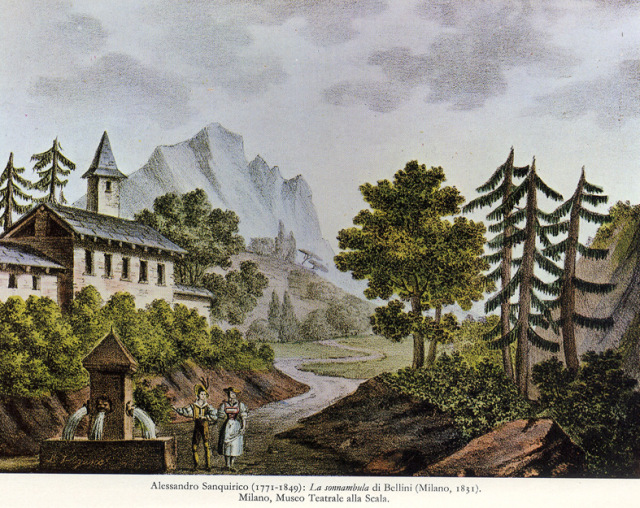
La sonnambula is an Italian opera in two acts composed by Vincenzo Bellini and first presented at La Scala in Milan on March 6, 1831. The libretto, by Felice Romani, draws on a ballet-pantomime by Eugène Scribe, adapting its central device of sleepwalking into a compact dramatic plot. The work is a touchstone of the bel canto repertoire and remains regularly staged by opera companies worldwide; references to it often appear in discussions of 19th-century Italian vocal style (opera).
Image gallery
10 Images




Composition and style
Written at the height of Bellini's career, La sonnambula is noted for its long, arching melodies, spare orchestral writing and emphasis on vocal line over dramatic spectacle. The score favors lyrical expression and elegant vocal phrasing characteristic of bel canto. Romani's libretto concentrates action in a rural setting and uses the sleepwalking incident to create dramatic misunderstanding and ultimate reconciliation, giving the opera a pastoral and intimate tone.
Structure and principal roles
The drama unfolds in two acts and features a small ensemble of principal characters. Important roles include:
- Amina – the young heroine whose sleepwalking triggers the central conflict.
- Elvino – her betrothed, torn between jealousy and trust.
- Lisa – a rival whose suspicions and pride complicate events.
- Count Rodolfo and Alessio – supporting figures who help resolve the plot.
The music alternates solos, duets and small ensembles; the sleepwalking tableau provides a dramatic centerpiece often staged with careful choreography.
Performance history and reception
At its premiere La sonnambula was an immediate success and helped establish Bellini's reputation. Over the centuries it has benefited from periodic revivals associated with renewed interest in bel canto technique and authentic performance practice. Directors often highlight the score's intimacy and the challenge it poses for singers in sustaining long phrases with nuanced dynamics.
Legacy and notable aspects
La sonnambula is widely admired for its melodic grace and psychological subtlety. It contrasts with Bellini's more dramatic works by favoring pastoral restraint. The drama hinges on a simple moral test of fidelity and misunderstanding, resolved by compassion and evidence rather than violence. The opera's central device — sleepwalking as both plot engine and symbolic motif — has influenced later theatrical depictions of somnambulism and remains a striking example of how musical and stagecraft can intertwine.
Further reading and production notes are available via libretto collections and critical studies (libretto, Bellini), and the work's sources are traced back to the original ballet-pantomime (pantomime) that inspired Romani's text.
Related articles
Author
AlegsaOnline.com La sonnambula: Bellini's pastoral bel canto opera Leandro Alegsa
URL: https://en.alegsaonline.com/art/55123