
Pantomime: British Family Musical Comedy Tradition and Seasonal Theatre
Pantomime: the British family musical-comedy tradition staged at Christmas and New Year, blending fairy-tale plots, songs, slapstick, cross-dressing roles and lively audience participation.
Pantomime (commonly shortened to panto) is a form of musical-comedy theatre that is popular in the United Kingdom and in several other English-speaking countries, especially during the Christmas and New Year season. It is a family-oriented entertainment that combines songs, dance, slapstick, topical jokes and audience interaction. Pantomime is distinct from mime: unlike silent mime, panto makes full use of spoken lines, music and vocal comedy.
Image gallery
10 Images

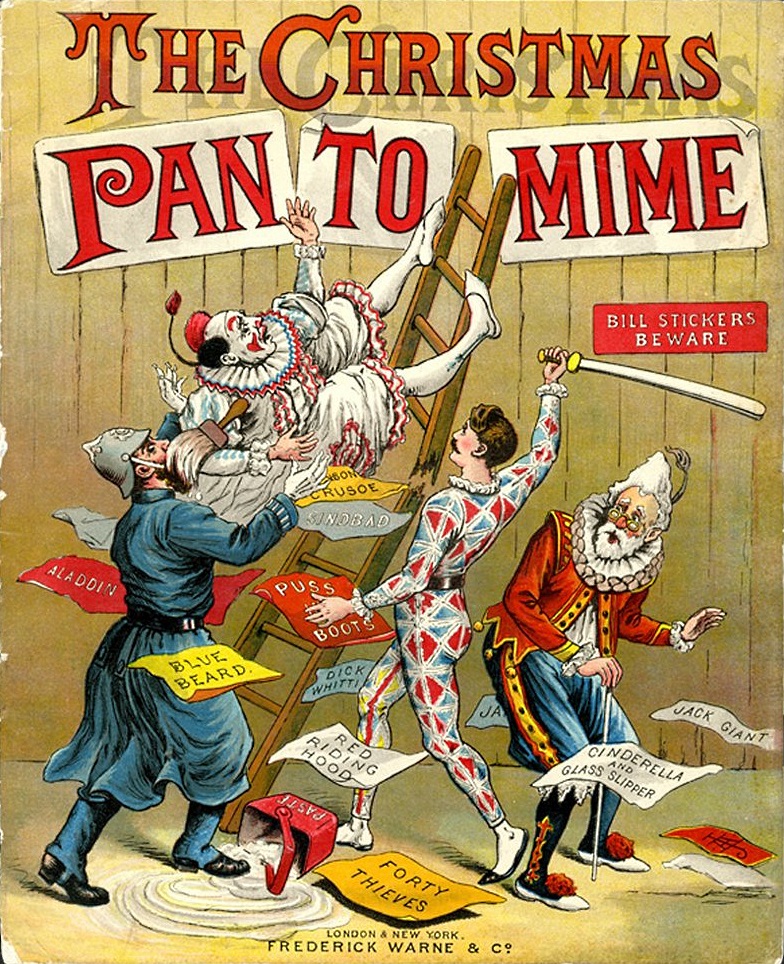


Format and features
Pantomimes are usually based on well-known fairy tales and children’s stories, but are adapted to include contemporary references and comic routines. Productions often mix broad physical humour with witty asides aimed at adults. Typical elements include spectacular scene changes, catchy songs, choreographed numbers and deliberate theatrical silliness.
- Stock characters: recurring roles such as the hero (often called the principal boy), the comic dame (a man in exaggerated female costume), a villain, and a clown or sidekick.
- Cross-dressing: the principal boy is traditionally played by a young woman, while the dame is played by a man; this gender-play is part of the genre’s comic tradition.
- Audience participation: the audience is encouraged to respond directly to the action with shouts, boos and cheers — common call-and-response lines include phrases like “He’s behind you!” and exchanges such as “Oh no it isn’t!” / “Oh yes it is!”
- Topicality: scripts are regularly updated with jokes about current events, celebrity cameos, and local references to keep the show fresh for returning audiences.
Typical stories and casting
Shows commonly draw on tales such as Cinderella, Aladdin, Jack and the Beanstalk, Sleeping Beauty and Peter Pan. Modern productions frequently cast well-known television personalities, pop stars or local celebrities to attract broader audiences, though amateur and professional companies alike continue to stage traditional versions.
Origins and development
The modern British pantomime evolved from several older theatrical forms. Elements of the Italian commedia dell’arte and the English harlequinade contributed characters and comic routines, and the genre was shaped through the 18th and 19th centuries into the family spectacular known today. Over time pantomime absorbed popular music, theatrical technology for impressive stage effects, and the British taste for playful audience engagement.
Audience and cultural role
Pantomime is principally designed as a family entertainment intended to appeal to both children and adults at the same performance. While many productions aim primarily at young audiences, the inclusion of innuendo and topical humour ensures there is often material aimed at grown-ups. In Britain and Ireland pantomimes are a strong seasonal tradition; similar forms are also staged in countries such as Australia, New Zealand and elsewhere where British theatrical customs took root.
Questions and answers
Q: What is pantomime?
A: Pantomime is a kind of theatre entertainment that is usually performed in Britain and a few other English-speaking countries around Christmas and the New Year.
Q: How is pantomime different from mime?
A: Pantomime is different from mime because while mime involves acting with gestures but no speech, pantomime is known for its comedy and audience participation.
Q: Who is pantomime usually meant for?
A: Pantomimes are usually meant for children, although they can also be directed at adults.
Q: What is pantomime known for?
A: Pantomime is known for its comedy and audience participation.
Q: When is pantomime typically performed?
A: Pantomime is typically performed around Christmas and the New Year in Britain and a few other English-speaking countries.
Q: In which countries is pantomime typically performed?
A: Pantomime is typically performed in Britain and a few other English-speaking countries.
Q: Can pantomime be directed at adults?
A: Yes, pantomime can be directed at adults, although it is usually meant for children.
Related articles
Author
AlegsaOnline.com Pantomime: British Family Musical Comedy Tradition and Seasonal Theatre Leandro Alegsa
URL: https://en.alegsaonline.com/art/74400