
Kyrgyz language: overview, writing systems, and distribution
Kyrgyz is a Turkic language spoken by millions in Kyrgyzstan and neighboring regions. This article covers its classification, key linguistic traits, scripts, history, dialects, and modern usage.
Overview
The Kyrgyz language is a member of the Turkic family, traditionally classified in the Kipchak branch. It serves as the official state language of Kyrgyzstan and is the primary mother tongue for most ethnic Kyrgyz communities. Spoken by several million people across Central Asia and diaspora communities, Kyrgyz functions in government, education, radio and television, and literature.
Image gallery
3 Images

Writing systems and orthography
Kyrgyz has been written in different scripts over its history. In the modern Republic of Kyrgyzstan it is written with a Cyrillic alphabet adapted to Kyrgyz sounds; this alphabet is based on the Russian Cyrillic system with additional letters to represent sounds not found in Russian. In other places where Kyrgyz communities live, alternative scripts are used or have been used historically, including variants of the Perso-Arabic script.
- Cyrillic: current official script in Kyrgyzstan, with letters added for ң, ө, ү and others.
- Perso-Arabic: used historically and still in practice among some Kyrgyz groups in China and parts of South Asia.
- Latin: periodic proposals and discussions about Latin-based orthographies have occurred since the 20th century.
Linguistic characteristics
Kyrgyz displays features typical of Turkic languages: agglutinative morphology, extensive use of suffixes, vowel harmony, and an SOV (subject–object–verb) basic word order. Noun cases and verbal aspect and tense are expressed through sequences of suffixes. Phonologically, Kyrgyz distinguishes vowel qualities and a range of consonants including palatalized and velar sounds.
History and development
The language developed from early Turkic dialects on the Eurasian steppes. Over centuries it absorbed influences from neighboring languages such as Persian, Arabic, Russian and other Central Asian Turkic languages through trade, religion and governance. In the 20th century the script and standardization of Kyrgyz changed several times as political regimes and language planning policies shifted.
Geographic distribution and uses
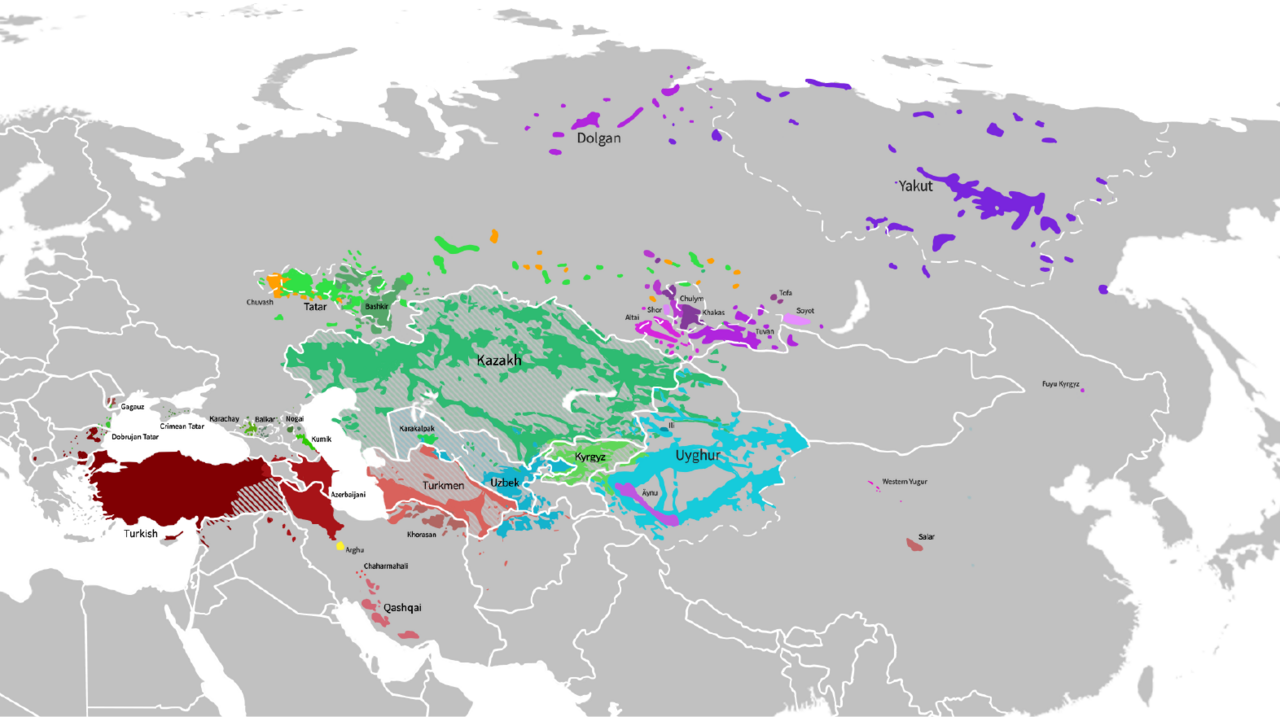
Most Kyrgyz speakers live in Kyrgyzstan, where Kyrgyz is used in official domains and cultural life. Significant Kyrgyz-speaking communities also reside in the Xinjiang region of China, and in smaller communities in Afghanistan and Pakistan, where local traditions and scripts may differ from the Kyrgyzstan standard. Kyrgyz is used in education at various levels, in broadcasting, and increasingly in digital media and literature.
Dialects and related languages
Kyrgyz contains several regional dialects that show phonetic and lexical variation; some dialects spoken across border regions have features influenced by neighboring languages. It is closely related to other Kipchak Turkic languages and shares mutual characteristics with languages such as Kazakh, though mutual intelligibility varies by dialect and exposure.
Resources and further reading
For official information and language policy refer to national sources and linguistic surveys. The following placeholders link to contextual resources and local communities:
- Kyrgyzstan — official language information
- Turkic language family overview
- Kyrgyz people and cultural background
- Perso-Arabic script traditions
- Kyrgyz in Xinjiang
- Kyrgyz communities in Afghanistan
- Kyrgyz in Pakistan and regional contacts
The Kyrgyz language remains a living, evolving medium of daily life, literature and media for its speakers, and it continues to be shaped by regional contact, education policy and modern communication technologies.
Related articles
Author
AlegsaOnline.com Kyrgyz language: overview, writing systems, and distribution Leandro Alegsa
URL: https://en.alegsaonline.com/art/54784
Sources
- ethnologue.com : Kyrgyz language
- glottolog.org : "Kirghiz"