
Kullervo — tragic figure of the Kalevala
Kullervo is a central tragic character in the Finnish national epic Kalevala, known for his doomed life, violent revenge, incestuous tragedy, and lasting influence on literature, music, and folklore interpretation.
Overview
Kullervo is one of the most striking and tragic personalities in the corpus of Finnish folklore and in the 19th-century epic poem known as the national epic or the Kalevala. In the poem he is presented as a handsome but ill-fated youth whose life is shaped by family massacre, enslavement, cruelty, and a sequence of misfortunes that lead to revenge and self-destruction. His story stands out in the Kalevala for its psychological intensity and bleak realism.
Image gallery
8 Images

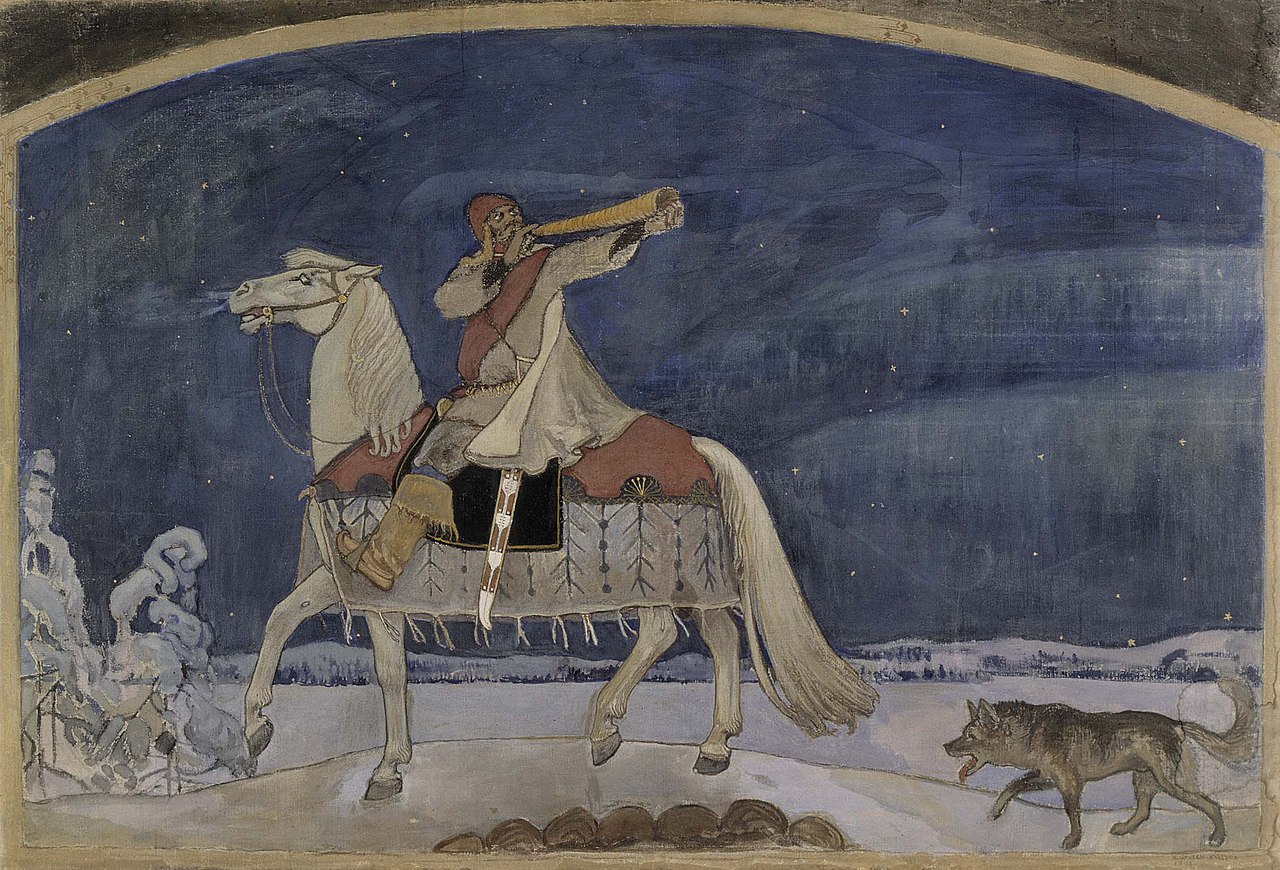


Narrative and principal episodes
The Kalevala account opens with the extermination of Kullervo's family by a rival clan led by Untamo; Kullervo survives because his mother was spared and gave birth to him in captivity. As a child he is repeatedly mistreated and misused; a series of failed tasks and humiliations culminate while he is held by the smith Ilmarinen, whose wife sabotages his bread by hiding stones. When Kullervo's knife breaks on a stone, he responds with violence and a curse on the household, and then flees.
During his wanderings Kullervo unknowingly has intercourse with a woman who is later revealed to be his sister. The discovery of this incestuous encounter devastates him and propels the narrative toward bloodshed: he returns to burn and slay those responsible for his family's misfortune, including Untamo and his kin, and eventually takes his own life. Along the way he is often described as having striking golden hair and a proud but tormented nature.
Origins, variants and folklore
Versions of Kullervo's story exist outside the Kalevala. In some folk tales he is presented as the son of the mythic giant Kaleva rather than of Kalervo, and different regional tellings emphasize aspects such as supernatural powers, prophetic rage, or resistance to slavery. The poem in the Kalevala synthesizes many oral motifs and arranges them into a coherent tragic biography.
Themes and interpretation
- Trauma and abuse: Modern readers and scholars often read Kullervo's behavior as a response to childhood abuse, exploitation, and social ostracism, elements that the poem treats with unusual psychological realism.
- Fate and fatalism: The epic frames his life as marked by destiny and cycles of violence common to heroic poetry.
- Taboo and consequence: The accidental incest and its aftermath expose questions of identity, guilt, and the limits of vengeance.
Critical discussions often connect Kullervo's tale to broader social and moral warnings found elsewhere in the Kalevala; the elder hero Väinämöinen notably interprets the episode as a cautionary lesson to parents and communities about neglect and cruelty. Scholars have also noted that Kullervo's life can be read as a rare pre-modern literary exploration of the effects of child abuse on personality and behavior.
Cultural influence and notable facts
The intensity of Kullervo's story has inspired generations of artists. The Finnish composer Jean Sibelius created a large-scale choral symphonic work titled "Kullervo" that helped bring the character to international attention; writers, painters, and later musicians have returned repeatedly to his image. Because he combines mythic force with a plausible human psychology, Kullervo often appears in discussions of tragic archetypes in Northern European literature.
Several motifs from Kullervo's tale — including his mistreatment in slavery, the broken knife, the curse on livestock and bears, and the fatal encounter with his sister following a nocturnal sexual episode — recur in regional folktales and in adaptations. The poem also preserves a version of his background as a tormented, work-shunned youth forced to herd cattle and sheep, a detail that helps explain his social isolation and eventual brutality.
Why Kullervo matters
Kullervo remains an important figure because he bridges heroic epic and social realism: he is both archetype and an individuated sufferer whose life invites ethical reflection. His narrative forces readers to confront the consequences of collective violence and private cruelty, making the Kullervo cycle an enduring subject for literary study, musical composition, and debates about how traditional tales reflect human psychology.
For more on the epic and Kullervo's place in it, see related entries on the Finnish oral tradition, editions of the Kalevala, and critical studies that explore how the poem adapts and preserves diverse folk variants such as those that name Kaleva as Kullervo's ancestor. Further reading and musical recordings may be found through general resources and collections dedicated to the national epic and its characters.
Related scholarly resources and translations often refer readers to discussions of the smith Ilmarinen, the role of curses and animals in mythic revenge tales (including references to bears), and comparative treatments of incestuous tragedy in folk literature. Those studying the poem also examine how episodes of exploitation and mistreatment inform Kullervo's violent choices and ultimate demise.
Readers who wish to explore primary texts and reputable commentary can consult critical editions and analyses that treat the episode with sensitivity to its portrayal of trauma and its social implications; these materials often emphasize the cautionary voice of elder figures such as Väinämöinen and situate Kullervo within a wider corpus of cautionary or corrective tales in the tradition.
Questions and answers
Q: Who is Kullervo in the Finnish epic Kalevala?
A: Kullervo is a person in the Finnish national epic Kalevala.
Q: What is Kullervo's appearance?
A: Kullervo is described as a good looking man with golden hair.
Q: What happens to Kullervo in his life?
A: Bad things happen to Kullervo; his destiny is tragic.
Q: Who is Kullervo's father in folk stories?
A: In folk stories, Kullervo is the son of the giant Kaleva.
Q: Who is Kullervo's father in the Kalevala?
A: In the Kalevala, Kullervo is the son of a man called Kalervo.
Q: What is the story of Kullervo's family in the Kalevala?
A: In the Kalevala, Kullervo's family is killed by Untamo's family before Kullervo is born. Only one woman is not killed. She gives birth to Kullervo who will be a slave of Untamo.
Q: What does the story of Kullervo warn against?
A: The story of Kullervo warns all parents from abusing their children in the end poem Väinämöinen.
Related articles
Author
AlegsaOnline.com Kullervo — tragic figure of the Kalevala Leandro Alegsa
URL: https://en.alegsaonline.com/art/54577