
Kuk (Kek, Kauket) — Egyptian deity of primordial darkness
Kuk (also spelled Kek or Keku) is an ancient Egyptian personification of darkness and the hours before dawn, paired with the feminine Kauket in the Ogdoad of Hermopolis.
Kuk, also written Kek or Keku, is an ancient Egyptian deity who personified primordial darkness and the obscurity that preceded creation. The concept appears in early Egyptian cosmogonies as a member of the Ogdoad, a group of four male–female pairs representing elemental conditions of the primordial world. In these myths Kuk embodies the dark, mysterious interval before sunrise and the hidden aspects of the cosmos that lie beyond sight.
Image gallery
2 Images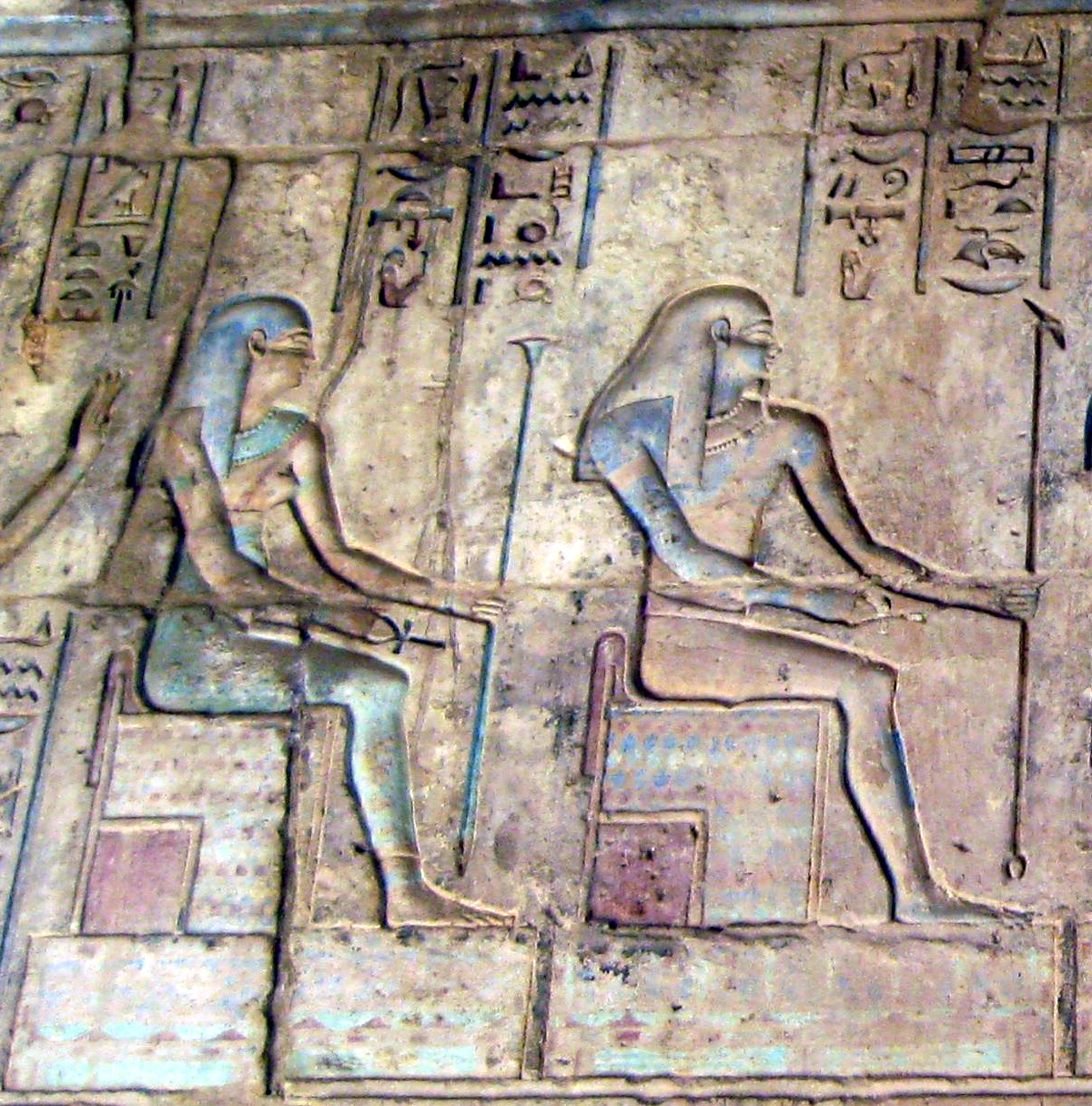

Names, forms and iconography
The name appears in a variety of spellings in Egyptian texts; the feminine counterpart is usually called Kauket or Keket. Artistic representations make the male often frog-headed or entirely frog-like, and the female as a woman with a serpent head or as a snake. These animal forms reflect Egyptian symbolic language: the frog and the serpent are linked to fertility, transition and liminal states. In some texts Kuk is given epithets that stress his connection to the unknown and to darkness.
- Male form: frog or frog-headed man (see frog imagery in Egyptian art)
- Female form: snake or snake-headed woman
- Function: personification of night, the hours before dawn, and the darkness that envelops creation
Role in Egyptian cosmology
Kuk and Kauket form one pair of the Ogdoad of Hermopolis, alongside three other male–female pairs that represent water, invisibility, and infinity. Collectively the Ogdoad describe the chaotic conditions from which the ordered cosmos is born. Within ritual and myth Kuk is sometimes called a "bringer-in-of-the-light," guiding the sun barque at the horizon so the sun can rise; Kauket is associated with the reverse passage, presiding over twilight and guiding the sun into the underworld. Their roles emphasize transition: dawn and dusk, emergence from darkness and return into night.
Worship, texts and historical development
Evidence for a popular cult specifically devoted to Kuk is limited compared with major state gods. Most references come from theological and funerary texts, temple inscriptions and iconography that reflect Hermopolitan cosmology rather than a widespread temple-centered cult. The figure of Kuk is an important theological device for explaining creation and the cyclical journey of the sun, appearing in Middle Kingdom and later religious literature and in syncretic depictions with other deities.
Distinctions and modern reception
Modern writers distinguish Kuk as the dark, pre-creative principle and Kauket as its feminine counterpart; together they are not opposing deities but complementary forces. In contemporary times the name and some visual motifs have been borrowed, misapplied and popularized outside Egyptology — an example of how ancient symbols are reinterpreted in new media and subcultures. Scholars caution that historical meanings are rooted in specific religious texts and iconographic contexts and should not be conflated with modern usages or internet memes about chaos.
Overall, Kuk illustrates how ancient Egyptian religion personified abstract cosmic conditions with anthropomorphic and zoomorphic figures, assigning them roles in creation narratives that helped explain the daily cycle of night and day and the origins of order from primordial darkness.
Questions and answers
Q: Who is Kek in Egyptian mythology?
A: Kek is the ancient Egyptian deity of night and darkness.
Q: What were Kek's male and female qualities?
A: Kek was viewed as having male and female qualities. His female form was known as Kauket which simply the female form of the word Kek.
Q: How was Kek's male form depicted?
A: Kek's male form was seen as a frog, or as a frog-headed man.
Q: What was Kauket's female form and how was it depicted?
A: Kauket's female form was seen as a snake or a snake-headed woman.
Q: What symbol did Kek represent?
A: Kek symbolized the unknown and chaos.
Q: What was Kuk's role?
A: Kuk was the god of the hours before dawn and was known as "Bringer-in-of-the-Light" as he guided the sun barge of the god Ra toward the sky from the underworld.
Q: Who was Kauket and what was her role?
A: Kauket was Kuk's feminine balance, depicted as a woman with the head of a serpent also called "Bringer-in-of-the-Darkness" who presided over the hours of twilight when the sun was setting and guided the sun barge into the underworld.
Related articles
Author
AlegsaOnline.com Kuk (Kek, Kauket) — Egyptian deity of primordial darkness Leandro Alegsa
URL: https://en.alegsaonline.com/art/54557