
Kluczynski Federal Building
A 45‑story modernist federal office tower in Chicago's Loop, designed by Ludwig Mies van der Rohe and completed in 1974; notable for its International Style design, raised plaza, and federal tenants.
Overview
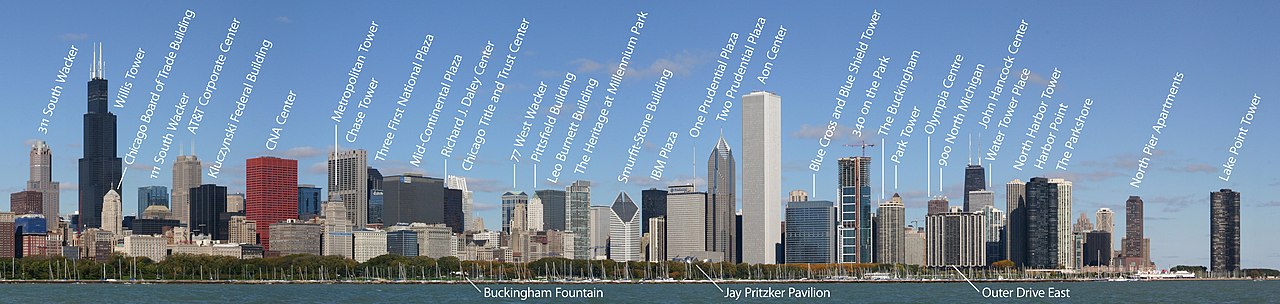
The Kluczynski Federal Building is a 45‑story federal office tower located at 230 South Dearborn Street in the Chicago Loop. Completed in 1974, the building rises to approximately 562 feet and forms a significant element of the downtown federal complex. It accommodates a variety of federal administrative offices and constituent services, and its plan and façade exemplify late modernist approaches to high‑rise office design. For further basic data see a general building profile.
Image gallery
4 Images


Design and characteristics
Designed by Ludwig Mies van der Rohe, the tower embodies characteristics commonly associated with his International Style: a rectilinear steel frame, a darkened curtain wall of glass and metal, minimal ornamentation, and a clear expression of structure through repeated, rational bays. The exterior presents a disciplined grid that emphasizes proportion and repetition. The building's design relates to other civic projects of the period that favored simple geometric forms and open plaza settings.
Plaza and public space
The Kluczynski Federal Building is set back from the street on an elevated plaza that creates a publicly accessible open space between the tower and adjacent federal facilities. This plaza was planned as part of a coordinated civic ensemble that includes pedestrian circulation, seating, and landscaping elements intended to frame views of neighboring buildings. The raised plaza approach reflects mid‑20th‑century planning ideas about creating civic space around government buildings and encouraging pedestrian activity in the urban core.
Key facts
- Address: 230 South Dearborn Street, Chicago Loop (city center)
- Architect: Ludwig Mies van der Rohe (architect profile)
- Stories: 45; Height: about 562 ft (171 m)
- Primary use: federal agency offices and congressional constituent offices
History and naming
Constructed in the early 1970s as part of a federal move to consolidate offices in downtown Chicago, the tower was named for Congressman John C. Kluczynski in recognition of his service. The project completed a planned grouping of federal buildings intended to modernize government facilities in the Loop. Although the exterior design is strongly associated with Mies van der Rohe, the construction and final fit‑out involved federal architects and associated firms working from his design intent.
Uses and tenants
The Kluczynski Federal Building houses a range of federal functions, including administrative offices and space used by members of Congress for constituent services. Over time the building has hosted offices for Illinois senators and representation offices; notable occupants have included Senator Mark Kirk and Senator Dick Durbin, who have maintained constituent or staff offices there (Mark Kirk, Dick Durbin). Its location near courthouses and other federal properties integrates it into Chicago's civic and judicial district.
Renovations, security and maintenance
Like many urban federal buildings of its era, the Kluczynski Federal Building has undergone periodic interior modernizations, systems upgrades and security improvements to meet changing operational needs and contemporary standards for accessibility and building systems. Exterior alterations have generally been limited so as to preserve the building's overall architectural character and its place within the larger federal complex.
Significance and context
The building is frequently cited as an example of Miesian influence on American civic architecture: its plain geometry, curtain wall and plaza siting reflect a modernist vocabulary that shaped public buildings in the mid‑20th century. It contributes to an ensemble of federal properties in the Loop and remains a visible demonstration of the era's approach to formality, proportion and restrained material expression in institutional architecture.
Access and surroundings
Located in the heart of the Loop, the Kluczynski Federal Building is accessible by multiple transit options and is adjacent to other government buildings, public spaces and transportation hubs. The site's integration with nearby civic functions continues to make it a focal point for federal activity in downtown Chicago.
Related articles
Author
AlegsaOnline.com Kluczynski Federal Building Leandro Alegsa
URL: https://en.alegsaonline.com/art/53960
Sources
- gsa.gov : "John C. Kluczynski Federal Building and U.S. Post Office, Loop Station"