
Ludwig Mies van der Rohe
German-American architect Ludwig Mies van der Rohe (1886–1969) was a pioneer of modernist architecture, known for minimal steel-and-glass designs, the motto “less is more,” and influential buildings worldwide.
Ludwig Mies van der Rohe (born Maria Ludwig Michael Mies in Aachen) is widely regarded as one of the leading figures of 20th‑century modern architecture. Commonly addressed simply as Mies, he helped establish the aesthetic and technical vocabulary of modernism alongside contemporaries such as Le Corbusier and Frank Lloyd Wright. Born in 1886 and passing in Chicago in 1969, his career bridged European avant‑garde movements and the development of a distinct American corporate and academic architecture.
Image gallery
10 Images


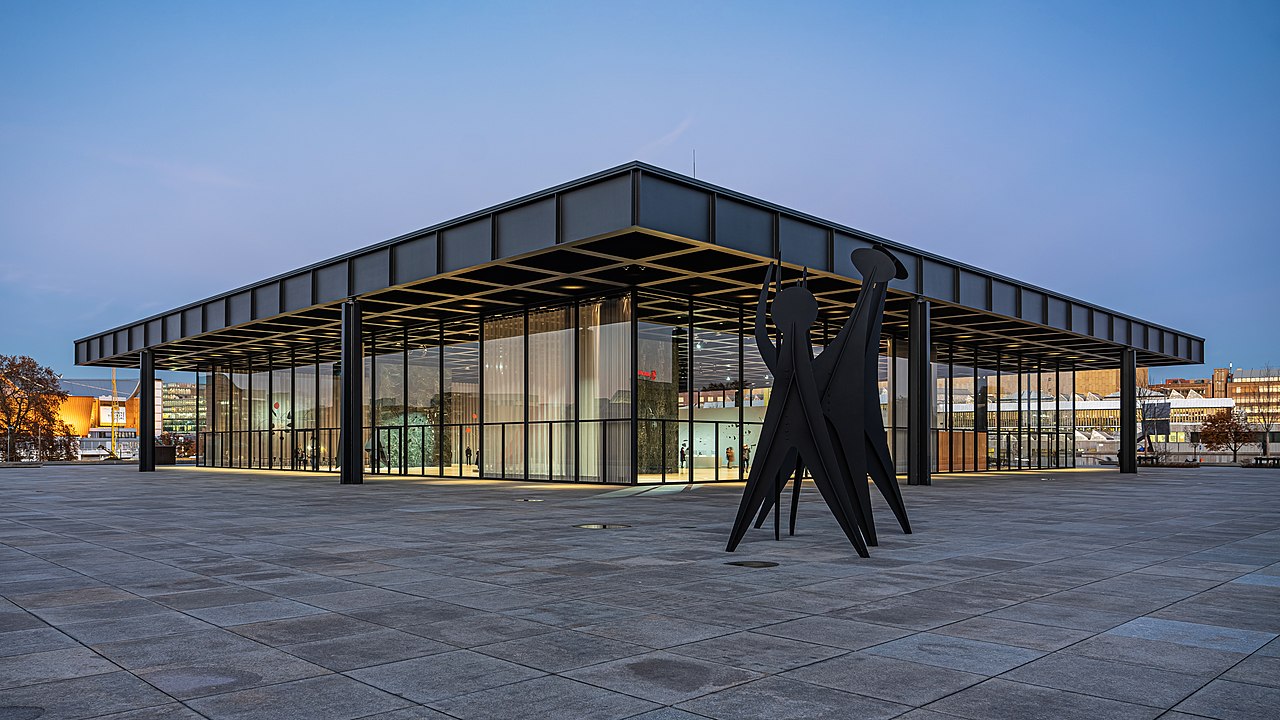

Design principles and characteristics
Mies championed clarity of structure, restraint in ornament, and an economy of materials. He favored exposed steel frames, wide glazed facades and open, flexible interior plans that minimized load‑bearing partitions. These choices embodied his concise aphorisms, often summarized as “less is more,” and resulted in what is commonly described as a "skin and bones" approach to building: structural logic made visible and aestheticized.
Career and influence
Trained and first active in Germany, Mies directed the architecture program at the Bauhaus in the early 1930s and played a role in shaping European modernist thought before relocating to the United States in the late 1930s. In Chicago he led an influential academic program and executed commissions that set standards for mid‑century office towers, academic buildings and private houses. His work helped define the International Style and influenced generations of architects and planners.
Notable works and examples
- Barcelona Pavilion – an experimental exhibition space noted for its planar surfaces and rigorous proportions.
- Farnsworth House – a minimal glass-and-steel country house that emphasizes transparency and site integration.
- Seagram Building – a landmark corporate skyscraper that popularized the modern glass curtain wall on urban towers.
- Crown Hall – an austere, open‑plan academic building illustrating his structural clarity.
- Tugendhat House and Lake Shore Drive apartments – further examples of his domestic and residential contributions.
Legacy and distinctions
Mies’s legacy is visible in the worldwide adoption of the glass‑and‑steel aesthetic, in university curricula, and in the preservation debates surrounding modernist buildings. He is frequently compared with other masters of modern architecture and is credited with advancing a rigorous, minimalist language that balanced engineering, proportion and craft. For further context about his origins and career, see entries on Aachen, his adopted city of Chicago, and the broader role of the architect in 20th‑century modernism.
While admired for the conceptual purity of his designs, Mies’s work has also prompted debates about monumentality, human scale and the social responsibilities of architecture. Conservation efforts and renewed interest in mid‑century modernism continue to shape how his buildings are maintained, interpreted and used today.
Related articles
Author
AlegsaOnline.com Ludwig Mies van der Rohe Leandro Alegsa
URL: https://en.alegsaonline.com/art/125498