
King penguin (Aptenodytes patagonicus)
A comprehensive overview of the king penguin: appearance, behavior, breeding, habitat, diet, and conservation, with distinctions from the emperor penguin and practical notes on research and protection.
Overview
The king penguin (Aptenodytes patagonicus) is a large, flightless seabird found on subantarctic islands. Renowned for its striking coloration and upright posture, the species is widely studied for its social breeding colonies, long foraging trips at sea, and adaptations to cold environments. For more basic species information see king penguin resources.
Image gallery
10 Images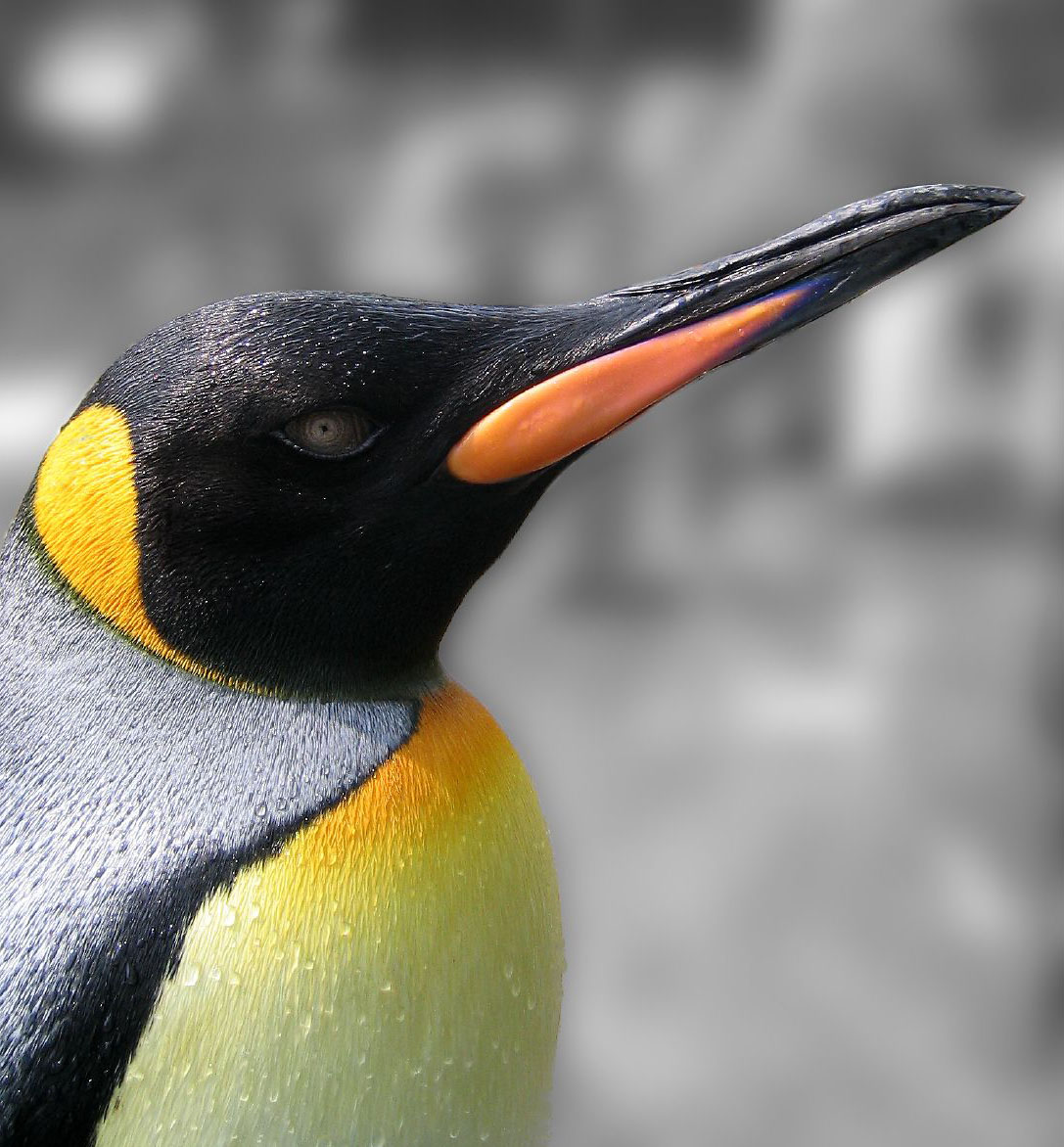


Appearance and adaptations
King penguins have a streamlined body, stiff flippers, and dense plumage that provides insulation. Adults show vivid orange markings on the head and upper chest that contrast with black, white, and silvery-grey tones. These adaptations help with thermoregulation and efficient swimming. Key physical characteristics include:
- Bright orange patches at the sides of the neck and on the upper chest.
- A long, slender bill suited to catching fish and squid.
- Thick blubber and tightly packed feathers for insulation in cold waters.
Distribution, habitat and foraging
King penguins breed in large, dense colonies on subantarctic islands and adjacent coastal areas. They forage at sea, diving to pursue fish, squid, and other marine prey. Their foraging trips can be long and may take them far from breeding sites; seasonal movements are linked to prey availability and oceanographic conditions. The species is noted as the second largest of all penguins, smaller than the emperor penguin but larger than most other species.
Breeding, life cycle and social behavior
Breeding colonies are highly social and often noisy. King penguins use a prolonged breeding season and may raise chicks in shifts, with parents alternating between guarding and foraging. The species does not build nests in the traditional sense; eggs and chicks are carried or incubated on the feet and tucked under the brood pouch for warmth. Chicks gather in creches while both parents forage.
Conservation and human interactions
King penguins face threats from climate change, which can alter prey distribution, and from human activities such as fishing and pollution. Conservation efforts focus on monitoring populations, protecting breeding sites, and managing marine resources. They are a focus of ecological research and ecotourism, which can support protection when well managed.
Notable distinctions
King penguins are frequently compared to the emperor penguin: the emperor remains the tallest and heaviest, while the king is slightly smaller but shares similar life-history traits like deep diving and extended parental care. For comparisons with the emperor penguin see related species.
Related articles
Author
AlegsaOnline.com King penguin (Aptenodytes patagonicus) Leandro Alegsa
URL: https://en.alegsaonline.com/art/53569
Sources
- iucnredlist.org : "Aptenodytes patagonicus"
- wikidata.org : Q182209
- species.wikimedia.org : Aptenodytes patagonicus
- animaldiversity.org : Aptenodytes_patagonicus · web.archive.org
- avibase.bsc-eoc.org : 827A77C754AB120E
- datazone.birdlife.org : 22697748
- birdlife.org.au : king-penguin
- ebird.org : kinpen1
- fossilworks.org : 173569
- gbif.org : 2481660
- inaturalist.org : 3821
- irmng.org : 10190139
- itis.gov : 174450
- apiv3.iucnredlist.org : 22697748