
Emperor penguin (Aptenodytes forsteri)
Largest of the living penguins, the Emperor penguin is an Antarctic specialist noted for deep diving, winter breeding on sea ice, and unique incubation on the feet beneath a brood pouch.
Overview
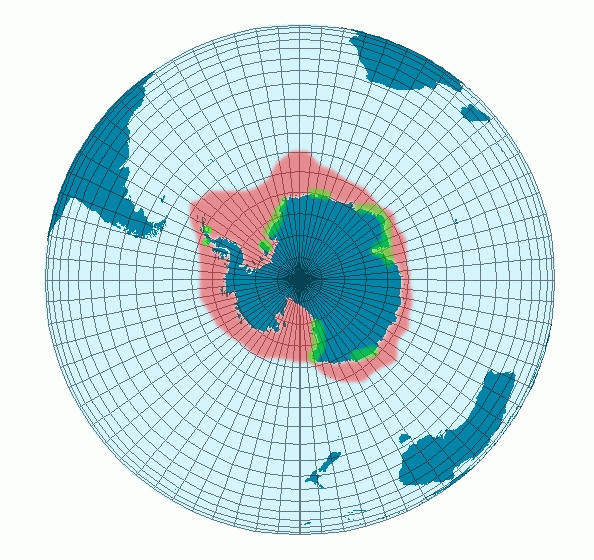
The Emperor penguin (Aptenodytes forsteri) is the largest living penguin species and a specialist of the Antarctic environment. It is adapted to survive and breed on sea ice and in near-freezing waters where few other birds persist. For general context about penguins see penguins, and for information on their polar habitat consult resources about Antarctica. The species name honors early naturalists and places the bird within a small genus distinct from other penguin groups; more on taxonomy is available at taxonomy references.
Image gallery
10 Images



Physical characteristics
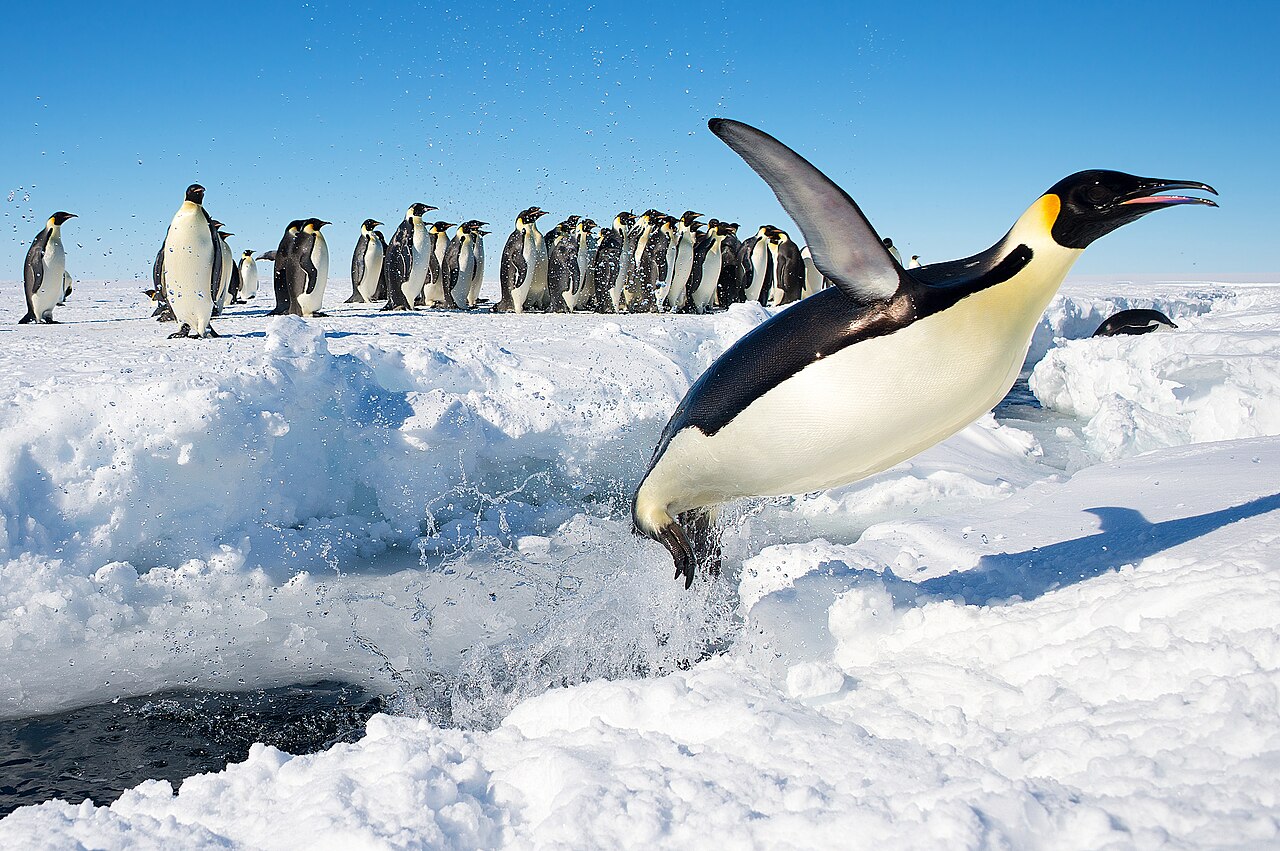
Emperors are notable for their large size, stature, and sleek, insulated bodies. Adults typically stand over a metre tall and are heavier than most other penguin species. Their plumage is counter-shaded—dark backs and light fronts—with characteristic golden-yellow markings on the head and upper chest. Their wings have evolved into stiff, flipper-like structures for powerful underwater propulsion. Insulation comes from dense, water-resistant feathers and a thick layer of fat that helps them endure cold air and cold water; field guides and species accounts offer additional measurements and comparisons at field data and comparison pages.
Behavior and life cycle
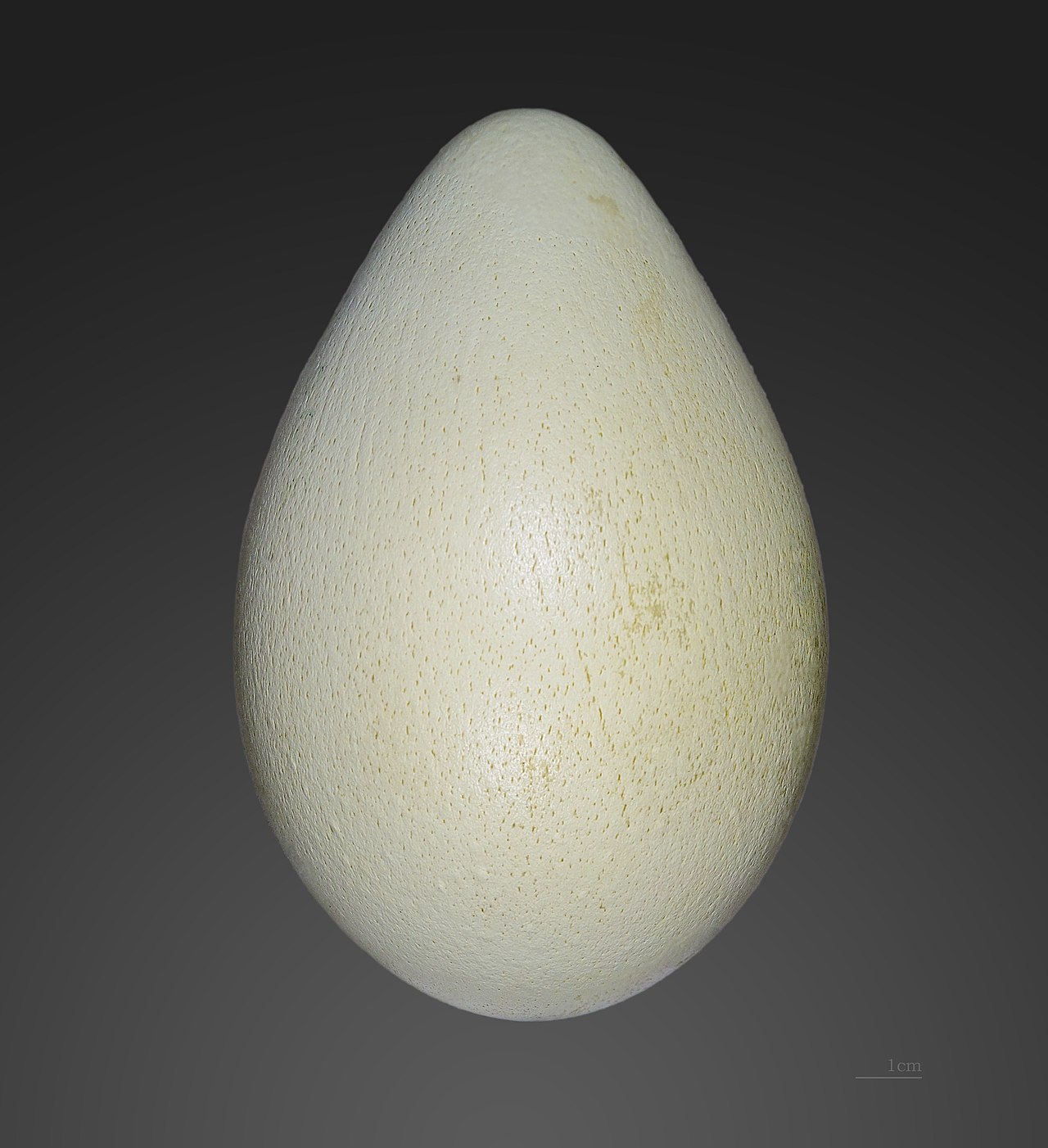
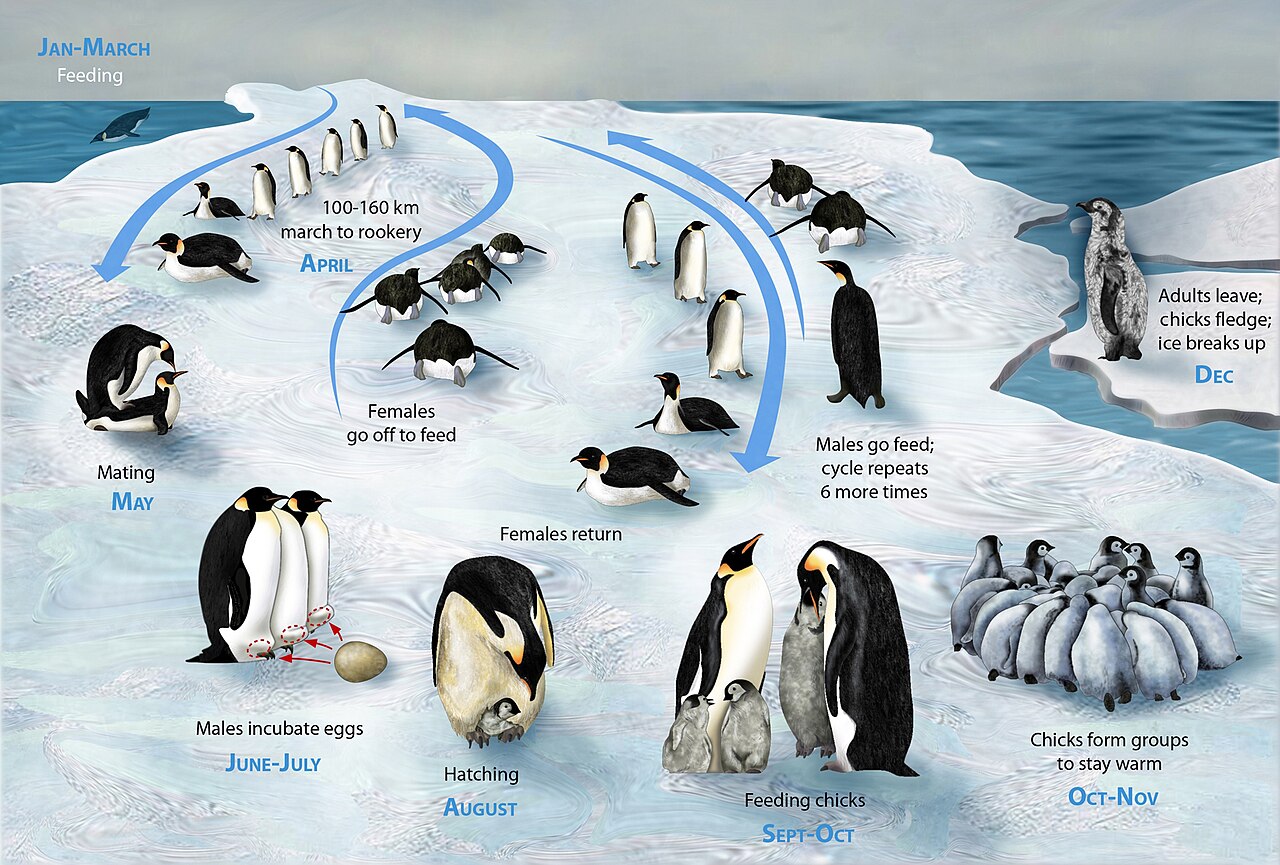
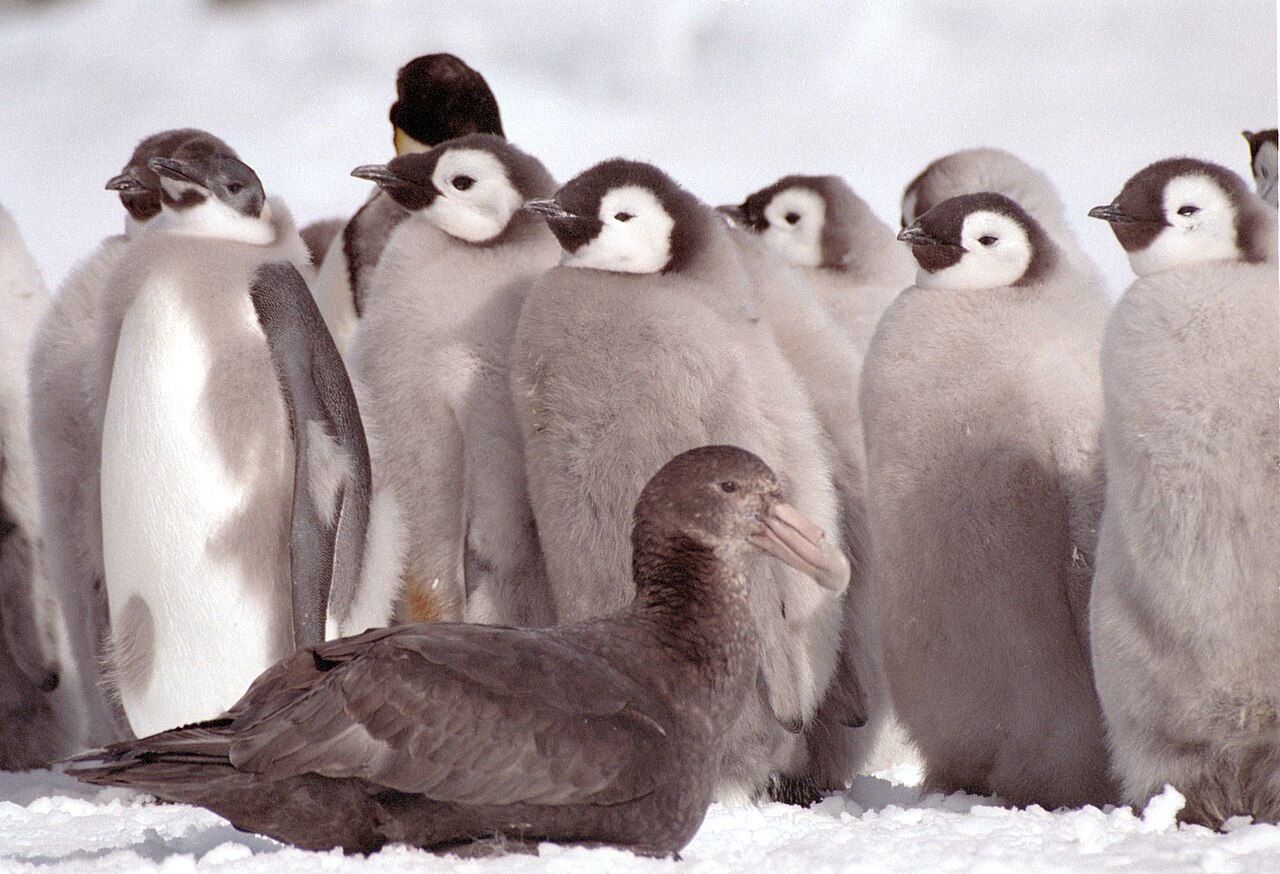
Unlike most birds, Emperor penguins breed during the Antarctic winter. They form large colonies on stable pack ice; after the female lays a single egg, she transfers it to the male, who incubates it on his feet under a brood pouch while females return to sea to feed. This incubation period requires adults to withstand extreme cold and wind for weeks. Chicks are brooded and later gather into communal groups called crèches while both parents alternate short foraging trips. Broad overviews of breeding behavior and parental roles can be found at breeding resources and behavior studies.
Feeding, diving, and predators
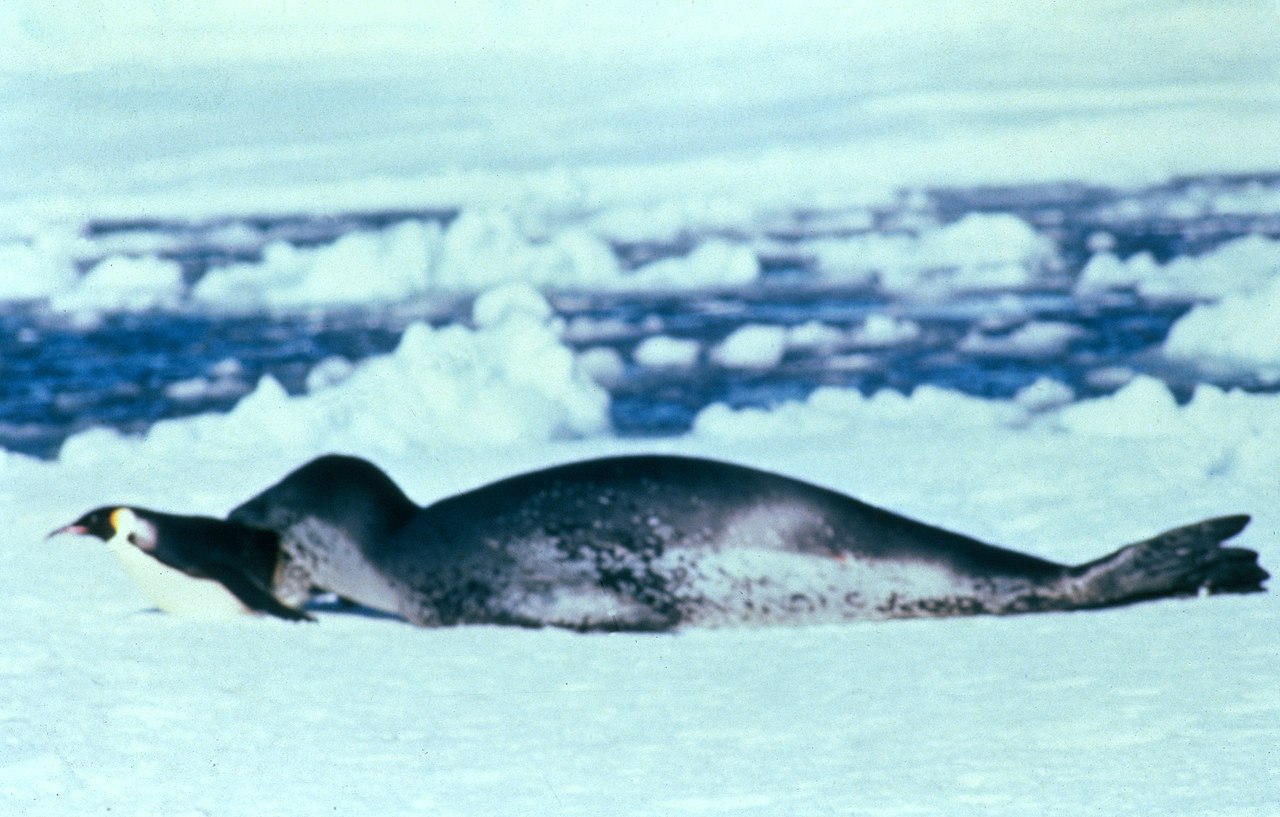
Emperors forage at sea, feeding primarily on fish, krill, and squid. They are exceptional divers among birds, able to reach great depths and remain submerged for multiple minutes while pursuing prey. Their hunting efficiency and physiological adaptations for diving—such as oxygen management and body streamlining—are subjects of ongoing research; see summaries at dive physiology. Predators include leopard seals in the water and occasionally large seabirds; species-level food-web roles and interactions are discussed in ecological references at ecology pages.
Conservation and significance
Emperor penguins are an iconic symbol of Antarctic life and have been the focus of scientific study, documentaries, and conservation concern. Their reliance on sea ice for breeding makes them vulnerable to changes in ice extent and stability driven by climate change. Conservation efforts emphasize long-term monitoring, protected areas, and research into how shifting ocean and ice conditions affect food supply and breeding success. Practical advice for accessing conservation reports and population reviews is available through the links above.
Notable distinctions
- Largest penguin species: Emperors exceed other penguins in height and mass.
- Winter breeders: They are unique for conducting their breeding cycle through the Antarctic winter.
- Incubation on feet: Eggs are balanced on feet and covered by a brood pouch rather than placed in a nest.
- Deep divers: Physiological adaptations allow prolonged dives and efficient underwater hunting.
Together these traits make the Emperor penguin an instructive example of extreme adaptation among birds. For further reading, follow the topical links embedded above to obtain more detailed species accounts, research summaries, and conservation updates.
Questions and answers
Q: What is the name of the species of penguin?
A: The species of penguin is called the Emperor Penguin (Aptenodytes forsteri).
Q: How tall and heavy are Emperor Penguins?
A: Emperor Penguins are about 1.1 m (4 ft) tall and weigh up to 45 kg (99 lb).
Q: What color are Emperor Penguins?
A: Emperor Penguins are black and white, with golden sides on their neck and chest.
Q: Are they able to dive deeper than other birds?
A: Yes, Emperor Penguins can dive deeper than any other bird, including other penguins.
Q: How many adult Emperor Penguins live in Antarctica?
A: There are approximately 595,000 adult Emperor Penguins living in Antarctica.
Q: Do they build nests or lay eggs on ice?
A: No, they do not build nests; instead they lay their eggs on the ice through their legs.
Q: Is there a special swimming technique that Emperors use?
A:Yes, like other penguins, emperors leap into the air while swimming which is called porpoising.
Related articles
Author
AlegsaOnline.com Emperor penguin (Aptenodytes forsteri) Leandro Alegsa
URL: https://en.alegsaonline.com/art/31264
Sources
- iucnredlist.org : "Aptenodytes forsteri"
- aad.gov.au : "Emperor penguins"
- emperor-penguin.com : "The Emperor Penguin: Aptenodytes forsteri"
- aad.gov.au : "Breeding cycle"
- aad.gov.au : "Emperor Penguins: winter survivors"
- wikidata.org : Q161829
- species.wikimedia.org : Aptenodytes forsteri
- animaldiversity.org : Aptenodytes_forsteri · web.archive.org
- avibase.bsc-eoc.org : 58848B7175EB4B3C
- biolib.cz : 8347
- datazone.birdlife.org : 22697752
- birdlife.org.au : emperor-penguin
- ebird.org : emppen1
- gd.eppo.int : APTNFO