
Kim Ok-gyun — Joseon reformer, activist and diplomat (1851–1894)
Kim Ok-gyun (1851–1894) was a Joseon-era Korean reformer and diplomat associated with the Gaehwa (enlightenment) movement. He played a central role in the 1884 Gapsin Coup, was exiled to Japan, and was assassinated in Shanghai.
Overview
Kim Ok-gyun (김옥균) was a prominent reform-minded figure of late Joseon Korea. Born in 1851 and dying in 1894, he is remembered as an advocate of rapid modernization and political change within the Joseon state. He served in various public roles and sought to reshape Korea's institutions through contact with foreign ideas and practical reforms.
Image gallery
3 Images

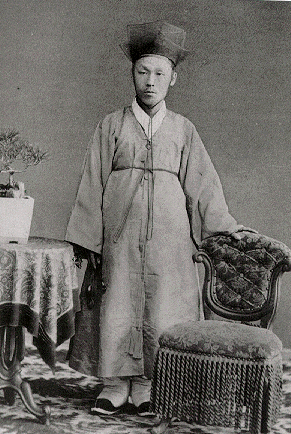
Political views and activities
Kim joined and helped lead a faction commonly known as the Gaehwa (enlightenment) party. He argued for administrative reform, development of industry and infrastructure, legal modernization, and a stronger central government capable of resisting foreign domination. His orientation was pro-reform and, in practice, often aligned with parties and officials in neighboring states who promoted rapid change. Contemporary accounts describe him as both an intellectual reformer and an energetic organizer.
Gapsin Coup and exile
Kim was a chief participant in the short-lived Gapsin Coup of 1884, an attempted rapid overthrow intended to implement reform policies. The coup failed when conservative forces and foreign intervention reasserted control. After the reversal, Kim fled into exile, spending a significant period in Japan and elsewhere while continuing to work for his political aims from abroad. During his career he was variously described as a politician and envoy, engaging in diplomatic contacts to advance reformist goals.
Assassination and aftermath
While abroad, Kim remained a controversial figure. In 1894 he was killed in Shanghai by an opponent; the assassination intensified debates over sovereignty, the role of foreign powers in Korea, and the risks faced by reformers. His death had diplomatic repercussions and has been interpreted in different ways by historians as both a crime and a symbol of the violent politics of the period.
Legacy and significance
Kim Ok-gyun's legacy is contested. Supporters credit him with pushing Korea toward modernization and breaking the inertia of conservative governance; critics fault his willingness to seek outside support and the abrupt methods pursued in 1884. He is often cited in accounts of late 19th-century Korean reform movements and in studies of how internal politics and foreign influence intersected during the decline of the traditional Joseon order. His nicknames, including Gowoo and Gokyun, appear in historical records and literary references.
Key points
- Born 1851, active reformer in late Joseon Korea.
- Leader in the Gapsin Coup (1884) and member of the Gaehwa movement.
- Exiled after the coup, continued political activity abroad.
- Assassinated in 1894; his death influenced domestic and international discourse on Korea's future.
Related articles
Author
AlegsaOnline.com Kim Ok-gyun — Joseon reformer, activist and diplomat (1851–1894) Leandro Alegsa
URL: https://en.alegsaonline.com/art/53461
Sources
- 100.naver.com : 100.naver.com/100.nhn?docid=31693
- navercast.naver.com : navercast.naver.com/contents.nhn?contents_id=4870