
Kidron Valley necropolis (Silwan necropolis), rock-cut Jewish tombs in Jerusalem
Ancient row of rock-cut Jewish burial caves in the Kidron Valley below the Mount of Olives and the City of David, known for carved facades, burial chambers, and the Tomb of Pharaoh's Daughter.
Overview
The Kidron Valley necropolis, commonly called the Silwan necropolis, is a linear group of ancient rock-cut burial caves carved into the western slope of the Mount of Olives overlooking the Kidron Valley. The tombs face west toward the area known as the City of David, and are located beneath the modern houses of the Silwan neighborhood. These monuments represent an extended funerary zone associated with the historical inhabitants of Jerusalem and the surrounding hills.
Image gallery
4 Images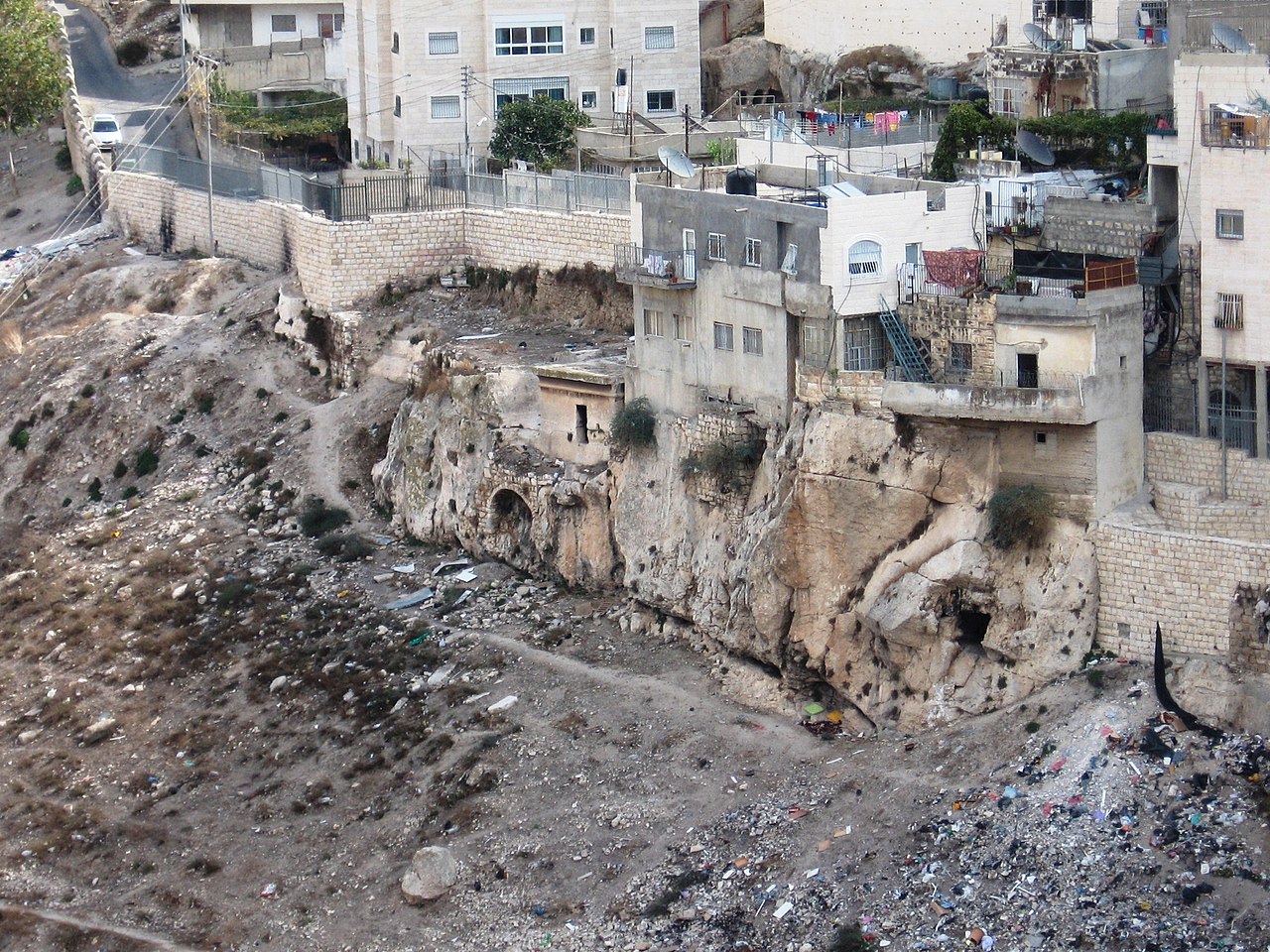


Location and relation to nearby sites
The necropolis lies in the Kidron Valley between the hillside of the Mount of Olives and the historic City of David. From the necropolis the tomb entrances look across the valley toward the ancient urban core: City of David. The burials are immediately below the north-west slope of the Mount of Olives and under today’s Arab neighborhood of Silwan. The row of tombs continues southward and meets a well-known monument often called the Tomb of Pharaoh's daughter, and forms a southern continuation of the modern Mount of Olives Jewish Cemetery.
Form and characteristics
The necropolis consists of carved rock facades and interior burial chambers. Common features include square or arched entrances, chamfered doorways, and internal niches or loculi carved into the soft limestone. Some tombs have decorative facades or corner pilasters; others are simpler family chambers intended for secondary burial practices. The row-like arrangement reflects use of the slope for successive interments.
History and archaeology
Scholars date elements of the necropolis to antiquity, with funerary activity broadly spanning periods when Jerusalem was inhabited in the Iron Age through the late Second Temple era and later. Archaeological study has focused on architectural typology, carving techniques, and inscriptions or finds where present. Because the necropolis sits beneath a lived-in modern neighborhood, excavation and conservation have been sensitive and occasionally contested.
Significance and modern context
The Kidron Valley necropolis is important for understanding burial customs, social organization, and the urban landscape of ancient Jerusalem. It illustrates how families used natural slopes for communal tombs and how funerary monuments could be elaborated or modest depending on status. Today the site lies within a complex urban and political environment; conservation, access, and interpretation involve archaeologists, local residents, and heritage authorities.
Notable features
- Linear row of rock-cut tombs facing the City of David (link).
- Architectural elements such as carved facades, loculi and burial chambers.
- Connection to larger cemetery traditions on the Mount of Olives and its modern Jewish cemetery (link).
- Ends at the locally named Tomb of Pharaoh's daughter, a distinctive monument.
For further archaeological and historical context see studies of Jerusalem's burial landscapes and published site reports that address typology, dating, and preservation practices.
Related articles
Author
AlegsaOnline.com Kidron Valley necropolis (Silwan necropolis), rock-cut Jewish tombs in Jerusalem Leandro Alegsa
URL: https://en.alegsaonline.com/art/53333
Sources
- jewishvirtuallibrary.org : "Kidron"