
Knap of Howar: Neolithic stone houses on Papa Westray
Early Neolithic farm on Papa Westray, Orkney, occupied c. 3700–2800 BC. Two stone buildings survive and illuminate domestic life in northern Europe’s early farming communities.
Overview
The Knap of Howar is an exceptionally well-preserved Neolithic settlement on the island of Papa Westray, part of the Orkney Islands. Located off the coast of Scotland, it is often described as one of the earliest surviving stone-built farmsteads in northern Europe. Archaeological evidence indicates the site was occupied from about 3700 to 2800 BC, and its surviving architecture provides direct insight into early farming communities of the region. The site is frequently referred to in discussion of prehistoric domestic life and regional Neolithic culture.
Image gallery
3 Images

Layout and architectural features
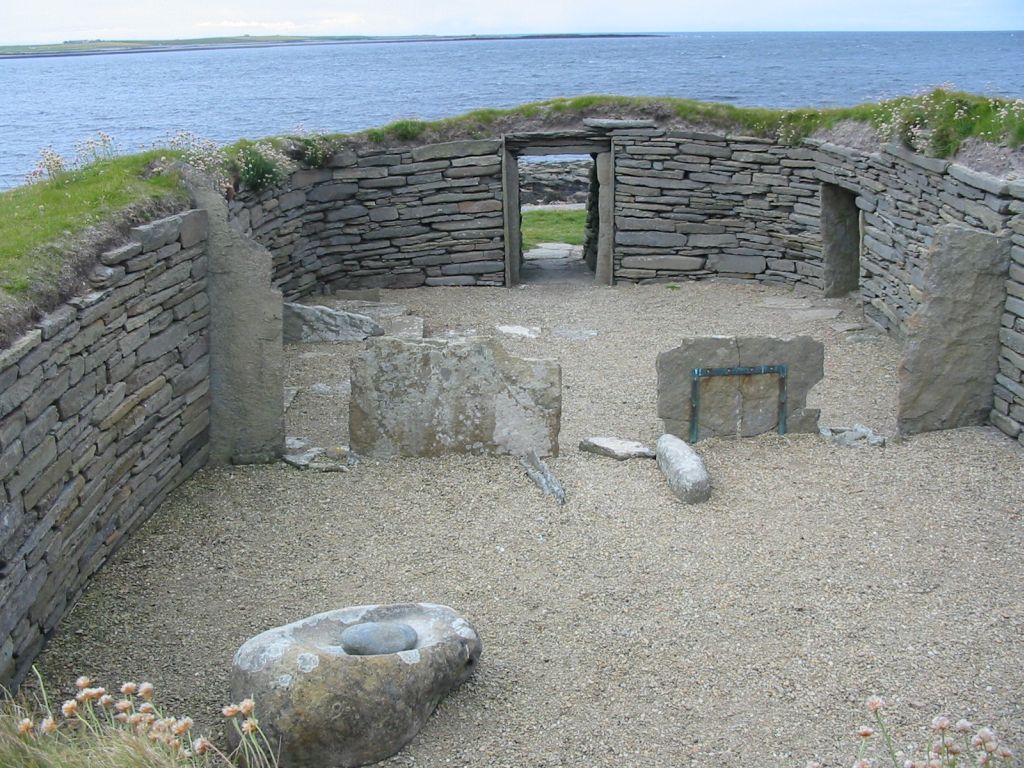
The settlement consists of two adjoining stone structures set close to the shoreline. Each building is simple and robust, with thick low walls and compact internal spaces. Doorways are low and reportedly face toward the sea; there are no true glazed windows. Internal lighting was provided by hearths and lamps, and surfaces show the kind of wear expected from long-term domestic use. One of the two buildings is commonly interpreted as a primary living space, while the other may have functioned as a workshop, storage area, or secondary sleeping area.
Finds and evidence of daily life
Excavations revealed domestic debris and artifacts that reflect routine Neolithic activities. Finds include pottery, stone tools and flakes, and animal bone fragments, indicating food processing, tool-making and consumption of marine and terrestrial resources. Middens and other deposits near the houses show how occupants disposed of shells, bone and other refuse. Together, these remains help reconstruct diet, craft activities and seasonal use of coastal resources.
Archaeological significance and context
Studied during 20th-century excavations, the Knap of Howar is important because its stone architecture survives with clear internal divisions and features, allowing direct comparison with other Orkney sites and wider Neolithic houses across northwest Europe. It complements better-known contemporary settlements and contributes to understanding settlement patterns, continuity of occupation and household organisation in prehistoric Orkney.
Notable features
- Two adjacent stone-built structures with low doorways facing the sea.
- Evidence of internal hearths and stone fittings used for daily tasks.
- Domestic artifacts—pottery, stone tools and animal remains—indicating mixed exploitation of land and sea.
Conservation and visiting
The Knap of Howar is a protected archaeological site and is treated as a fragile remnant of prehistoric life. Visitors are encouraged to respect the remains and follow local guidance to minimise damage. For further information about the site, its interpretation and visiting arrangements, consult heritage authorities and regional resources that cover Neolithic Orkney and related sites such as Skara Brae. The site is often discussed in literature addressing early farming settlements and the development of domestic architecture in northern Britain.
Related articles
Author
AlegsaOnline.com Knap of Howar: Neolithic stone houses on Papa Westray Leandro Alegsa
URL: https://en.alegsaonline.com/art/53966