
Khaira Arby — The Nightingale of Timbuktu
Khaira Arby (1959–2018) was a Malian singer-songwriter celebrated for singing in regional languages and bringing the music of Timbuktu to international audiences.
Overview
Khaira Arby (21 September 1959 – 19 August 2018) was a Malian singer-songwriter widely known as the "Nightingale of Timbuktu." Born in the city of Timbuktu when it formed part of the Mali Federation, she became one of the most visible female voices from northern Mali and a recognized ambassador for the region's musical traditions.
Image gallery
1 Image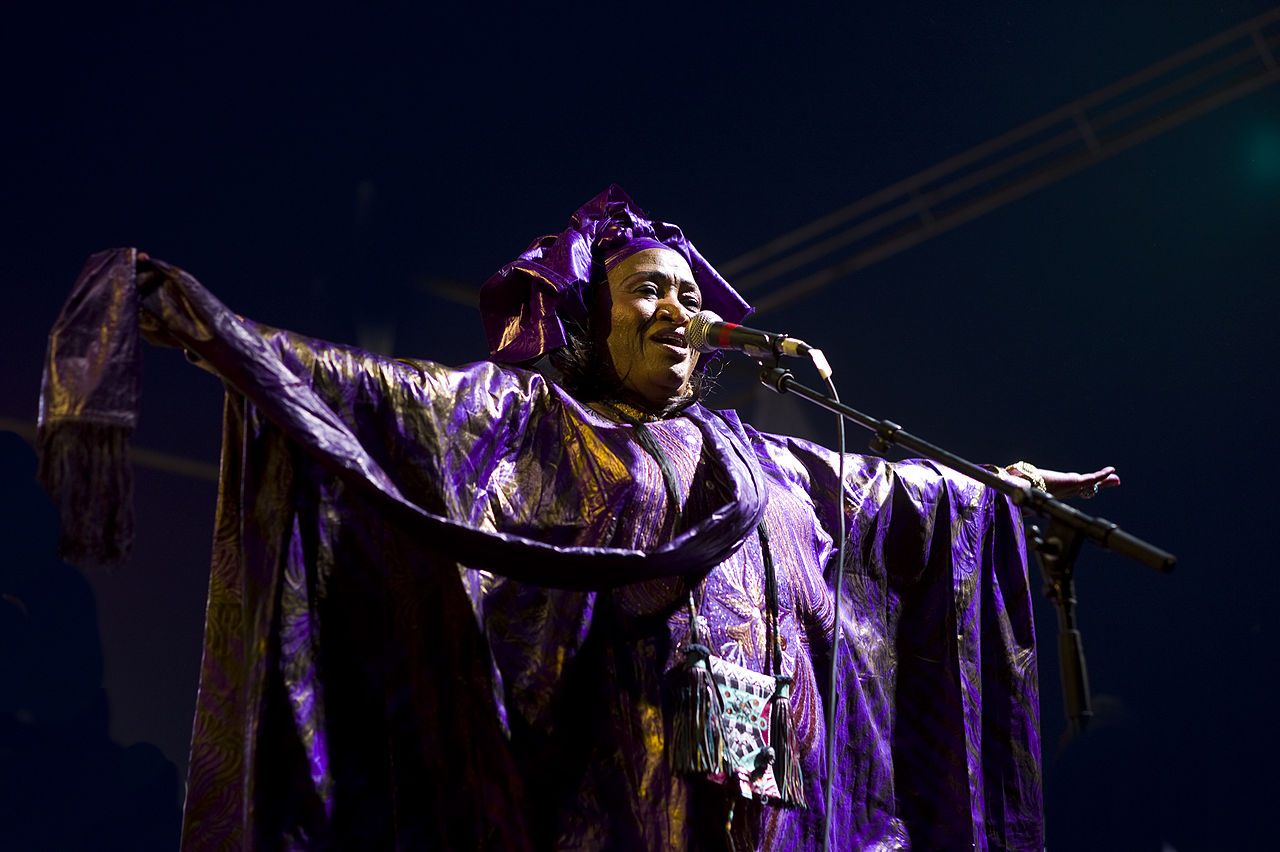
Music, language and style
Arby's repertoire blended local musical forms with accessible songcraft. She performed in several of the region's main languages and drew on melodic and rhythmic traditions rather than western pop conventions. Her songs are noted for clear vocal delivery and a focus on communal themes more than on virtuoso instrumental displays.
- Languages she used on record and in concert included Songhai, Tamasheq (Tuareg), Bambara and Arabic.
- Her material ranged from personal and social observations to songs that reflect regional cultural life.
Career and notable performances
Arby began performing under her own name in 1992, a move that marked her as a pioneer for women in Malian popular music. She rose to broader international attention around 2010, touring outside Mali and appearing at several international festivals. Notable appearances included a North American tour and festival performances that introduced her work to new audiences.
- Touring the United States and performing in festival circuits.
- Appearances at Pop Montreal in 2010 and at the Montreal International Jazz Festival in 2011, among other events.
Legacy and death
Khaira Arby is remembered for bringing the sound and stories of Timbuktu to listeners beyond Mali, serving both as an artistic figure and a cultural representative. Her work helped raise international interest in the diverse languages and musical practices of northern Mali. Arby died in Bamako, Mali, on 19 August 2018 after a battle with breast cancer. Her passing prompted tributes from colleagues and audiences who valued her role as a pioneering female artist from the region.
For those seeking recordings or more on her life, look for festival archives and published interviews that document her later touring years and the music she recorded in the 2000s and 2010s.
Related articles
Author
AlegsaOnline.com Khaira Arby — The Nightingale of Timbuktu Leandro Alegsa
URL: https://en.alegsaonline.com/art/53162
Sources
- malijet.co : Khaira Arby n’est plus : Une grande artiste quitte la scène
- brooklynvegan.com : "Khaira Arby and her band returning to North America, playing some shows w/ Delicate Steve (summer 2011 dates)"
- exclaim.ca : Montreal Jazz Festival Announces Complete Lineup with the B-52s, Galactic, Poirier's Sound System
- lemonde.fr : Mort de la chanteuse Khaira Arby, « le rossignol de Tombouctou »