
Abu Al-Asar Hafeez Jullundhri
Pakistani Urdu poet (1900–1982) best known for writing the lyrics of Pakistan’s national anthem and for patriotic, religious and romantic poetry.
Overview
Abu Al-Asar Hafeez Jullundhri (1900–1982) was a prominent Urdu-language poet and lyricist whose verses became widely known across Pakistan. Born in Jullundher, Punjab, he later moved to Lahore after the 1947 partition of India. Jullundhri's writing spans patriotic anthems, religious epics and lyrical poetry; his most internationally recognized contribution is the official national anthem of Pakistan.
Image gallery
1 Image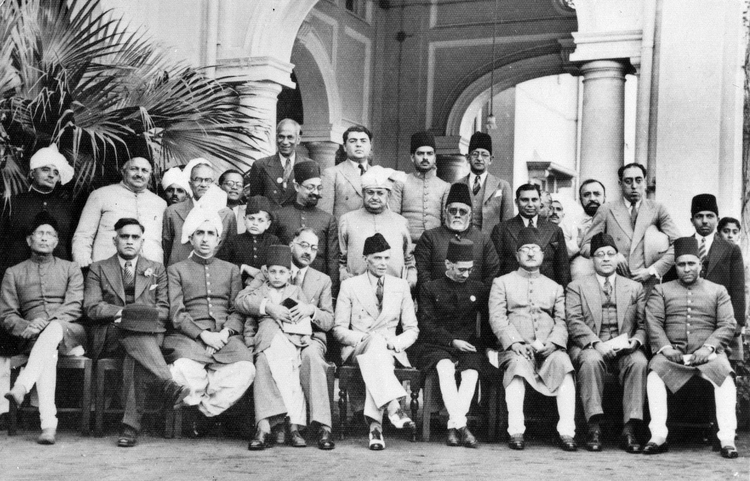
Life and education
Jullundhri received his early instruction in a local mosque and attended elementary school before continuing his studies through private tutoring and self-directed reading. He was influenced by classical Persian and Urdu literary traditions and benefited from the guidance of teachers such as Maulana Ghulam Qadir Bilgrami, a scholar of Persian literature. After the Partition of India, he settled in Lahore, which remained his principal base for literary activity.
Works, style and themes
Jullundhri wrote in standard Urdu while incorporating lexical and rhythmic elements drawn from Persian and Hindustani poetic practice. His poems are noted for clear diction, devotional intensity and a melodious metre that made many of his pieces suitable for setting to music. Major themes include romance, religion, patriotism and reflections on life. One of his ambitious long poems, often cited in accounts of his oeuvre, is titled Shahnam-e-Islam, a verse retelling of episodes from Islamic history.
- Notable works: National anthem of Pakistan lyrics, Shahnam-e-Islam, several patriotic songs for the 1965 conflict.
- Language and influence: rooted in Urdu with Persian influences and occasional Hindustani idioms; admired for singable cadences.
- Other compositions: an anthem written for Kashmir and numerous nazms and ghazals.
National anthem and public recognition
In the years after independence, Pakistan used provisional patriotic texts, including a hymn by poet Jagannath Azad, composed around 1947. Jullundhri's composition was later selected and officially adopted in the early 1950s as the national anthem of Pakistan. The anthem's text emphasizes unity, faith and discipline and was set to music to provide a solemn, ceremonial melody for state occasions. Jullundhri also authored other patriotic pieces that were used during periods of national conflict, such as the 1965 war with India, and an anthem for Kashmir.
Legacy and distinctions
Hafeez Jullundhri is remembered primarily for the national anthem but also for a broad body of poetry that found a place in educational curricula, public ceremonies and musical settings. His contribution bridges devotional and civic registers, and his verses remain frequently recited and performed. He is often referenced in studies of twentieth-century Urdu poetry and in accounts of Pakistan's cultural formation following his birthplace and subsequent relocation. Brief biographical notes and collections of his poetry appear in many anthologies and online resources.
Further reading and archival material can be sought through national libraries, literary foundations and digitized collections that document Urdu poets and the cultural history of South Asia; related biographical sketches also discuss contemporaries and predecessors, including poets like Jagannath Azad, whose provisional anthem is part of the early republican history. For cultural context on language and literary forms, see discussions of Persian influence, Hindi and Urdu interaction, and studies of poetic themes such as Islam and national identity.
Although not every detail of his life is widely documented in every source, Jullundhri's reputation rests on a handful of widely circulated texts and on the enduring public use of his most famous composition. Short biographies and collections of selected poems remain accessible in print and in many Urdu literary archives and educational resources (see national anthem background and other archival entries).
Tags
Related articles
Author
AlegsaOnline.com Abu Al-Asar Hafeez Jullundhri Leandro Alegsa
URL: https://en.alegsaonline.com/art/531
Sources
- samaa.tv : "Poet Hafeez Jalandhuri being remembered today"
- wikidata.org : wikidata.org/wiki/Q1593557
- isni.org : 0000 0000 8263 9836
- id.loc.gov : n85184703
- idref.fr : 116571748
- viaf.org : 72831727
- worldcat.org : lccn-n85184703