
Jagannath Azad (1918–2004)
Urdu-language poet and academic who asserted he wrote the early patriotic song known as the Tarana-e-Pakistan; his claim about Pakistan’s first anthem remains debated.
Overview
Jagannath Azad was an Urdu-language poet and academic (1918–2004) best known for his assertion that he composed an early patriotic song often called the Tarana-e-Pakistan. Azad was a Hindu writer who wrote in Urdu, and his story draws attention because it intersects with the fraught cultural and political history of South Asia at the time of partition in 1947.
Image gallery
1 Image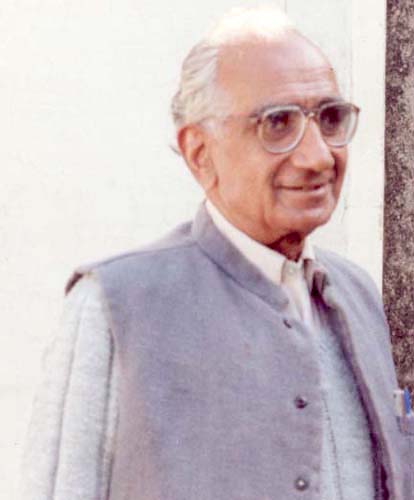
The Tarana-e-Pakistan claim
Azad maintained that, shortly after the creation of Pakistan in 1947, he was asked to prepare a patriotic anthem and that his poem — sometimes cited as the Tarana-e-Pakistan — was used informally on some official occasions. Supporters of his account point to contemporary press reports and personal testimonies that remember a short Urdu tarana (anthem) being sung in the early months of statehood. Critics and many historians note that documentation is limited and that official records do not clearly establish a formal adoption of his text as a national anthem.
Official national anthem and later developments
Pakistan's modern, officially adopted national anthem has a different origin: music composed by Ahmad G. Chagla and Urdu lyrics by Hafeez Jullundhri, which were formally approved and published several years after independence. That anthem became the recognized Qaumi Tarana and replaced provisional songs that had been used in various contexts during the country's early years.
Career and language
Azad was known within literary circles as a poet and educator who worked in Urdu literary traditions. Writing in a language shared by Hindus, Muslims and others in the subcontinent, his biography illustrates the multilingual and multiethnic character of the region's literary life. He continued to be identified with Urdu poetry throughout his life and died in 2004.
Legacy and debate
The question of whether Azad's verses functioned as Pakistan's first anthem remains contested. Some accounts emphasize the symbolic importance of a Hindu Urdu poet contributing a patriotic composition at the moment of partition; others stress the absence of firm archival proof that his song was formally adopted. The episode is often cited in discussions about language, identity and shared cultural heritage in South Asia.
Further reading and resources
- Contemporary accounts and newspaper reports from 1947–1950 (varied and sometimes contradictory).
- Overviews of Pakistan's national anthem history and the later official Qaumi Tarana.
- Discussions of Urdu literature in post‑partition South Asia and the roles of poets across communities. See also Tarana-e-Pakistan for references to the title associated with Azad's claim.
Related articles
Author
AlegsaOnline.com Jagannath Azad (1918–2004) Leandro Alegsa
URL: https://en.alegsaonline.com/art/49084