
King Philip's War (Metacom's War)
A concise, neutral overview of King Philip's War (1675–1676), its causes, main actors, course, and consequences for New England Native peoples and English colonists.
Overview
King Philip's War, also known as Metacom's War, was a broad and destructive conflict between Native American peoples and English settlers and colonists in the seventeenth century. It took place mainly from 1675 to 1676 across territory that is now part of the modern United States, primarily in the region called New England. The conflict is widely regarded as one of the most devastating wars per capita in early North American colonial history, reshaping power relations in the region.
Image gallery
10 Images


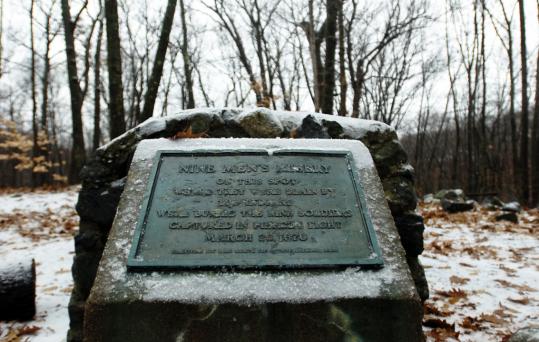


Causes and key actors
The war grew out of long‑standing tensions over land, sovereignty, trade, and cultural change. English settlers—many of them descendants of the Pilgrims and later Puritan arrivals—expanded settlements in Massachusetts and neighboring colonies, pressing demands for land and resources. Metacom, commonly called King Philip by the English, was a principal leader of a Wampanoag Pokanoket polity (Wampanoag Pokanoket) and sought to defend native autonomy. Frictions provoked accusations, arrests, and local trials that escalated into open warfare.
Course of the fighting
The war involved shifting coalitions of Native American groups and a patchwork of colonial militias. Fighters used raids, sieges, and ambushes; many frontier settlements were attacked and several towns were burned. Both sides suffered heavy losses. English colonial forces mounted counterattacks with help from allied Native groups. The killing of Metacom late in the conflict marked a turning point; his death undermined coordinated native resistance and accelerated the collapse of major organized opposition.
Consequences and significance
The immediate aftermath was catastrophic for many indigenous communities: populations were reduced by combat, disease, and famine; prisoners were taken and, in some cases, sold into slavery. The war weakened native political structures and opened land for further colonial expansion. For English colonists the conflict was costly in lives and property and led to changes in military organization and frontier policy. Long term, the war influenced later colonial‑Native relations and memory on both sides.
Notable incidents and legacy
Contemporary reports describe a series of notable episodes—a trader who accused Metacom of plotting against colonists and whose death heightened tensions; retaliatory executions and trials that inflamed both communities; and the display of the body parts of fallen leaders as a warning to others. These events have been preserved in regional histories and have been reassessed by modern scholars seeking to understand motives, law, and cross‑cultural collisions.
Further reading and context
King Philip's War is studied as a pivotal moment in early American history, illustrating how competition for land, different legal and cultural systems, and shifting alliances can produce sustained violence. For regional context and primary documents, consult sources on the war, colonial records from Massachusetts, and Native perspectives on the Wampanoag Pokanoket. Additional topics include colonial military organization, the role of Christian converts and traders in accelerating distrust, and the long‑term demographic effects on New England's indigenous peoples.
Related items and archival materials can be found via collections that focus on early New England encounters (Native American accounts), English colonial governance (English sources), trial records and local narratives (colonists), and chronological timelines covering 1675–1676 in the broader geographic area of the United States and New England. For social history, see studies of the Pilgrims and later settler migrations, patterns of settlement in land acquisition, and leadership among indigenous polities (leaders and Wampanoag Pokanoket communities).
Questions and answers
Q: What was King Philip's War?
A: King Philip's War was a war fought between Native Americans and English colonists in the area of the United States that is now New England between 1675 and 1676.
Q: Why did the war happen?
A: The war happened because the English colonists needed more land and they took it from the Native Americans, violating treaties previously made. John Wussausmon, a Christian convert and trader, also informed the English that King Philip was preparing an alliance to attack them, which further escalated tensions.
Q: Who was King Philip?
A: King Philip, also known as Metacom, was the leader of one of the Wampanoag Pokanoket tribes during the time of King Philip's War.
Q: What was the result of the war?
A: The Indians lost the war and thousands of them died. Many towns were burned and every inhabitant was affected in some way. King Philip was killed by a native and his head was cut off by Benjamin Church to be brought back to Plymouth. 500 Indians were also taken prisoner and made slaves.
Q: What were the English colonists' actions towards the Native Americans prior to the war?
A: The English colonists needed more land and they took it from the Native Americans. The two sides accused each other of violating treaties previously made.
Q: How did John Wussausmon contribute to the escalation of tensions between the two sides?
A: John Wussausmon, a Christian convert and trader, informed the English that King Philip was preparing an alliance to attack them. When he was found dead, the English executed three Indians for his murder, which angered people on both sides.
Q: How did King Philip's War affect the whole countryside?
A: The war resulted in many towns being burned and every inhabitant being affected in some way. Thousands of Native Americans died and 500 were taken prisoner and made slaves.
Related articles
Author
AlegsaOnline.com King Philip's War (Metacom's War) Leandro Alegsa
URL: https://en.alegsaonline.com/art/53570