
Absolute temperature (thermodynamic temperature)
Absolute temperature is the thermodynamic measure of thermal energy using scales with zero at absolute zero (Kelvin or Rankine); it underlies physical laws, conversions, and cryogenic science.
Overview
Absolute temperature, often called thermodynamic temperature, measures how much thermal energy a system contains on a scale whose zero point is absolute zero. This concept differs from everyday scales such as Celsius or Fahrenheit because its zero corresponds to the theoretical state of minimum possible energy. For general reference see temperature and how it applies to an object.
Image gallery
10 Images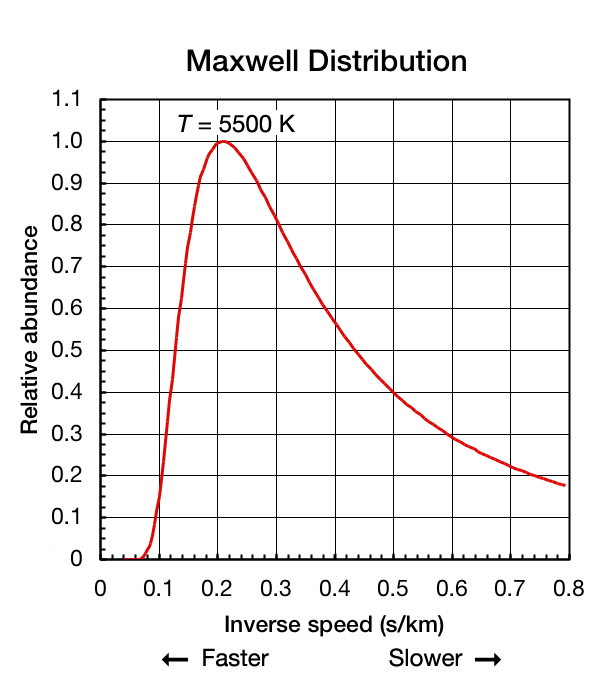




Definition and scales
The two principal absolute scales in common use are the Kelvin scale and the Rankine scale. The Kelvin scale is used in most scientific contexts and sets 0 K at absolute zero; Celsius and Kelvin differ only by an additive offset (T(K) = t(°C) + 273.15). The Rankine scale is the absolute counterpart to Fahrenheit (T(R) = T(°F) + 459.67). The term absolute zero itself refers to the lower bound of the temperature scale; see absolute zero.
Physical meaning
In classical terms, temperature correlates with the average kinetic energy of particles in a material: as temperature falls, molecular motion becomes smaller. That relationship is formalized in statistical mechanics by the Boltzmann constant and by expressions such as the average translational kinetic energy being proportional to temperature. For further context about microscopic motion, consult molecules and kinetic energy. Practical thermometry historically used a gas thermometer to define the absolute scale.
Origins and theoretical limits
The idea of an absolute temperature scale emerged in the 19th century as scientists sought a temperature measure independent of any particular substance. Lord Kelvin helped promote the Kelvin scale; the Rankine scale was introduced by W. J. M. Rankine. Thermodynamics also establishes a key limitation: the third law implies that absolute zero cannot be reached by any finite sequence of processes, so it is an unattainable limit in practice. Because of this, neither living organisms nor measurement devices can exist or function at true absolute zero; see general notes on electronic devices.
Uses and importance
- Fundamental physics and chemistry: absolute temperature appears in the ideal gas law, statistical mechanics, and reaction-rate theory.
- Cryogenics and low-temperature research: scientists routinely approach millikelvin or microkelvin ranges to study quantum states, superconductivity and superfluidity.
- Astrophysics and cosmology: background radiation and interstellar medium temperatures are reported in kelvins.
- Engineering calculations: thermodynamic formulas use absolute temperatures to ensure proportionality and correct units.
Notable distinctions and facts
Absolute temperature is a scalar measured from a fixed physical limit. Because many laws of thermodynamics and kinetic theory require temperatures in an absolute scale, using degrees Celsius or Fahrenheit without converting can produce incorrect results. Practical reminders: the cosmic microwave background has a temperature of a few kelvins; laboratory techniques can reach fractions of a kelvin but not true 0 K; and historical thermometers such as the gas thermometer helped establish early empirical relationships. For concise cross-references see Kelvin, temperature, and the roles of objects and molecules in thermal behavior.
Related articles
Author
AlegsaOnline.com Absolute temperature (thermodynamic temperature) Leandro Alegsa
URL: https://en.alegsaonline.com/art/511