
Jor‑El — Kryptonian scientist and father of Superman
Jor-El, a leading figure in Superman fiction, is the Kryptonian scientist who warned of his planet's doom and sent his son Kal‑El to Earth; his character appears in comics, films, and other media.
Overview
Jor‑El is a central figure in the Superman mythos: a scientist and member of Krypton's leadership who realized his world was about to be destroyed and acted to preserve its future by sending his infant son to Earth. His decision and sacrifice are the origin of Kal‑El's survival and later role as Superman. The character functions as both a plot catalyst and a moral template, embodying scientific foresight, parental devotion, and tragic loss within the broader Superman saga.
Image gallery
6 Images




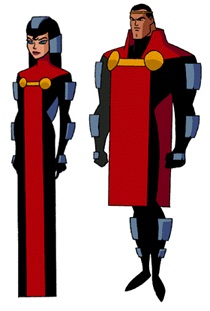
Characteristics and role
Typically portrayed as brilliant, principled and determined, Jor‑El combines the traits of a research scientist and a visionary. He often advocates that scientific evidence should guide public policy, and his failure to convince Krypton's ruling authorities adds a political and human dimension to the catastrophe. He is usually married to Lara Lor‑Van, who shares his concern for their son's survival; many retellings stress their partnership in preparing Kal‑El's voyage to Earth — see references to Lara Lor‑Van in character biographies.
Common elements in stories
- Prediction: Jor‑El detects instability or natural processes that will doom Krypton and tries to warn leaders.
- Rejection: His warnings are ignored or dismissed by the planet's authorities or institutions.
- Sacrifice: He arranges a way to save his son, often building or commissioning a spacecraft to send the infant away.
- Legacy: Jor‑El's scientific notes, recordings, or artificial intelligence often guide Kal‑El later in life.
Development and variations
The character has evolved across comics, radio, television and film. Early comic versions presented Jor‑El as a canonical father figure whose foresight allows Earth to become Kal‑El's refuge. Modern interpretations sometimes expand his role, portraying him as the creator of preserved Kryptonian knowledge or as the originator of an interactive recorded consciousness that advises his son. In some stories this takes the form of a synthetic mentor or holographic intelligence that helps the young exile understand his heritage; such devices are often described as artificial intelligences or legacy programs in adaptations and analyses (AI and recorded consciousness).
Portrayals in film and notable adaptations
Jor‑El has been depicted by several actors and adapted to match the tone of each production. Two widely known cinematic portrayals are by Marlon Brando, who appeared as Jor‑El in the original feature film Superman, and by Russell Crowe, who played the role in Man of Steel. Brando's version emphasized the elder statesman and prophetic aspects of the character, while later portrayals have highlighted his scientific genius and the technological legacy he leaves his son.
Legacy and significance
Beyond individual stories, Jor‑El serves several narrative purposes: he provides a believable scientific explanation for Kal‑El's survival, establishes the cultural and moral roots of Superman, and represents the idea that knowledge and conscience can outlive a civilization. He also anchors debates about responsibility, governance, and the ethics of intervention — for instance, whether one should defy authorities to act on scientific warnings. Because creators frequently reinterpret him, Jor‑El remains a flexible symbol of parental love and prophetic duty across the many continuities of the Superman legend.
Notable portrayals and resources
- Classic comic appearances and origin accounts: consult character histories and encyclopedias of the Superman universe.
- Film portrayals: Marlon Brando in Superman and Russell Crowe in Man of Steel, each offering different emphases on Jor‑El's personality and methods (Brando, Crowe).
- Adaptations that use a preserved consciousness or hologram to advise Kal‑El: see materials describing Kryptonian legacy technology and artificial intelligence.
For further reading on Jor‑El and his place in the broader Superman narrative, consult general overviews of the character and adaptation-focused analyses that compare how the father figure appears across different media and continuities.
Related articles
Author
AlegsaOnline.com Jor‑El — Kryptonian scientist and father of Superman Leandro Alegsa
URL: https://en.alegsaonline.com/art/51066