
Jōmon period
Long prehistoric era of the Japanese archipelago (commonly c. 14,000–300 BCE) noted for early pottery, cord‑marked ceramics, diverse hunter‑gatherer settlements, elaborate material culture and regional variation.
Overview
The Jōmon period is the long prehistoric era of the Japanese archipelago, commonly dated from the late Pleistocene–Holocene transition (roughly 14,000 BCE) until the later first millennium BCE (often considered to end between about 500 and 300 BCE). The name jōmon (縄文) means "cord pattern" and derives from the impressions left by braided cord used to decorate many ceramic vessels. Archaeology shows a wide range of lifeways across centuries: early pottery manufacture, persistent use of forest and marine resources, and the emergence of increasingly complex villages and ritual objects.
Image gallery
10 Images





Material culture and art
Jōmon people produced pottery among the earliest known in the world; fragments and vessels dated to the incipient phase place ceramic production at the start of or soon after the end of the last glacial period. Pottery ranges from simple, thick-walled forms to elaborately rimmed and appliquéd vessels with cord impressions. Small clay figurines known as dogū appear in many later Jōmon contexts and are often ornamented and stylized, sometimes interpreted as ritual or symbolic objects. Other preserved materials include polished stone tools, bone and antler implements, shell ornaments, and examples of lacquer and basketry impressions on organic remains.
Settlements and economy
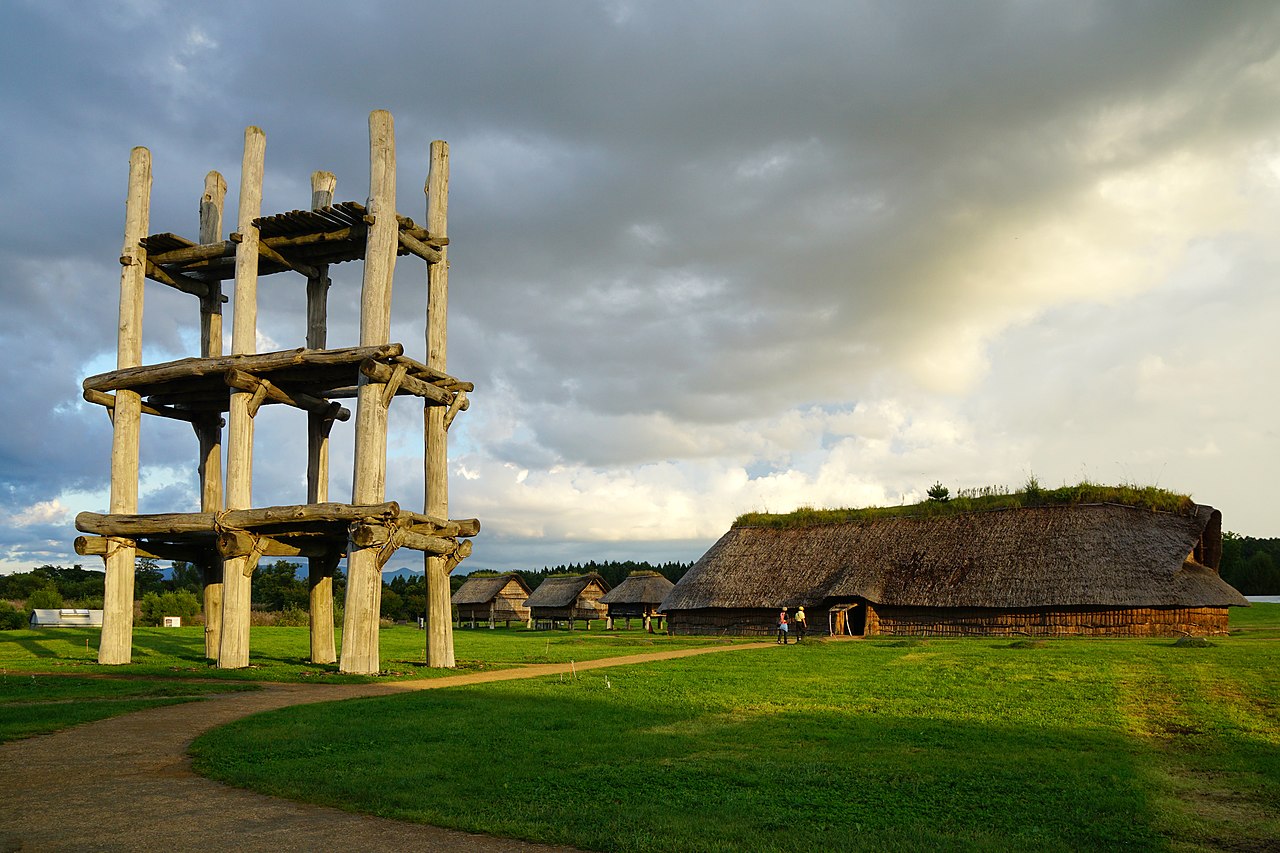
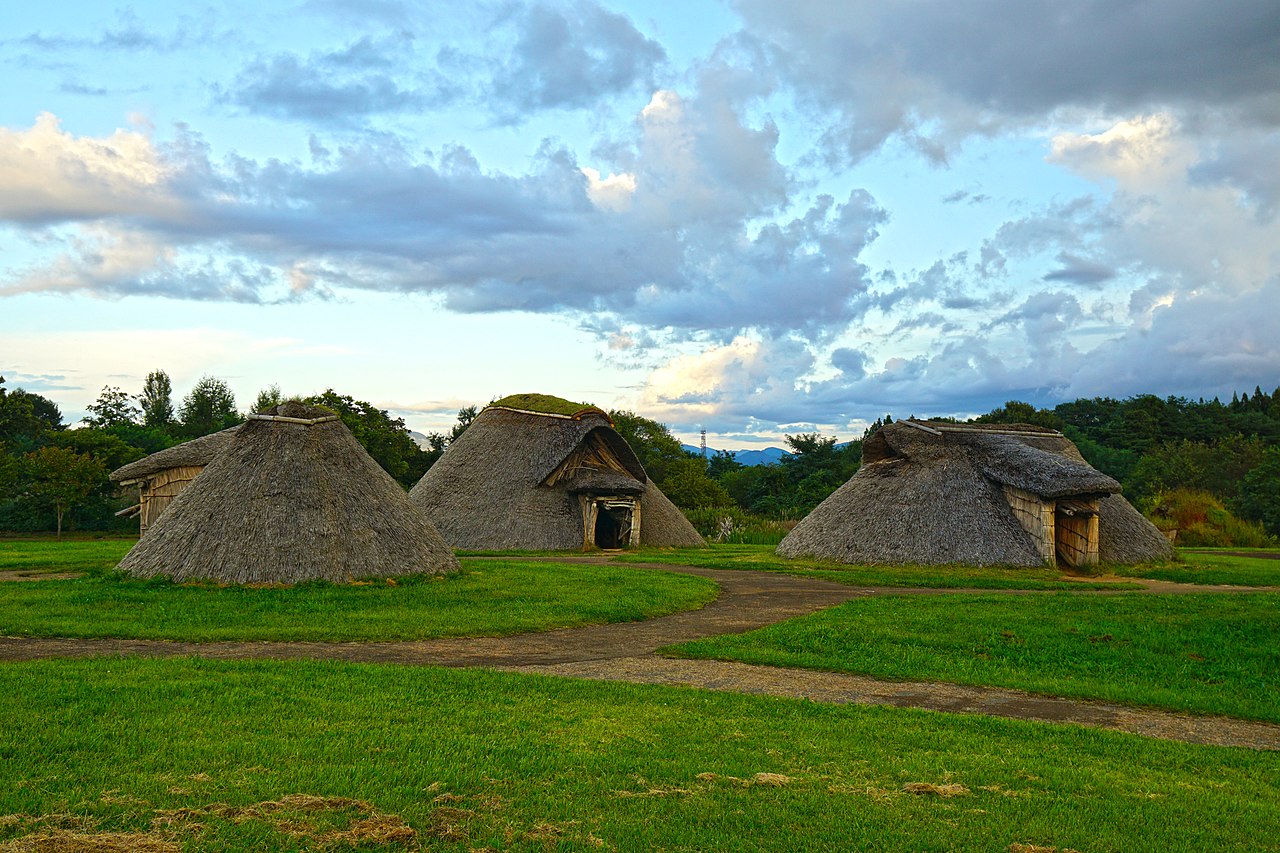
While broadly mobile foragers in some regions, many Jōmon groups established long‑term occupation at coastal and riverine sites, exploiting abundant fish, shellfish and plant resources. Shell middens—deposits of discarded shells and food debris—are common at coastal sites and provide rich evidence of diet and seasonality. Large Middle Jōmon settlements such as Sannai‑Maruyama show organized layouts, pit dwellings, raised structures and storage features indicating repeated seasonal or year‑round occupation and social coordination.
Subsistence and environment
Subsistence strategies were regionally adapted and diversified: marine resources were intensively used on coasts, while inland communities relied on hunting deer and boar, freshwater fish, nuts and wild plants. There is evidence for plant management and simple forms of landscape modification, though the Jōmon are not generally characterized by large-scale agriculture. Seasonal rounds and the storage of food likely supported denser and longer-term settlements than typical of highly mobile hunter‑gatherers.
Chronology and regional variation
Archaeologists divide the Jōmon sequence into phases—Incipient, Initial, Early, Middle, Late and Final—to describe technological, stylistic and settlement changes. The timing and character of these phases vary substantially by region: Hokkaidō and northern Honshū, central Honshū, and the southern islands each show distinct ceramic styles, settlement forms and subsistence emphases. Regional syntheses and catalogues of finds offer overviews for comparative study (site surveys and illustrated collections).
Origins, population and contacts
The origins and genetic history of Jōmon populations remain active areas of research. Broadly, Jōmon groups reflect long‑term occupation of the archipelago with cultural continuity in many areas and varying degrees of contact with continental East Asia. Recent ancient DNA studies indicate affinities with other East Asian groups while also detecting complex regional variation and episodes of gene flow from populations to the north and west at different times. For accessible summaries and comparative perspectives, see general reviews of population research (research overview and comparative studies).
Transition to the Yayoi and later legacy
From around the first millennium BCE, the appearance of the Yayoi cultural complex—characterized by wet‑rice agriculture, new pottery types, metallurgy and different settlement patterns—marked a major regional transformation. In some areas the shift involved migration and demographic change; in others it reflects cultural exchange and gradual adoption of new practices. Elements of Jōmon material culture and land use persisted and influenced subsequent societies, and Jōmon sites remain central to understanding prehistoric Japan.
Research, interpretation and public interest
Ongoing archaeological fieldwork, radiocarbon dating, paleoenvironmental studies and genetic analyses continue to refine understanding of Jōmon lifeways, chronology and population dynamics. Many museums and local sites exhibit Jōmon pottery, dogū and settlement reconstructions; public archaeology and regional surveys provide entry points for non‑specialists to learn about the period. Scholarly debate continues on topics such as the degree of sedentism, social complexity and interregional connections.
Significance
The Jōmon period is important for its longevity, early adoption of pottery technology, rich artistic expression and adaptation to diverse environments across the Japanese islands. Its material record informs inquiries in archaeology, art history, paleoecology and human population studies, making the Jōmon a key focus for understanding prehistoric East Asia and the varied pathways of hunter‑gatherer societies.
Related articles
Author
AlegsaOnline.com Jōmon period Leandro Alegsa
URL: https://en.alegsaonline.com/art/50980
Sources
- books.google.com : Ancient Jomon of Japan, p. 42
- web-japan.org : "Jomon Fantasy: Resketching Japan's Prehistory,"
- facts-about-japan.com : "Ancient Japan"
- t-net.ne.jp : Jomon Culture,"
- t-net.ne.jp : Japanese Archaeology
- books.google.com : Ancient Japan, p. 270.
- pnas.org : pnas.org/content/pnas/98/17/10017.full.pdf
- researchgate.net : researchgate.net/publication/281036097_Jomon_Culture_and_the_peopling_of_the_Japanese_arc…