
Joseon (Korean dynasty, 1392–1910)
Joseon was a Korean dynasty founded by Taejo Yi Seong‑gye that shaped state institutions, Confucian culture, and language from the late 14th century into the modern era.
Joseon (Hangul: 조선; Hanja: 朝鮮) was a Korean state established by Taejo Yi Seong‑gye in 1392 following the decline of the Goryeo dynasty. The new polity began in the northern city of Kaesong and later moved its capital to Hanyang (today's Seoul). Over successive centuries Joseon became the dominant social and political framework on the Korean peninsula and left enduring cultural, legal, and linguistic legacies.
Image gallery
10 Images


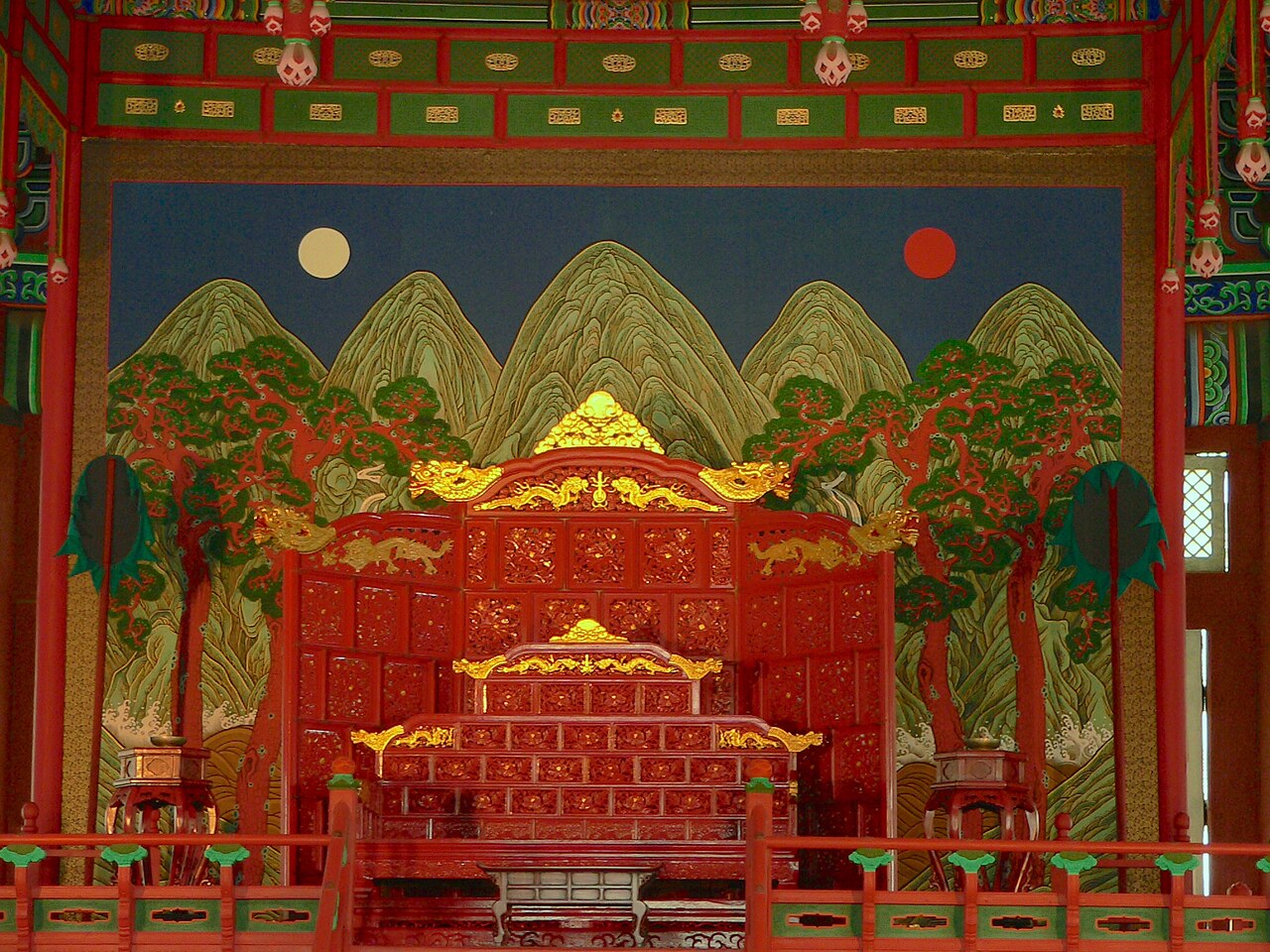

Government, society and institutions
Joseon organized public life around a state ideology strongly influenced by Neo‑Confucian thought. The civil service examination system and a bureaucratic hierarchy promoted scholar‑officials, while an aristocratic yangban class held social and political privileges. Agricultural administration, cadastral records and local magistracies formed the day‑to‑day machinery of rule. The dynasty is often described as the longest‑lasting Confucian monarchy in Korean history, with elaborate rituals and educational institutions at its core.
Culture, learning and innovations
Culturally, Joseon fostered scholarship, printing, and the arts. One of its most significant achievements was the creation of the Korean alphabet, Hangul, under King Sejong in the 15th century, which made literacy more widely accessible. Ceramics, painting, court music, and historiography also flourished; state journals and private writings preserved governance practices and intellectual debates that shaped later Korean thought.
Major events and historical outline
Joseon experienced periodic crises alongside long intervals of stability. Notable episodes include the Japanese invasions of 1592–1598 (the Imjin War) and subsequent Manchu incursions. In the late 19th century the dynasty faced external pressure and internal reform movements. The assassination of Empress Myeongseong is a pivotal event in 1895 that intensified political turmoil (Empress Myeongseong). The Joseon state was reconstituted as the Korean Empire in 1897, and monarchic rule under the Yi family effectively ended with Japan's annexation of Korea in 1910.
Legacy and modern perceptions
Joseon's influence remains visible in modern Korean law, family customs, educational values, and language. The dynasty's name appears in multiple romanizations—Chosŏn, Choson, Chosun—reflecting historical transcription systems. In contemporary discourse some young people use the term "Hell Joseon" to express frustration with social inequality and job market pressures in South Korea. The word can carry critical or ironic connotations, but it also evokes a long historical continuity in Korean identity.
Notable distinctions and facts
- Founded by Taejo Yi Seong‑gye in 1392 after the fall of Goryeo.
- Ended as a dynastic title with the transformation into the Korean Empire; often called the last Korean dynasty.
- State ideology built on Confucian principles, shaping education and administration for centuries.
The Joseon period remains a central reference point for historians, cultural scholars, and the public, bridging medieval and modern Korean history and informing debates about governance, culture, and national memory.
Questions and answers
Q: What is the meaning of Joseon?
A: Joseon was a Korean state started by Taejo Yi Seong-gye that began after the end of the Goryeo Dynasty at what is today the city of Kaesong. It was also the last dynasty of Korean history and the longest Confucian dynasty.
Q: When did Joseon begin?
A: Joseon began after the end of the Goryeo Dynasty at what is today the city of Kaesong.
Q: Who founded Joseon?
A: Joseon was founded by Taejo Yi Seong-gye.
Q: When did it end?
A: The Joseon Dynasty ended with the assassination of Empress Myeongseong.
Q: How do some Koreans view Joseon today?
A: Some Koreans view Joseon negatively because they think it failed, and young Koreans use expressions like "Hell Joseon" to talk about how hard it is to find a good job in South Korea today.
Related articles
Author
AlegsaOnline.com Joseon (Korean dynasty, 1392–1910) Leandro Alegsa
URL: https://en.alegsaonline.com/art/51194
Sources
- newstown.co.kr : "(세상사는 이야기) 왜색에 물든 우리 말-(10)"